Or: on the capacity of cups and teapots, by way of English porcelain.
Ask a respectable, buttoned-up Englishman what the capacity of his cup is and he will most likely not understand the question at all. What do you mean, capacity? There are only two kinds of cup: tea and coffee. The coffee one is roughly half the size.
An alchemist attempting to determine the capacity of an English cup.
And only our sort of person, with an enquiring mind, a scientific training and the precision that is the politeness of kings, will keep pressing the Englishman. But one has to work out how to ask an inhabitant of England how many millilitres are actually in there.
You can come at it from the other side and ask whether the Englishman has a porcelain teapot, and what its capacity is. And here he will answer simply — I have a six-cup pot, say. That's it. And the capacity of the pot? Six cups. Which is not a volume in litres. And here you meet incomprehension all over again.
"How much boiling water do you put in the pot, roughly?" "A pint and a half."
It isn't getting any easier, is it? The question is meaningless.
But we are not born yesterday either, and we can pour water into the pot and measure it.
Into a standard six-cup pot I can pour 1.24 litres of water. So one cup comes to about 200 ml. And even here it isn't that simple, because every cup shape has its own capacity. From a six-cup pot you might pour five cups, or you might pour seven.
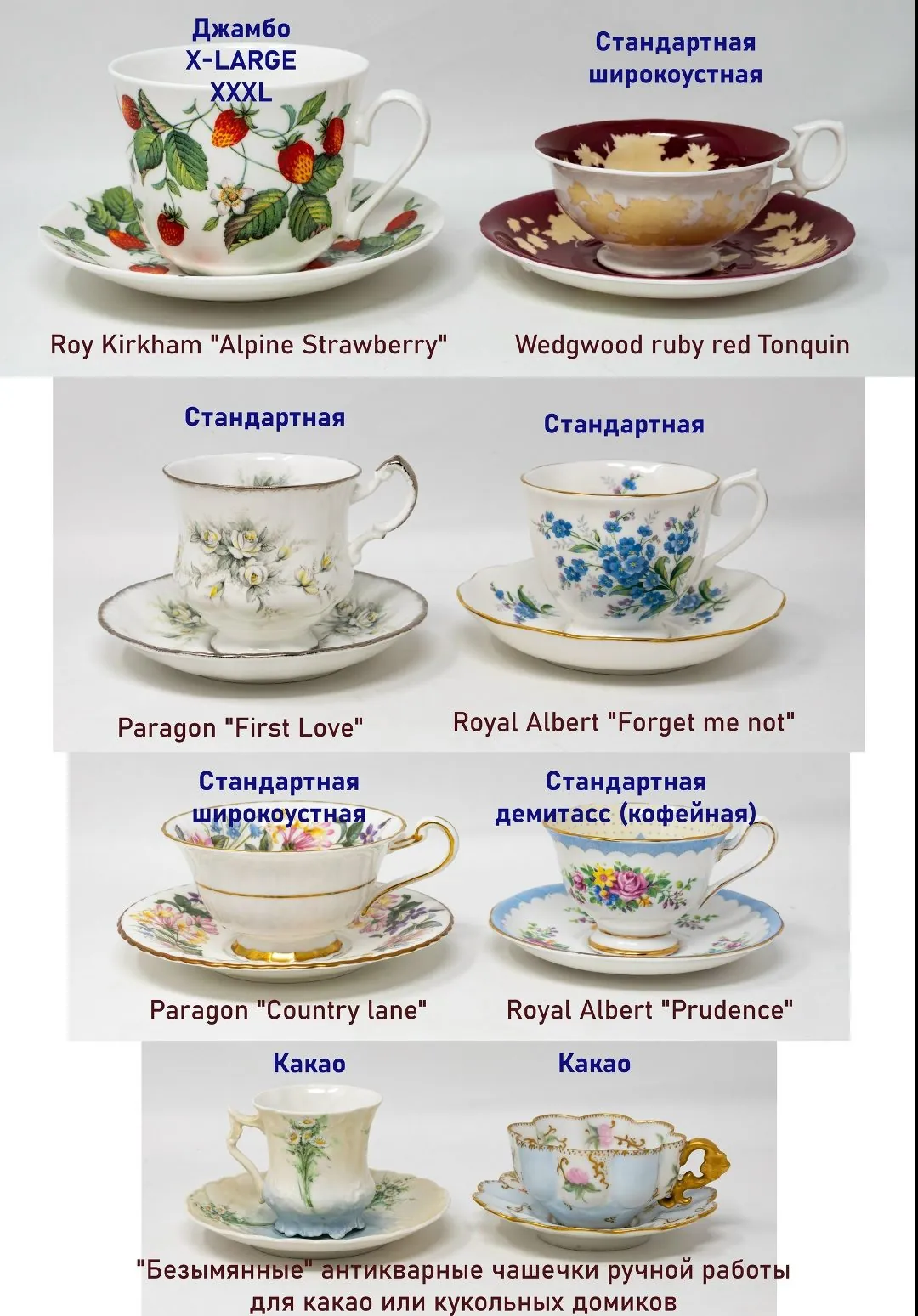
Let us test it ourselves.
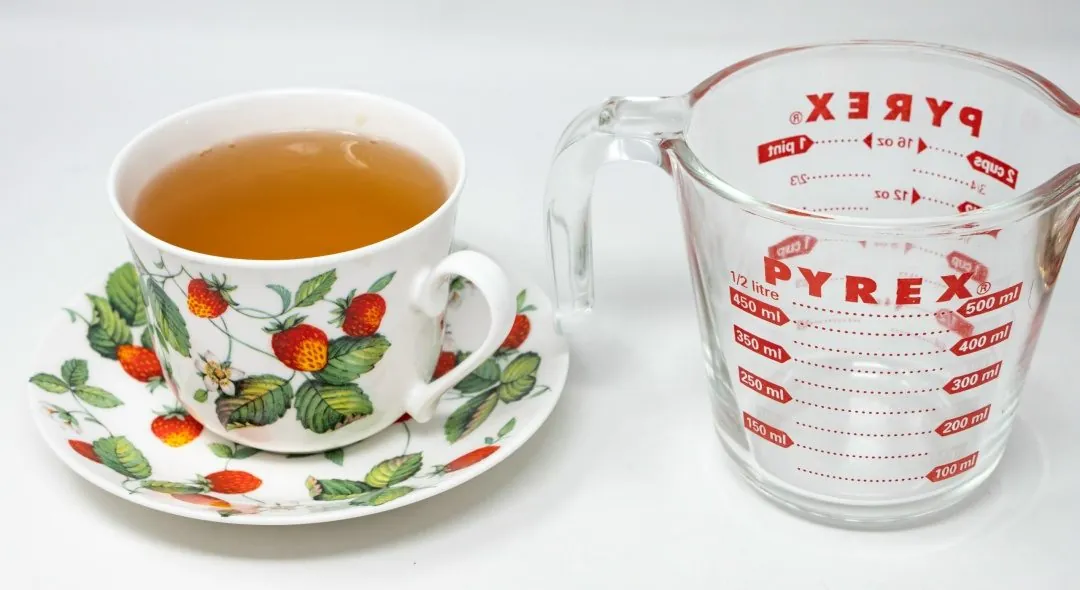
Roy Kirkham, "Alpine Strawberry".
This is Roy Kirkham, "Alpine Strawberry", 1990s and still made today; porcelain, England. So as not to frighten buttoned-up Englishmen with words like XXL, giant or enormous, the cup was named a "breakfast" cup. 450 ml. Filled the way I fill it, though, it comes to about 420 ml.
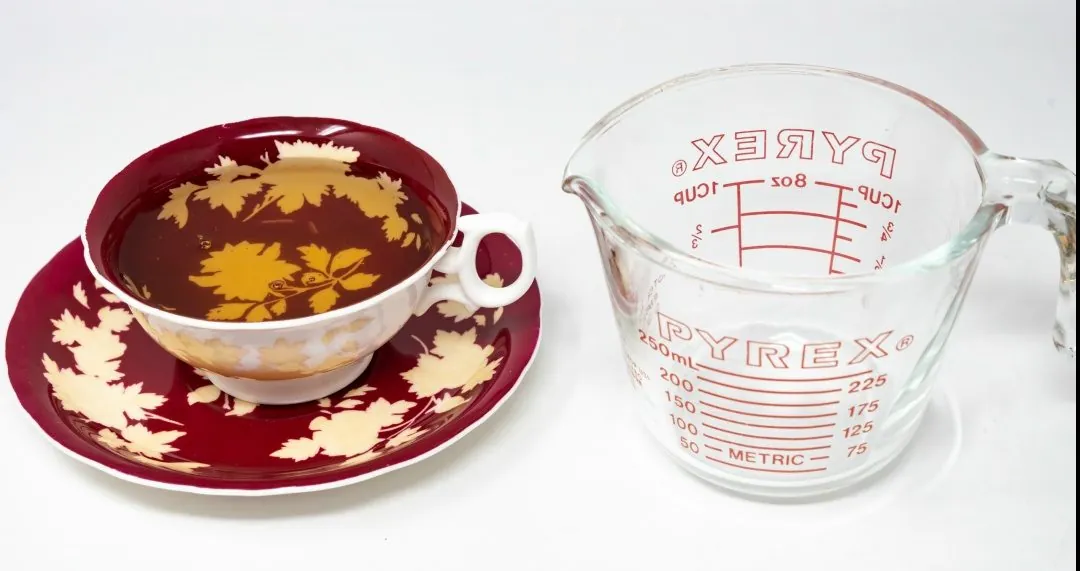
Wedgwood Tonquin.
This is a beautiful Wedgwood, English bone china, the simplified Tonquin pattern; depending on how you pour, it takes 160–180 ml.
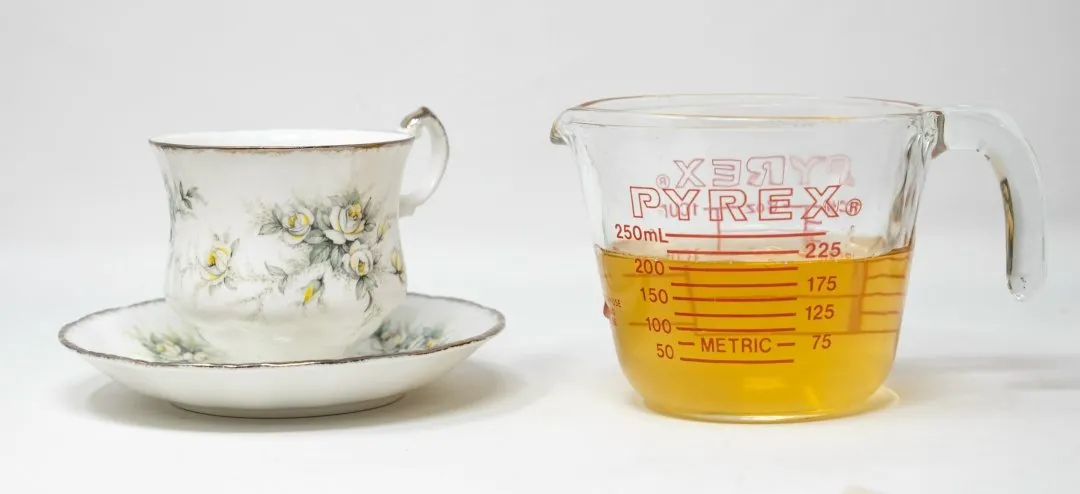
Paragon, "First Love".
The classic Paragon "First Love"; the form holds almost 200 ml. The photograph is taken at a slight angle, so it looks like more than 200 ml, but that is an optical illusion.
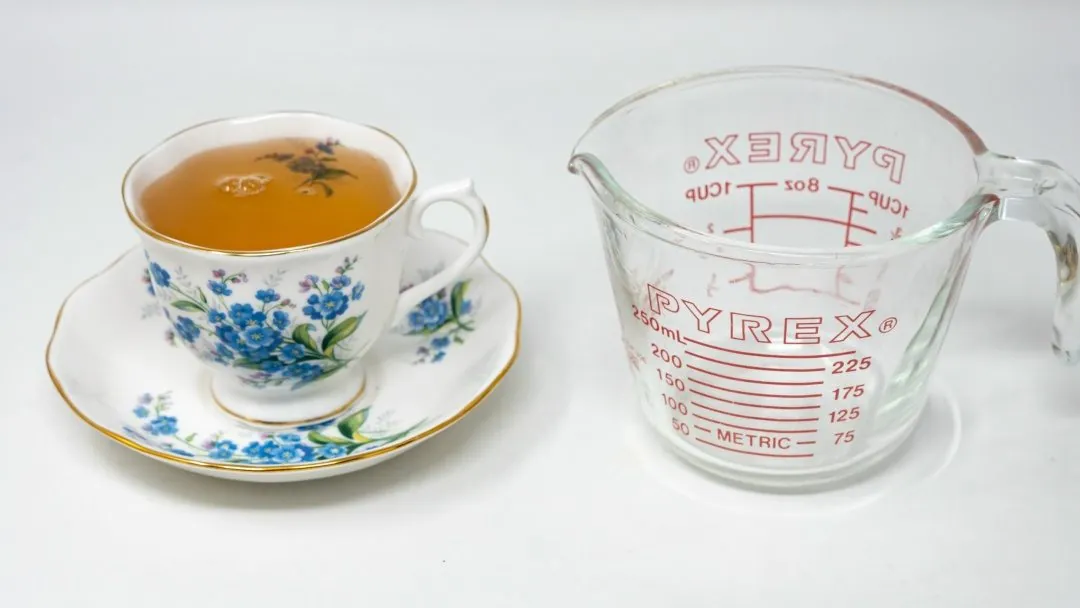
Royal Albert, "Forget-me-not".
Royal Albert's forget-me-nots hold about 180 ml.
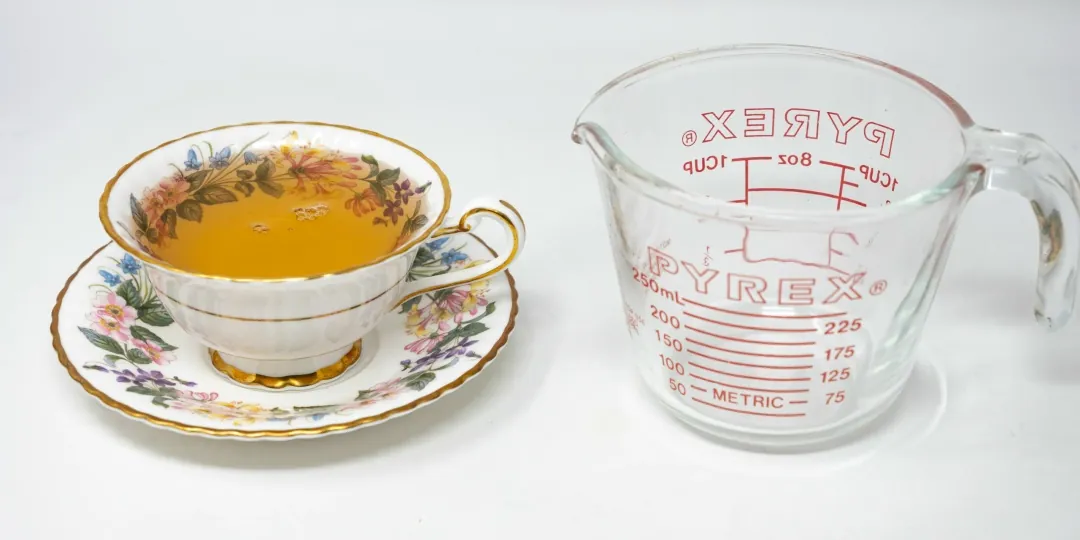
Paragon, "Country Lane".
Another wide-mouthed beauty, Paragon "Country Lane" — 160 ml.
The demitasse
Demitasses, otherwise coffee cups, generally hold about half the capacity of a standard teacup — so, in the range of 75 to 110 ml.
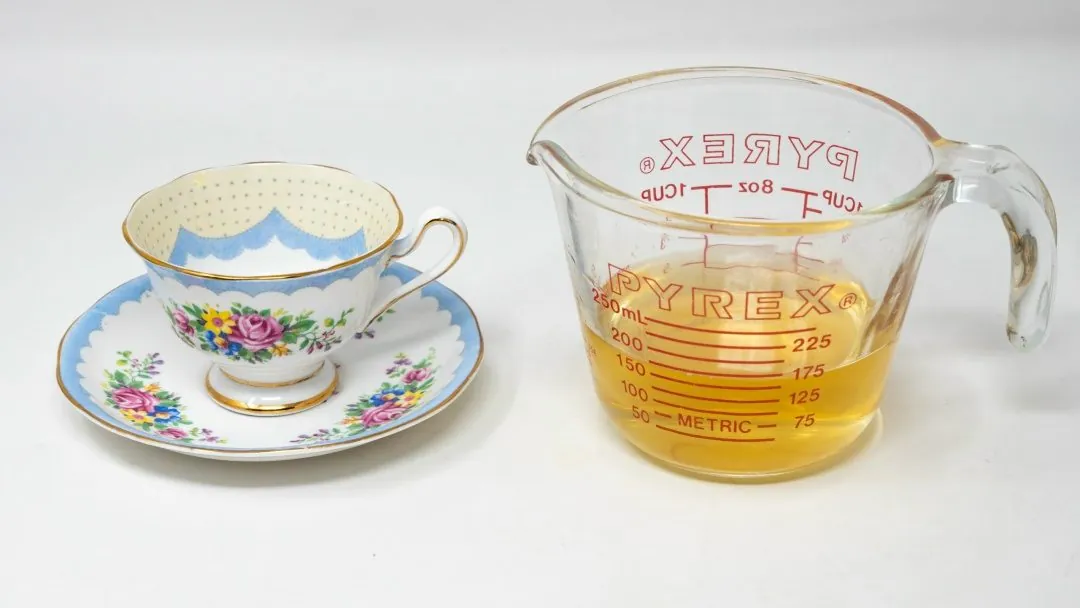
Royal Albert, "Prudence".
The painted coffee beauty Royal Albert "Prudence" — 100–110 ml. That is "a lot" for a demitasse.
Cocoa, antiques, and dolls' house china
A few hundred years ago coffee, and cocoa especially, and their like, were affordable only to the well-off, so the cups were utterly microscopic from the point of view of anyone who grew up in Eastern Europe or the former USSR.
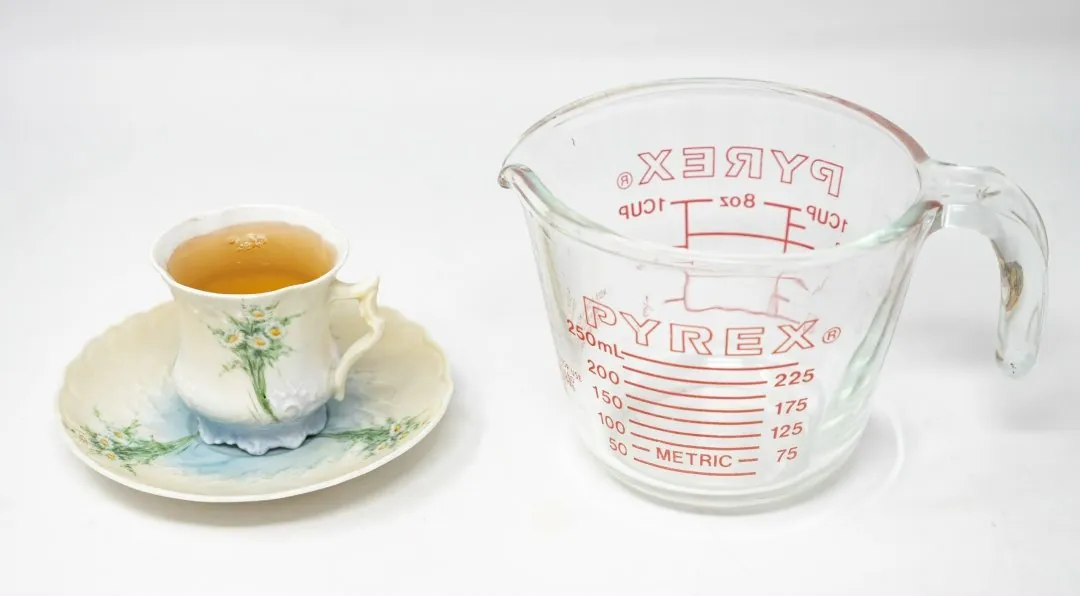
An antique hand-painted cup — 75 ml.
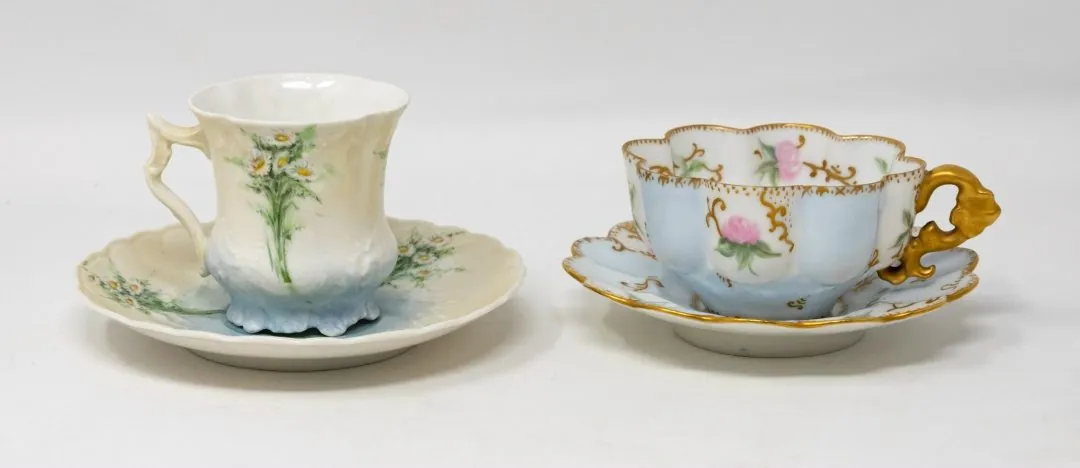
Its plumper friend holds a whole 90 ml!
Cups this small were used in the dolls' houses of noble children. And on the subject of dolls' houses, our idea of them is often mistaken too. They could be like this:
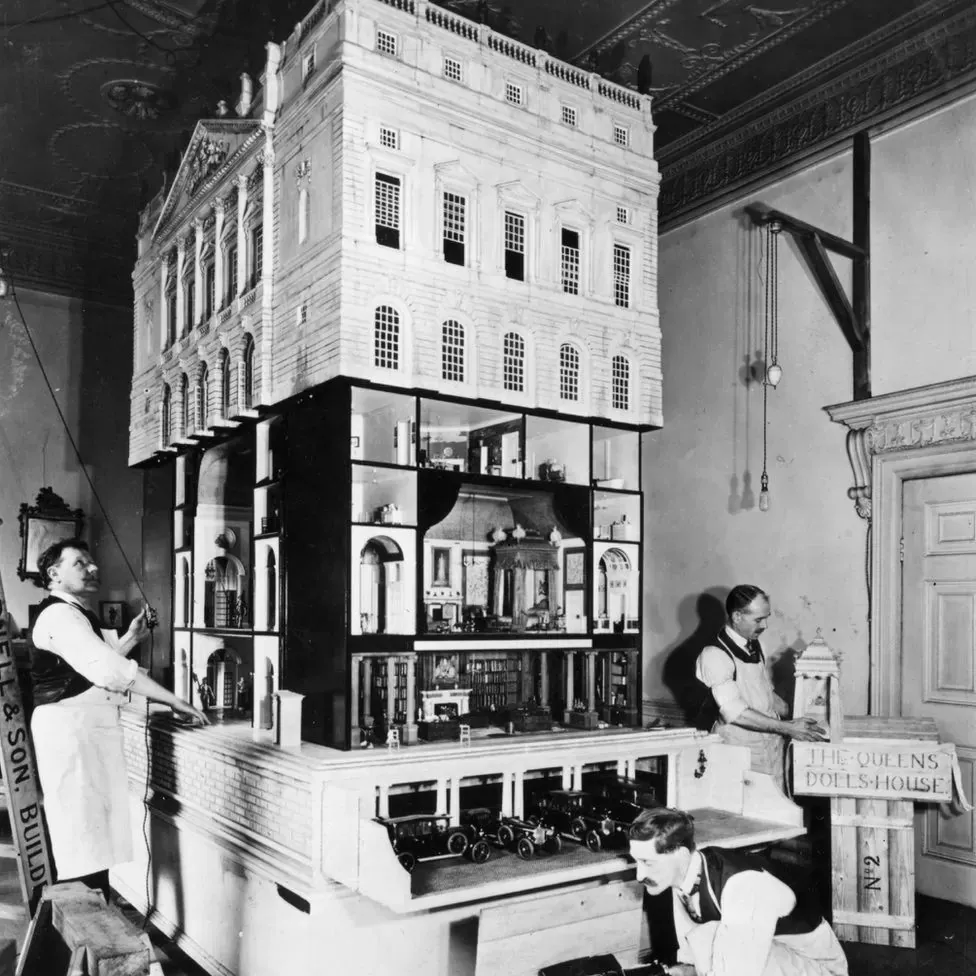
This dolls' house was made specially for Queen Mary, and took four years to build.