Remember one simple rule: since you cannot handle the cup in person, the only way is to trust the seller. So how do you tell that a seller isn't misleading you? Look at how they photograph the tea duo. Do they show it from every side? Are the details visible? Does the seller write about structural change, or about cosmetic quirks?
That is a universal rule, really. But the specifics for cups are what we'll go through now.
So — a checklist to help you choose a cup properly, using a lovely cup of mine that happens to have several problems, which is exactly what we'll pick apart.
The points are given in order of importance.
I use this guide myself, and every step has become automatic — the moment a tea duo is in my hands, I run through all of it without thinking.
1. The overall photograph, or the look of the cup
You have to like the cup. If you don't, or you have doubts, it isn't your cup — it should be love at first sight.
Otherwise you'll have spent the money for nothing.
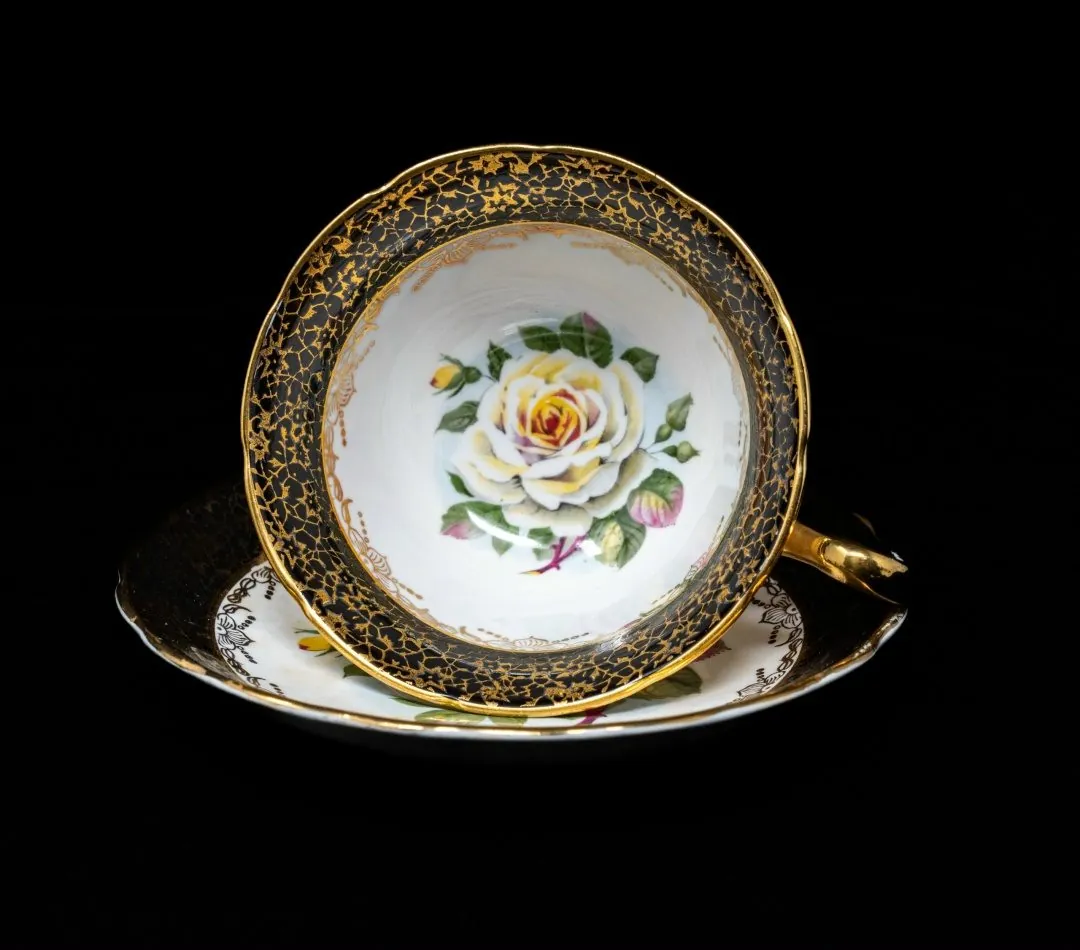
A most beautiful Regency tea duo with a large white-cream rose leaves nobody indifferent. But are you ready to look at it and use it all the time? Do you like roses of that kind? And gold on black? And a gilded handle? Perhaps you'd rather have the pattern on the outside of the cup than the inside?
2. Structural change
This covers crazing (that fine web of lines), cracks where present, chips, and flea bites — microscopic chips.
Your seller ought to say whether the cup rings. Why it matters: with porcelain cups this is the first and best way to find out whether there is serious structural change, including the hidden kind. If a cup doesn't ring, or rings dully, there should be a description of the structural change alongside. A cup may fail to ring because of crazing, for instance — in which case the listing should spell that out.
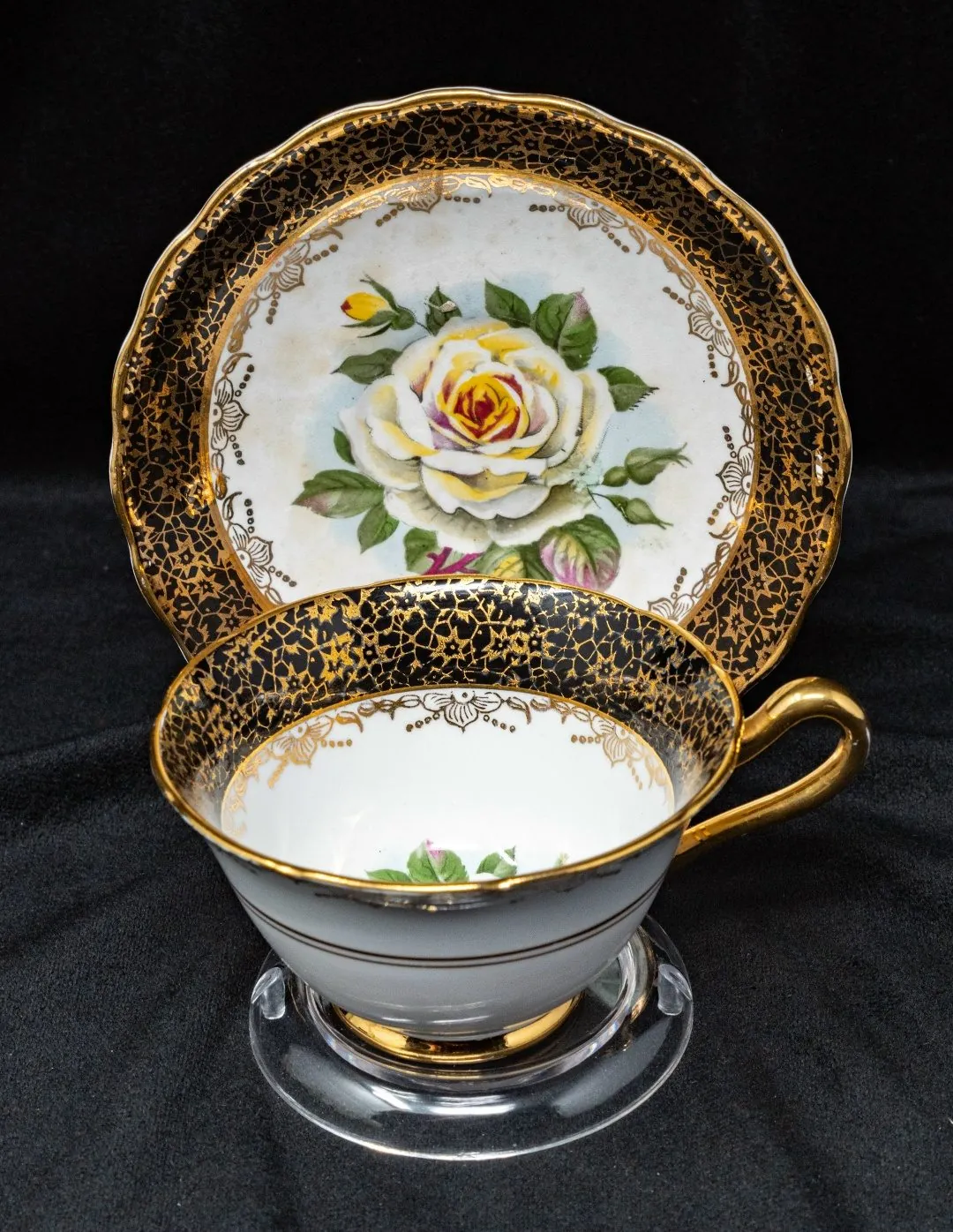
What can you tell from this photograph? Honestly, even I can't tell anything from it, beyond some whitish elongated "specks" on the saucer. So we ring the pair: the cup rings like a tuning fork, all is well, and the saucer sounds like a piece of plastic. Which means what? We look hard for structural change.

No cracks, no chips, no flea bites. But there is crazing, which is why the saucer doesn't ring. Note the yellow patch — the crazing is no longer pristine; a "dye" has crept underneath it, tea or something like it. On a saucer that kind of structural change matters less than it would on a cup, but its working life will be shorter.
The details that matter most: wherever the piece meets your body there must be nothing sharp. How to check — run a finger around the rim of the cup, and feel the handle. Take the cup by the handle and bring it towards your mouth: there should be no sense of play between handle and body, and no odd noises as you raise it. If there are — a sound like shingle, the way pebbles roll over each other when you dive in the Black Sea — that handle will not last long.
4. The report on cosmetic imperfections
Cosmetic troubles matter far less, though they can wound a delicate soul — a perfectionist's, say. The most demanding buyers on this point are customers from China: one small speck and that's it, no sale. And they are looking for a cup that is two hundred years old and flawless. They pay generously for it, mind — three or five times over, so long as it is "flawless".
Let's look over the same cup, and see whether any of it disappoints us.
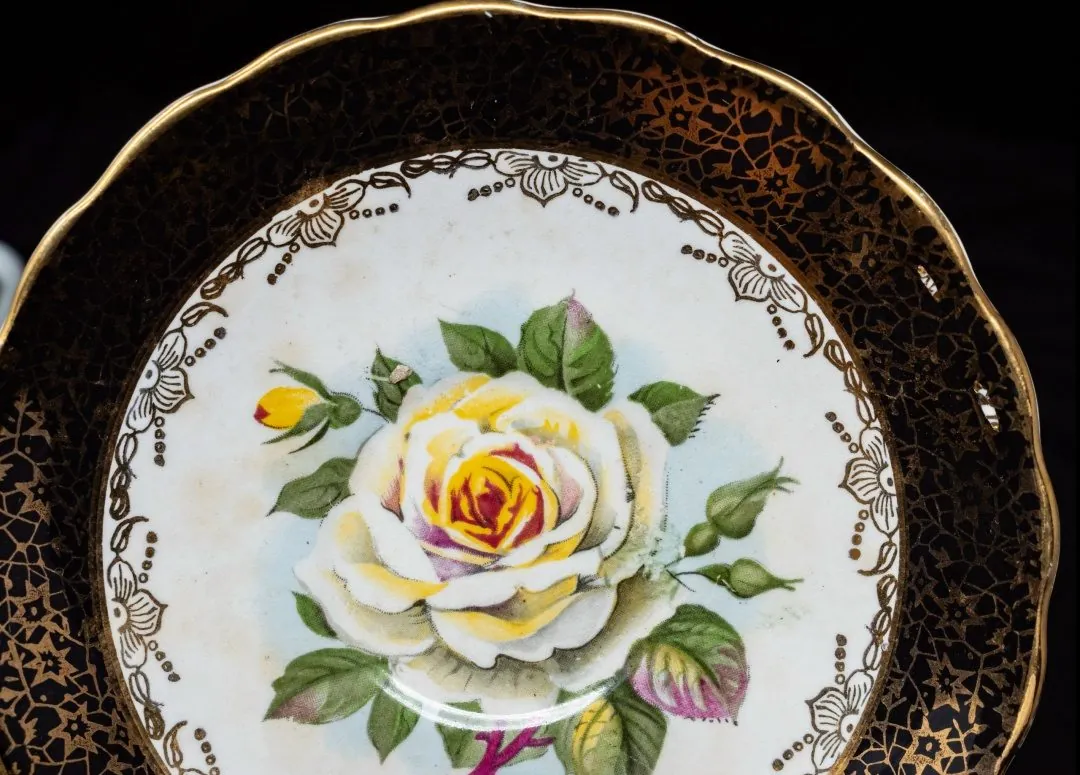
A production error — the painter dragged the black colour and laid the gilding over the top. This is what's called a "factory error". There is nobody to complain to about it: that is how the piece left the manufactory. But there absolutely must be a photograph of it — and, ideally, a description.
5. The mark
I sometimes jokingly call it the "stamp".
If you aren't shown the mark, that is already a problem. Ask for a photograph of it. Never buy without one. Sometimes your porcelain supplier simply forgets to attach it, or something goes wrong — so there's no need to suspect the worst straight away; just ask. If the answer to "please send a photo of the mark" is rudeness, well, that's your judgement to make. I don't deal with people like that.
There are rare exceptions — pieces that were never marked in production. Eighteenth-century tea duos, for the most part, carry no mark at all. Occasionally a photograph of an absent mark will tell you more than a mark would. The underside can say a great deal even with no identifying signs on it. But I'll write a separate article about that.
The most important thing: the marks on cup and saucer must match. Sometimes one of the two goes unmarked, but that isn't common, so it is always worth looking at the underside of both.
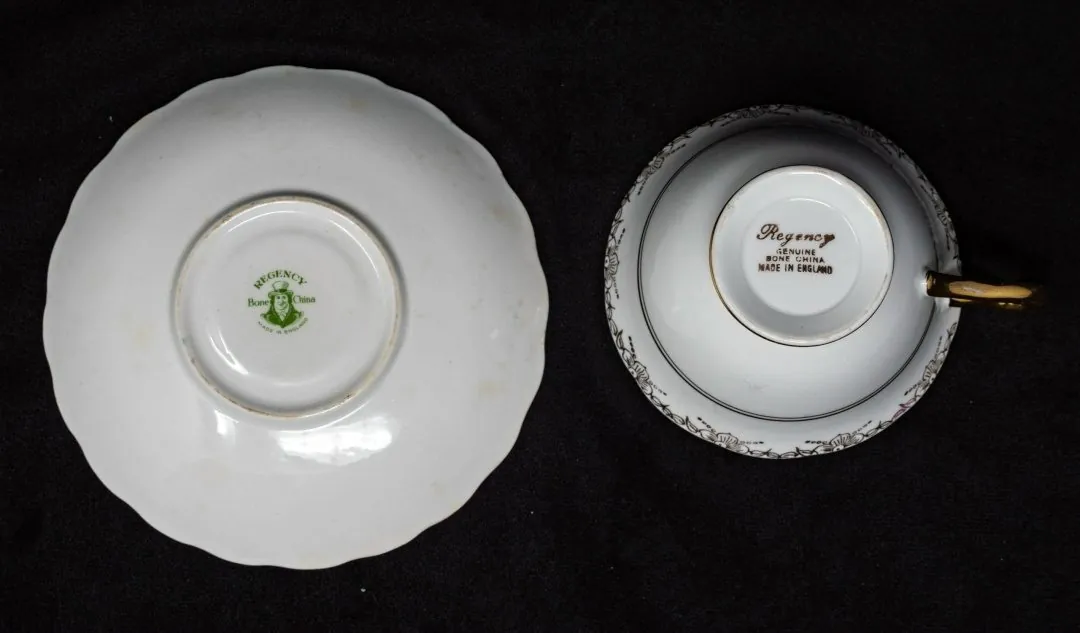
The same pattern, from the same manufactory, but the cup is considerably younger than the saucer. For drinking tea it makes no difference, but the pair's investment appeal drops sharply. A mismatch like this ought to be sold at a discount.
… This piece is still being added to.