We all grow old differently.
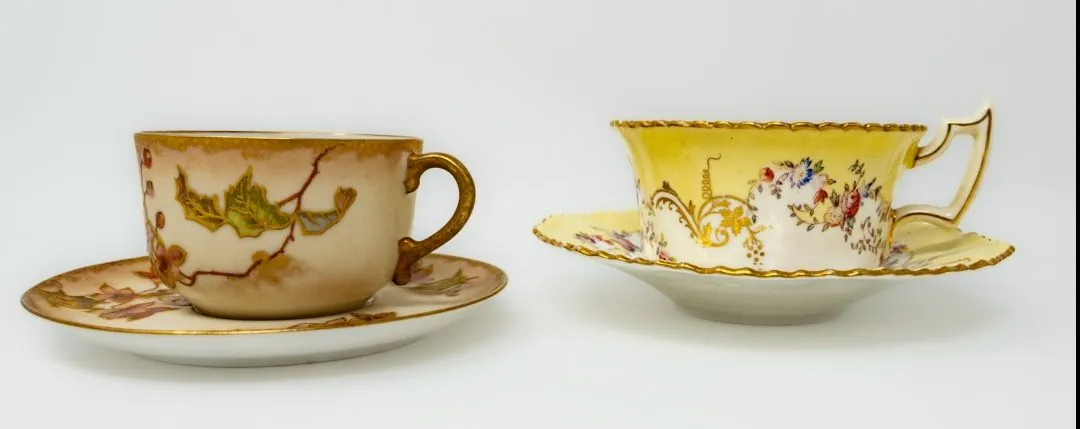
Two antique tea duos.
You look at one person and think, well, hasn't he gone downhill — while another seems never to have aged at all. "A witch," people say about those.
In the opening photograph, two very rare pairs side by side. One is Coalport, the other Limoges — Haviland.
Both are of the same period, the very end of the nineteenth century. Both are hand-painted.
The details of their histories differ, of course, but there is a thread connecting them.
Both cups were made in Europe for the new, attractive and demanding market of North America. That market does not deal in trifles: it will pay good money, but it asks for more than is usual.
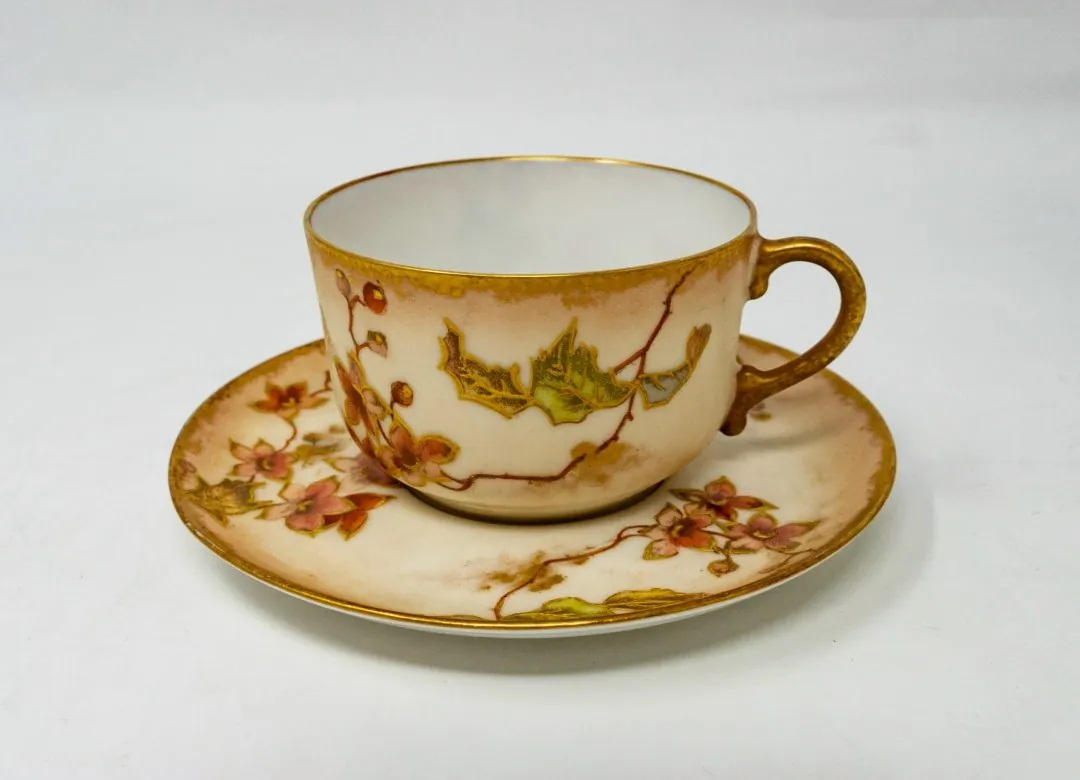
Limoges, Haviland.
Theodore Haviland fitted that niche very well, setting up a supply of Limoges porcelain to the New World. But he was not alone. A great many entrepreneurs were eager to grow rich shipping the best European porcelain across.
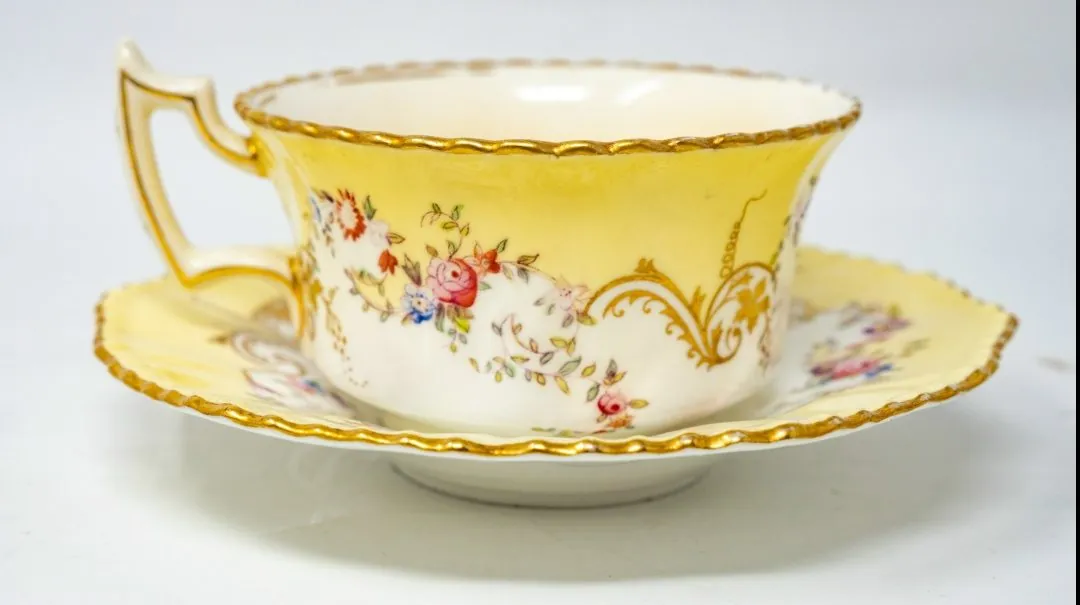
Coalport.
It was not easy — fierce competition forced them to be resourceful and to invent new patterns.
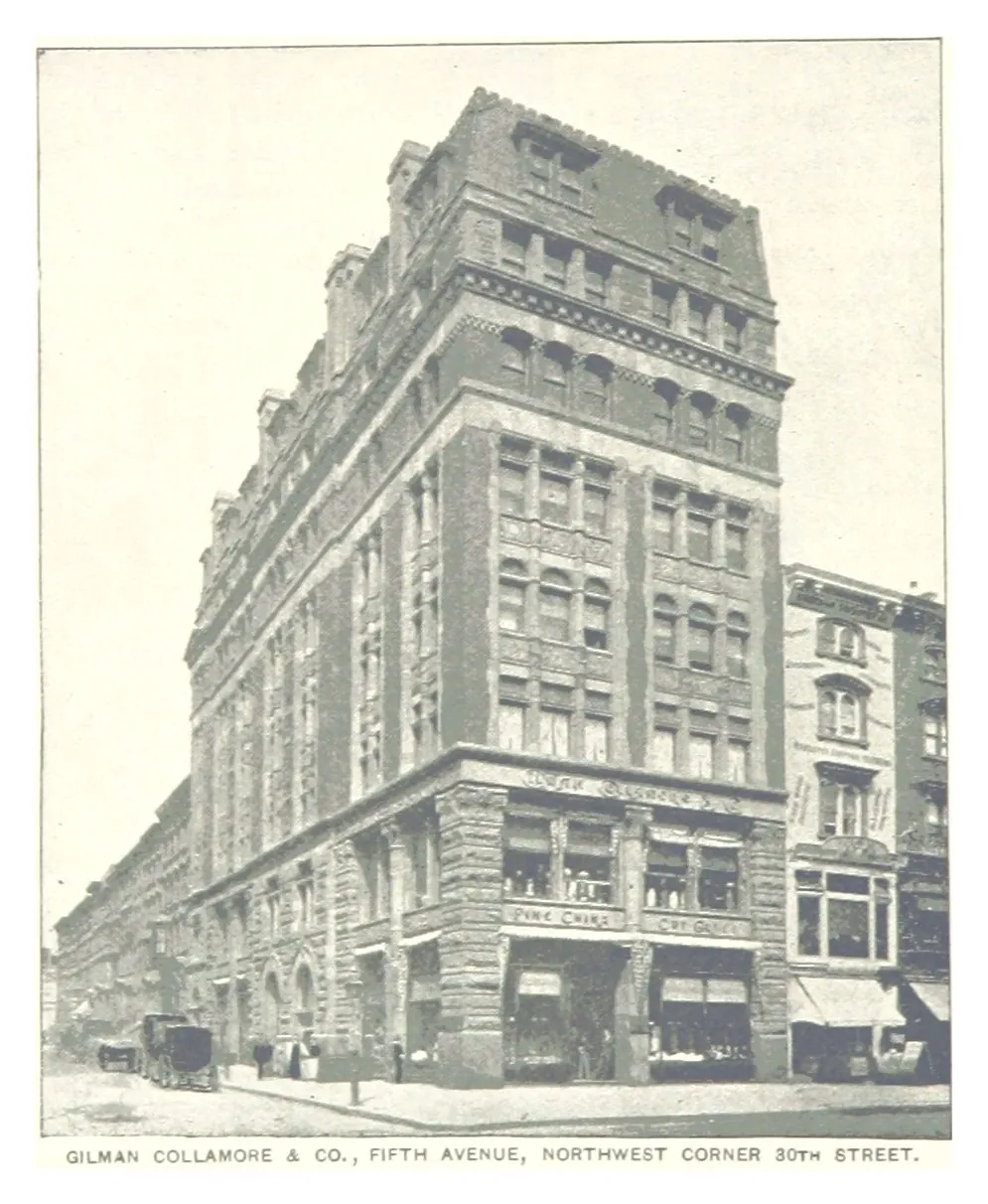
The shop of the importer Gilman Collamore, on the corner of Fifth Avenue and 30th Street.
Every supplier — every shop, in effect — tried to pick the finest porcelain and to present new patterns nobody had seen before.
The first is Gilman Collamore (1834–1888), a businessman with a shop on Fifth Avenue, right beside what is now the Empire State Building. Collamore supplied porcelain to the upper reaches of society.
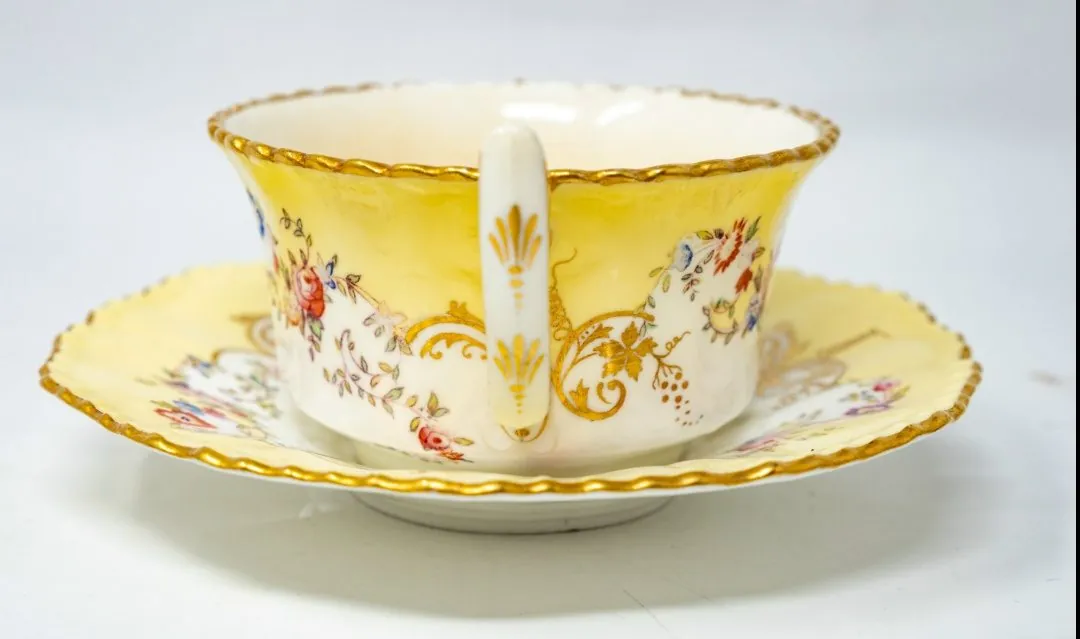
Coalport, pattern Y2291.
It was he who commissioned this cup from Coalport. A pattern like it was not to be found in England; it was a special order. Which is why Gilman's "stamp" was displayed proudly as a second mark on the cup:
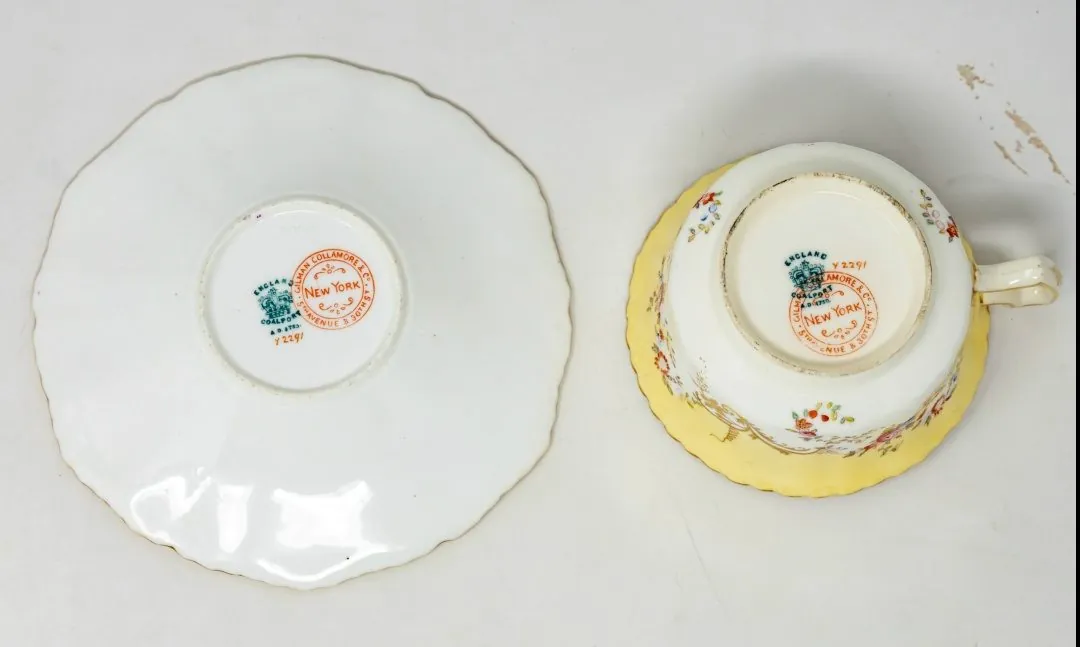
At that very same time, in Philadelphia, Hector Tyndale — a well-known abolitionist and philanthropist — was opening an import shop of his own.
Hector's mother was a woman of strict principles, and she obliged him to carry on the business of his father, who had brought the family from Ireland to the New World. His father was a well-known importer of glassware and porcelain from England.
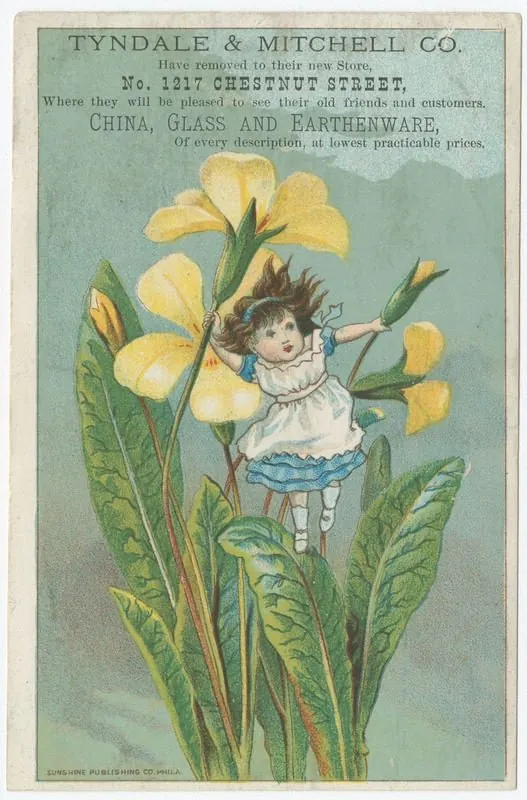
Tyndale and Mitchell's partnership announces the shop's move to a new address with this rather charming poster.
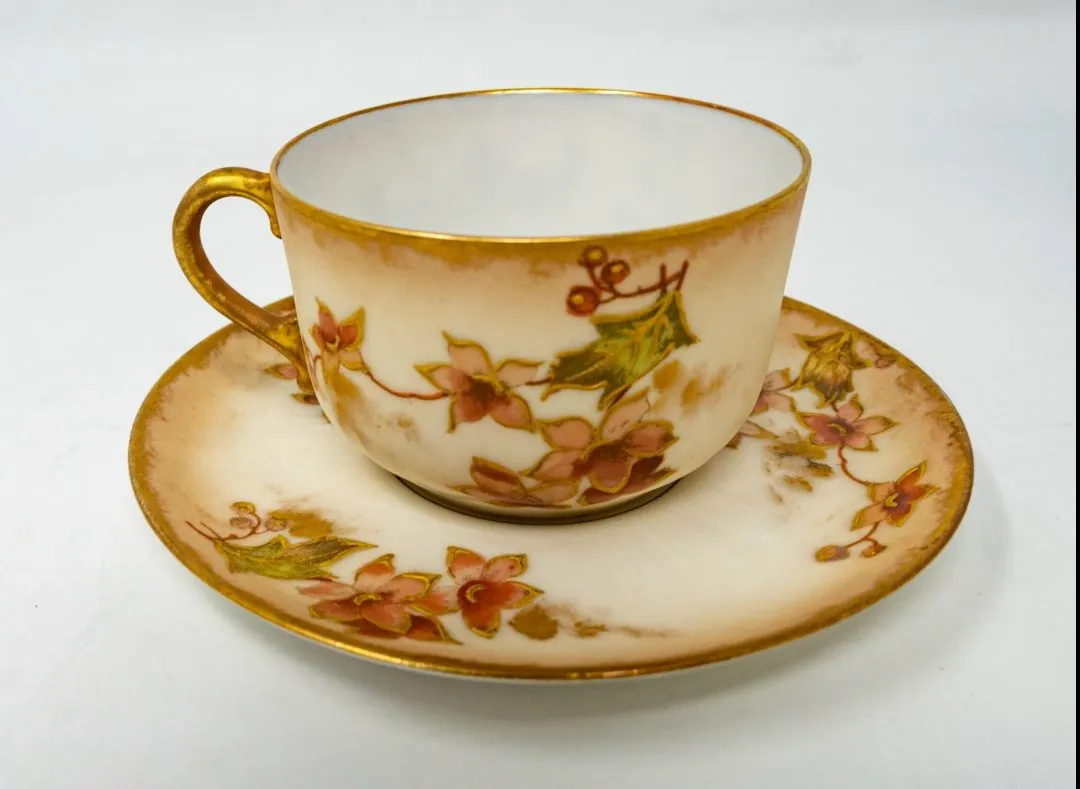
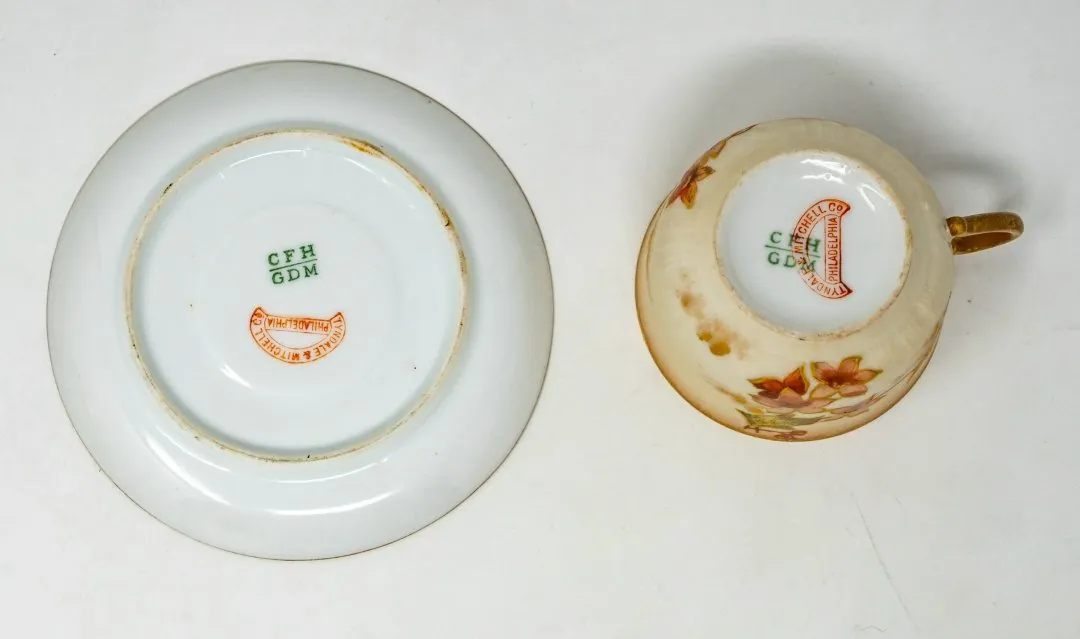
A Limoges (Haviland) coffee cup.
This cup was brought over by Tyndale and Mitchell's company, which had commissioned an exclusive design from the porcelain maker Haviland — and set its own importer's "stamp" as a second mark in just the same way:
So which of the cups, do you think, has aged the better?
We are in a privileged position: from the height of the hundred years since, we can see who was right, whose work held up and whose did not.
Incidentally, I don't know whether you noticed, but the Coalport looks magnificent while the Limoges cup is fairly modest. That is a trick of the photograph — cups can be photogenic too. In life it is quite the other way round: the Limoges draws the eye no less than the supposedly bright-yellow Coalport, and perhaps more.
Well then — the Coalport has fallen apart and crazed all over. Here, for instance, is the best cup of the six:
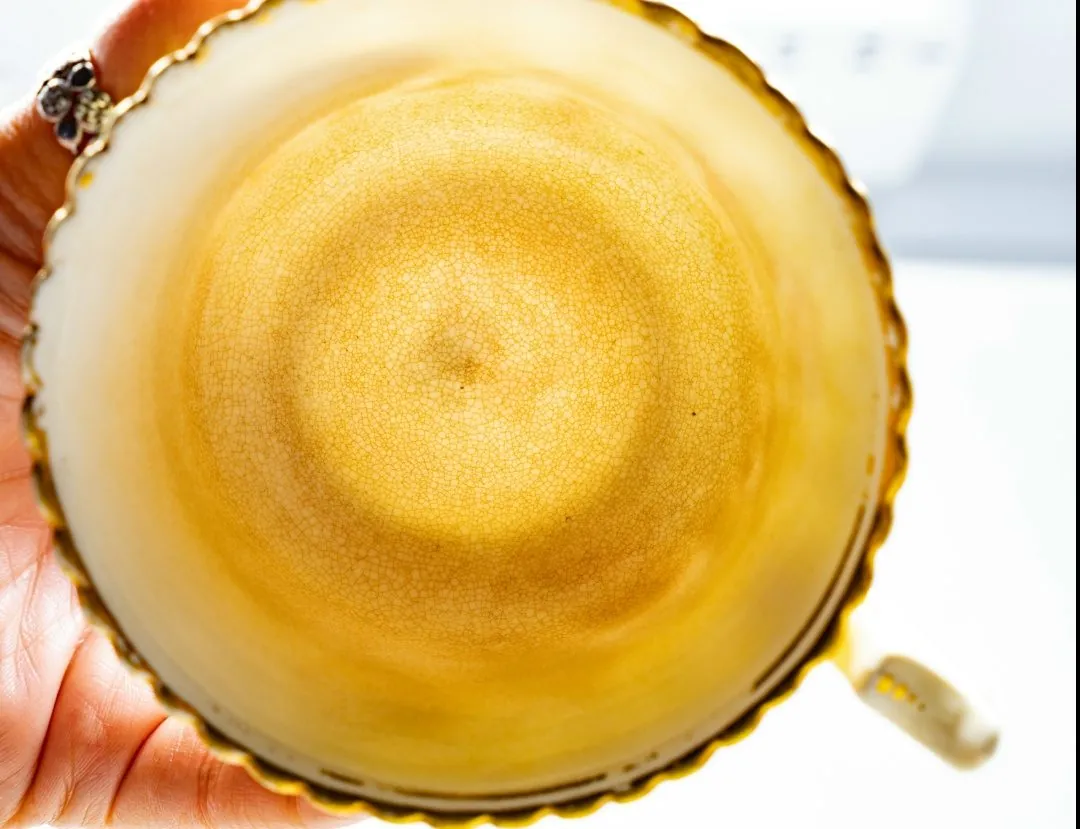
This is how this particular Coalport has aged.
What happened to the Coalport is very hard to say. The manufactory is one of the best; I have several Coalports in my collection that are more than a hundred years old — and yet here we are. It is the first time I have seen ageing this destructive in cups that were never touched.
The saucers are made far better, and have a shape unusual for English cups.
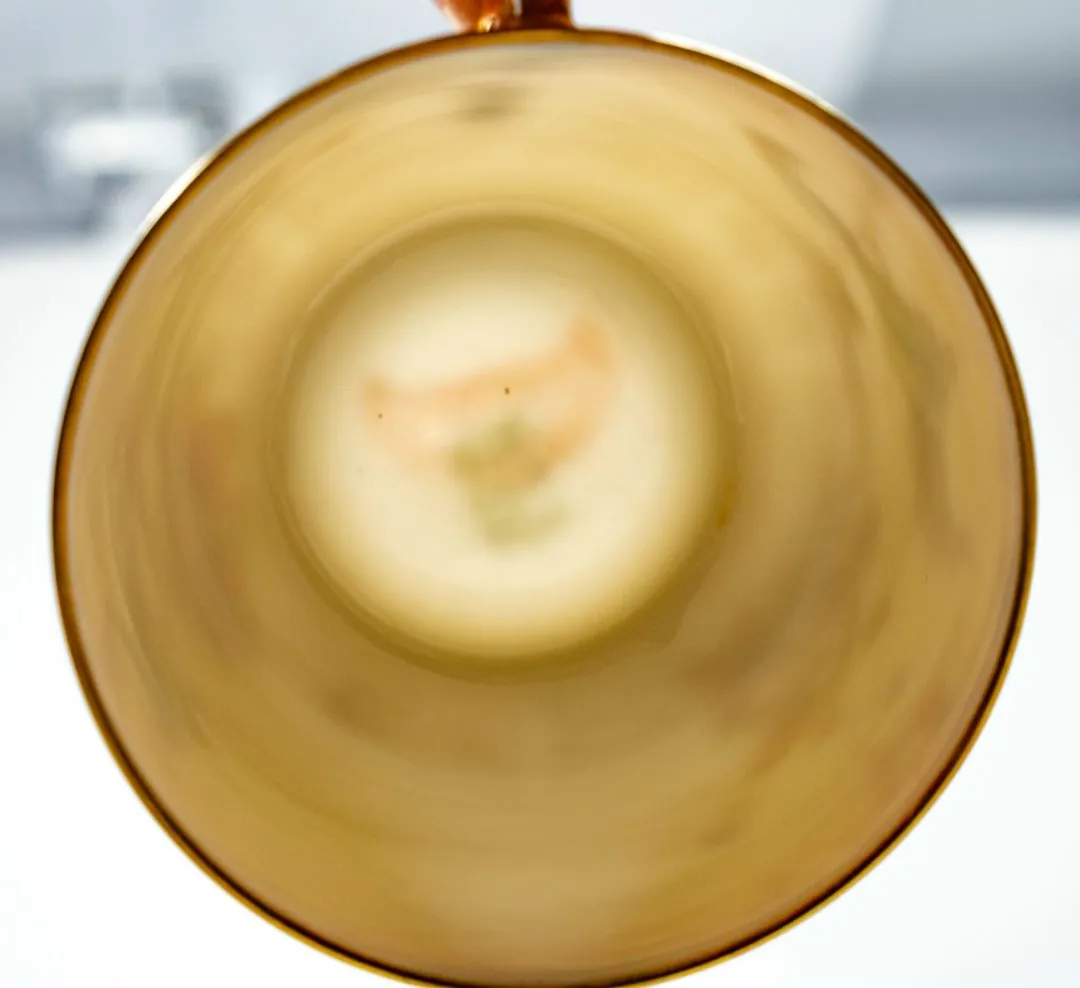
And this Limoges might have been made yesterday. The thickness of an eggshell, a most interesting pattern; you take it in your hands and the whole world stops.
Let me say it once more: my sample is six identical Coalport cups and six identical Limoges cups by Haviland. All six Limoges coffee cups are in perfect condition. All six Coalports are in poor condition. All twelve cups had been kept in the cupboard of a single estate in New York State.