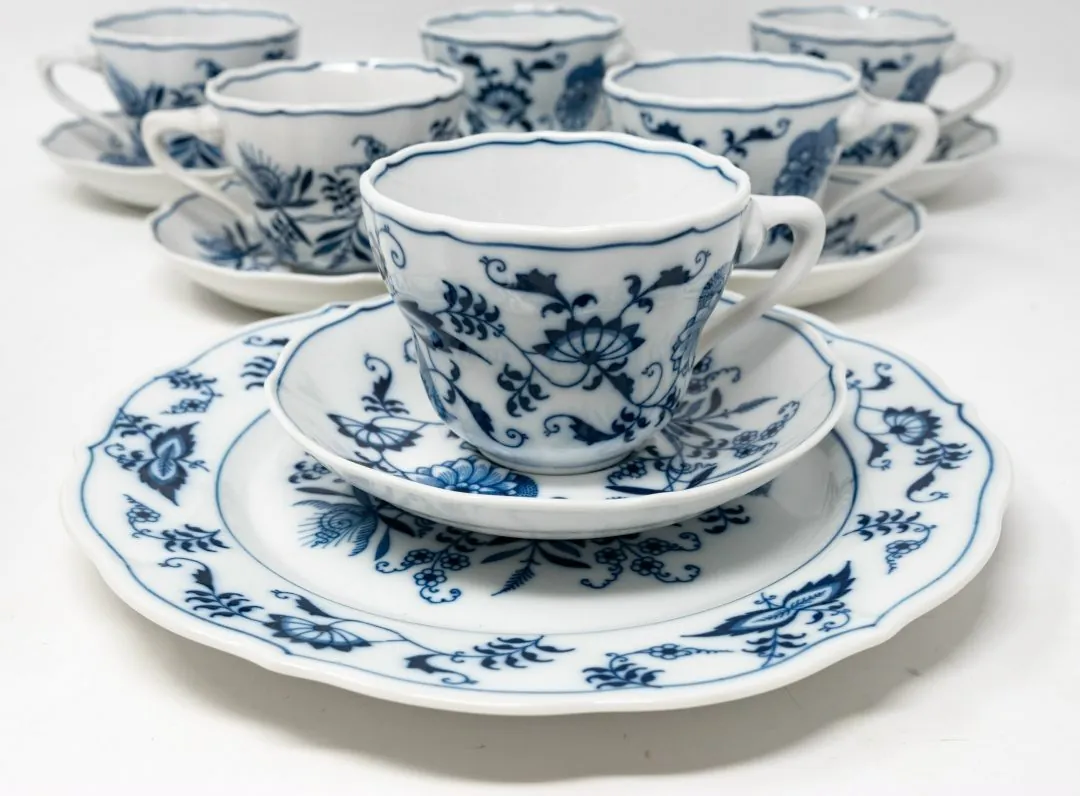
How beautiful Meissen porcelain is!
You can sing odes to Meissen porcelain — or you can howl at the price and stall for a long while, unable to grasp how a few pieces of fired kaolin can cost as much as a flat in a city of a million people.
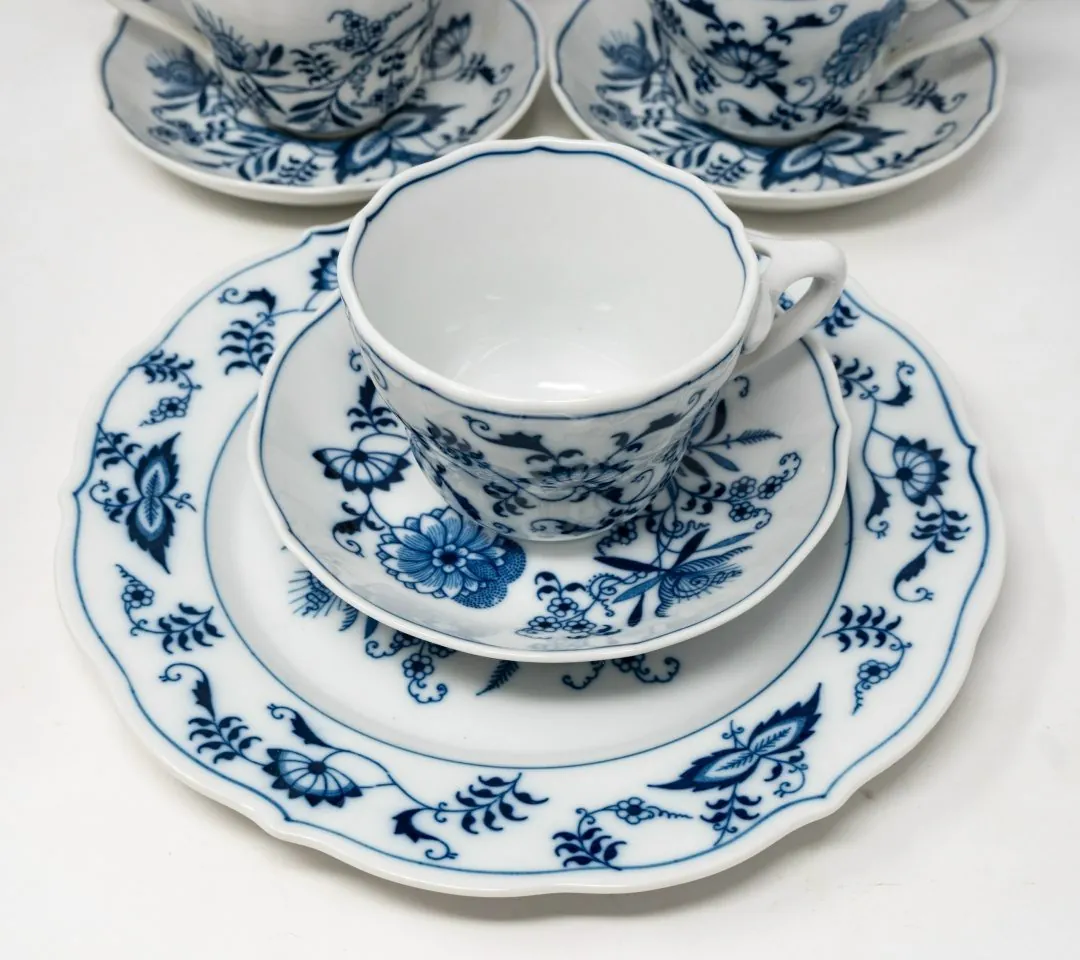
You have to understand that Meissen porcelain stood on the tables of emperors, princes, generals and nobility of every kind. Not much of it is left in the world. And what is left very rarely comes onto the open market.
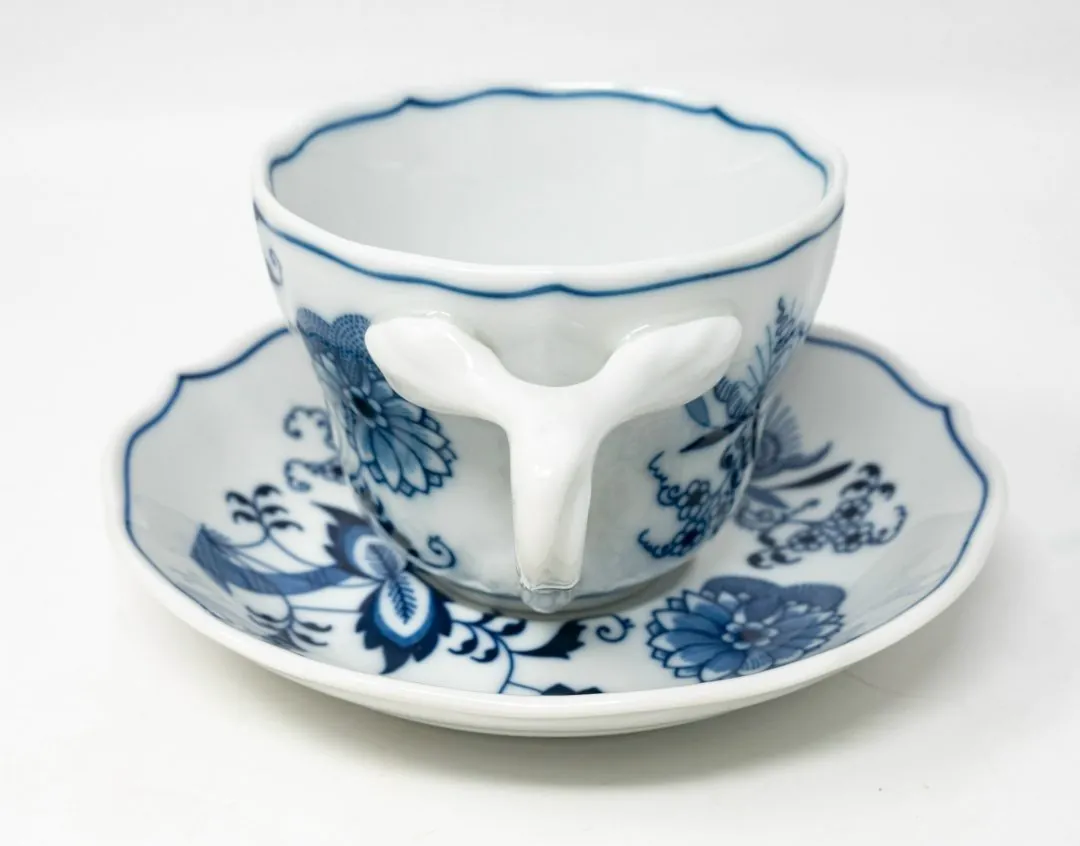
A handle like a tripod. A tri-handle!
Look at the handle — it is a rare one, and quite possibly you are seeing its like for the first time. The Saxon masters knew how to draw an audience, and so they invented handles of every imaginable kind, from "tripods" to "plaits".
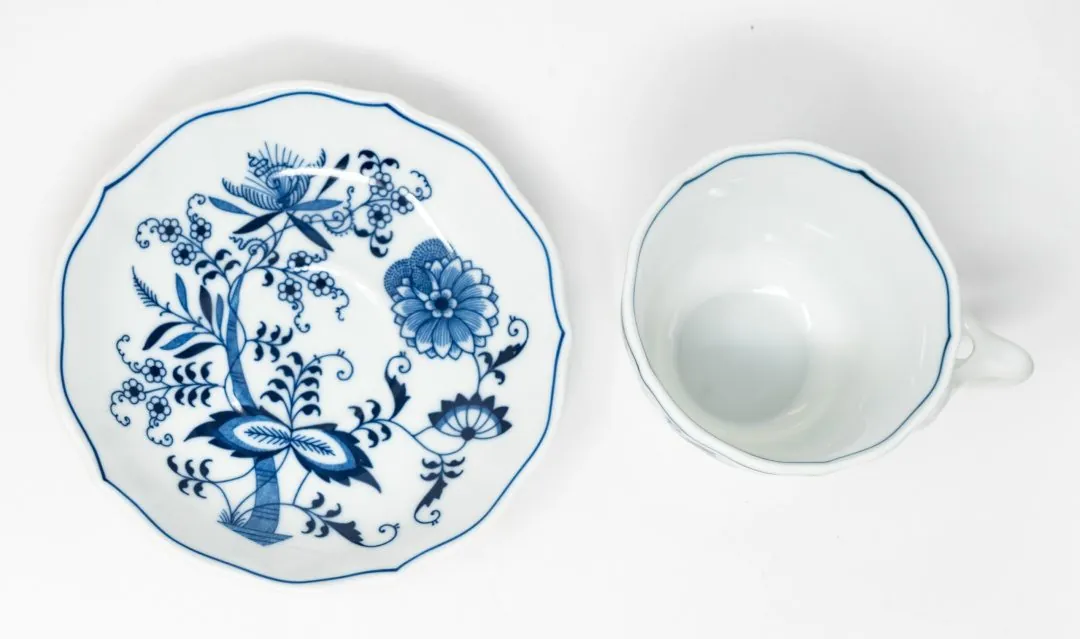
The famous onion pattern.
Naturally, a passion for collecting attracts not only connoisseurs and collectors but businessmen too, who sense that where there is demand there is money to be made.
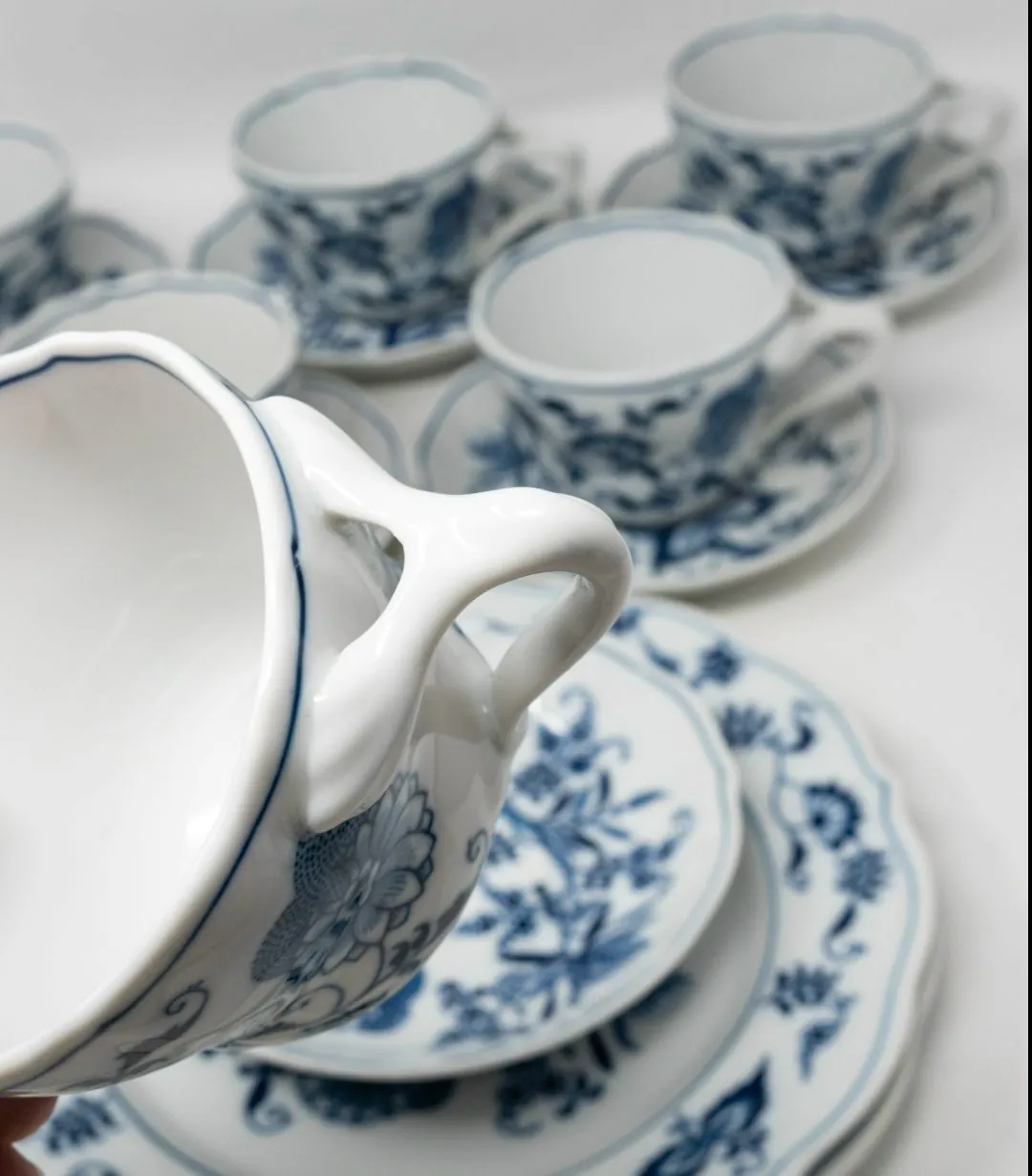
In 1951 Lipper International, having patented a pattern that was not entirely its own — it is attributed to the eighteenth-century German master Johann Joachim Kändler — copied, without troubling itself unduly, the form of the Meissen porcelain and the original design, hundreds of years old and still not short of charm today.
But it matters that you know how to tell them apart. A trained eye would already have spotted something off in the colour of the porcelain in my photographs, though there are other differences too. In this Japanese porcelain in particular
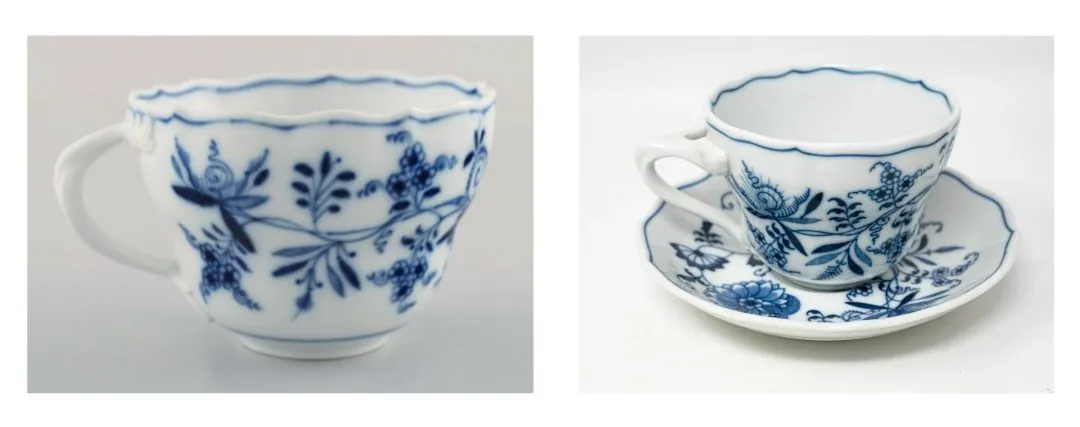
They did try to make it similar, of course, but the Japanese porcelain is a touch greyer and the handle is less elegant. Note the thickness of the walls and the scalloping: Meissen's walls are thinner and the scalloping more pronounced.
I found this Japanese set to order for a customer who needed two tea duos and a couple of small plates to replace pieces that had been broken. Because drinking tea out of Meissen porcelain of the imperial periods takes a person with steel nerves, steady hands and a thick wallet.
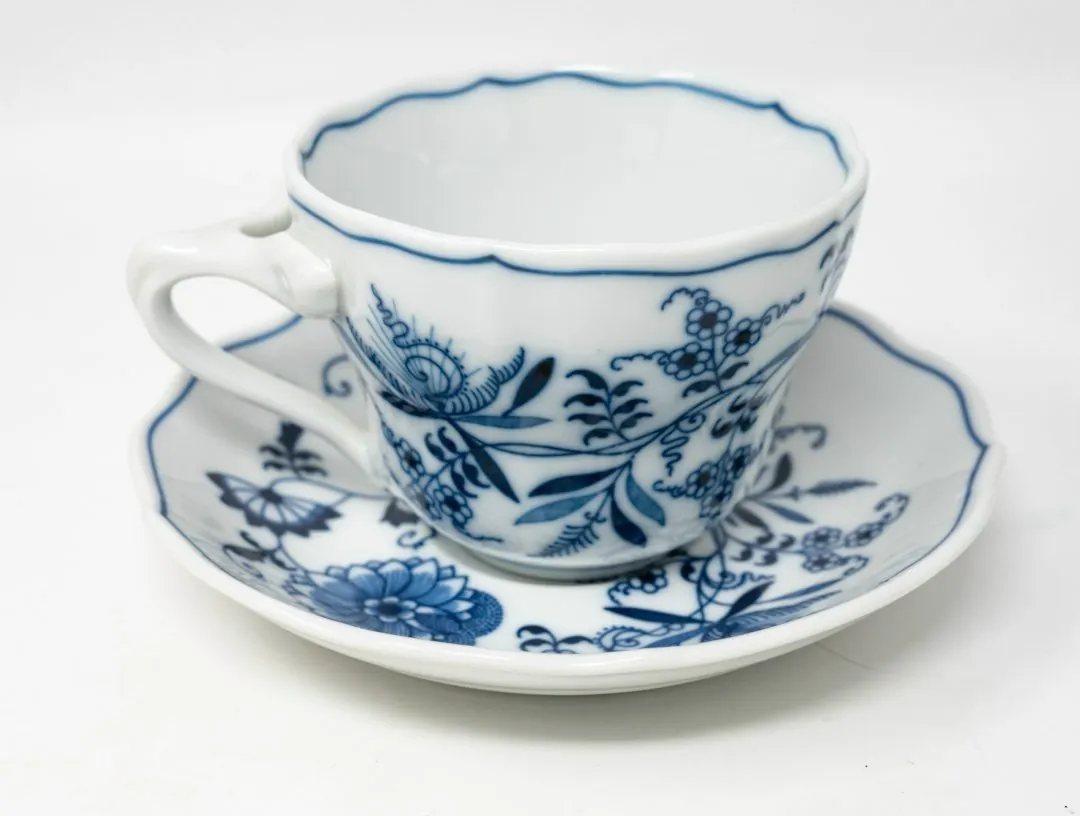
Sound porcelain at an affordable price, with the famous onion pattern.
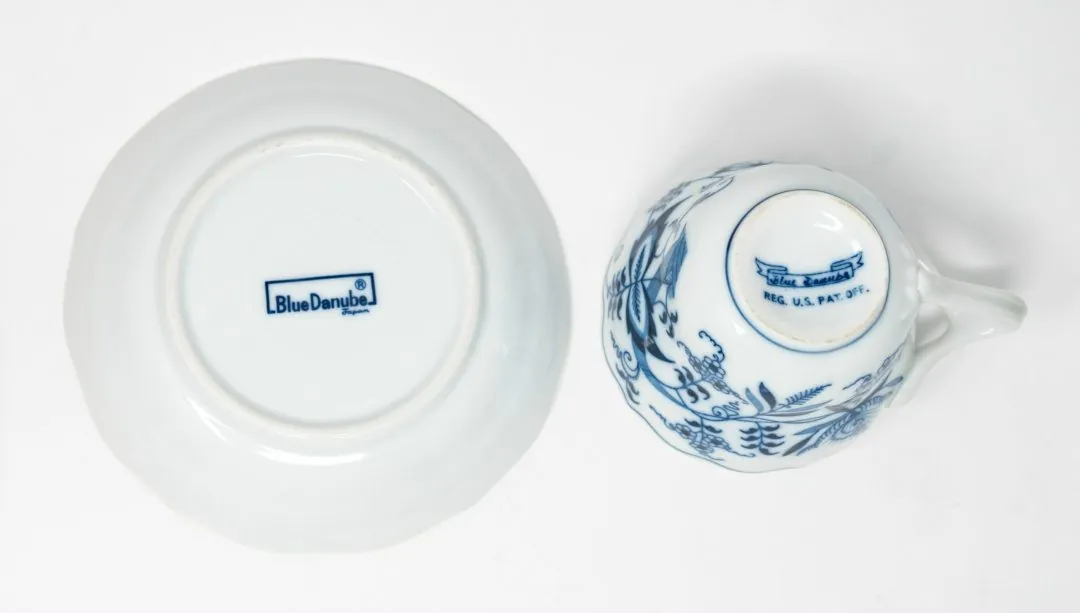
Easy to tell apart here. Not a whiff of Meissen about it. It says "Blue Danube".