A larger primer from Cupsicum: Shakespeare's wife, who bought what and for how much, and "you're no brother of mine, Josiah!"
Porcelain and faience have carried everything, from high art to the crudest vulgarity.
The English manufactory Enoch Wedgwood, for instance, put fragments of Shakespeare's sonnets on its wares.
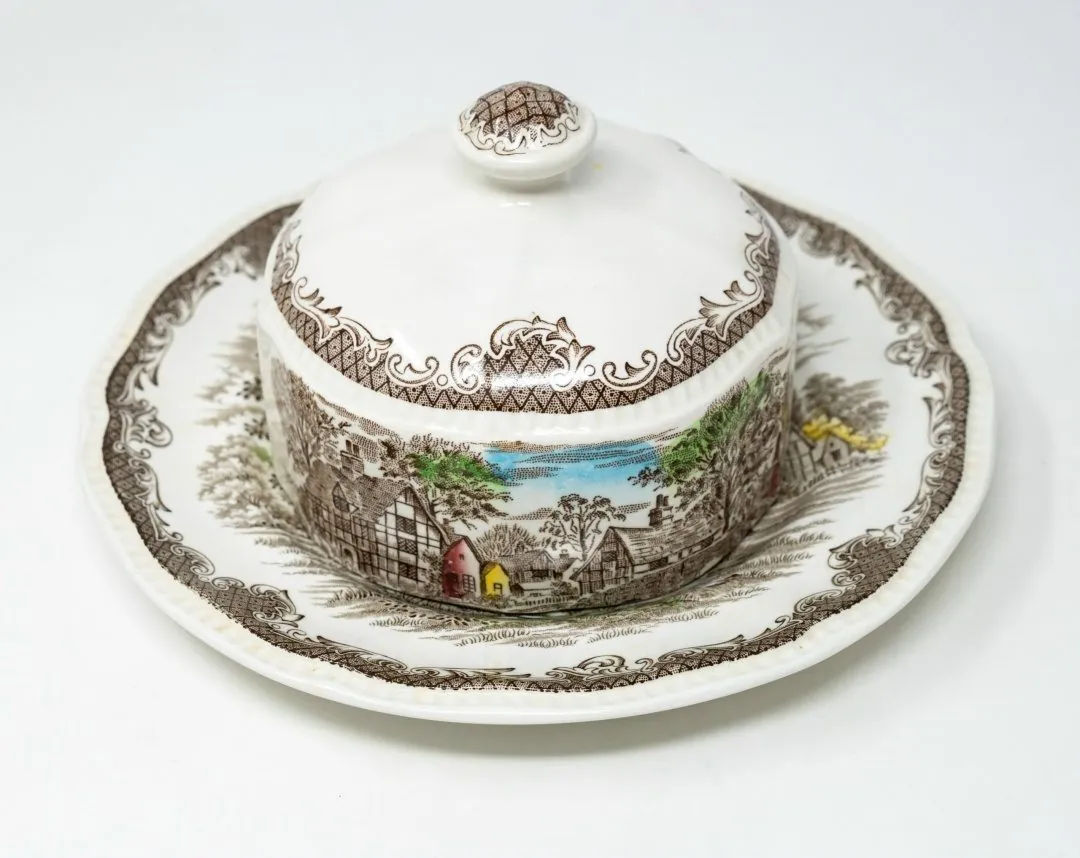
An Enoch Wedgwood butter dish.
How do you like these lines on a butter dish — the opening of Sonnet 18, comparing the beloved to a summer's day and finding them lovelier and more temperate?
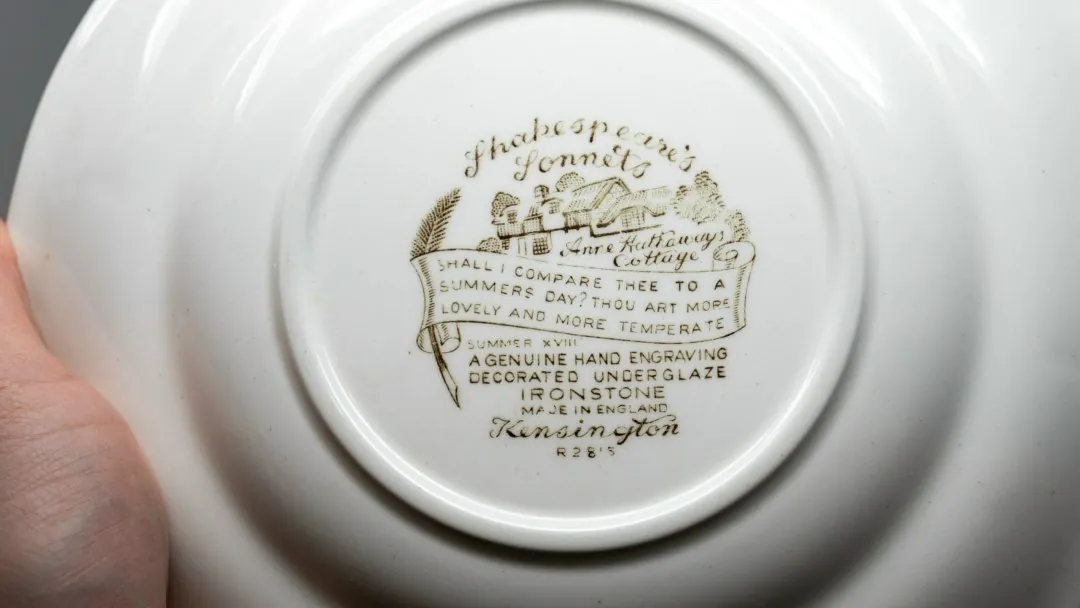
"Shall I compare thee to a summer's day? Thou art more lovely and more temperate."
Shakespeare's wife
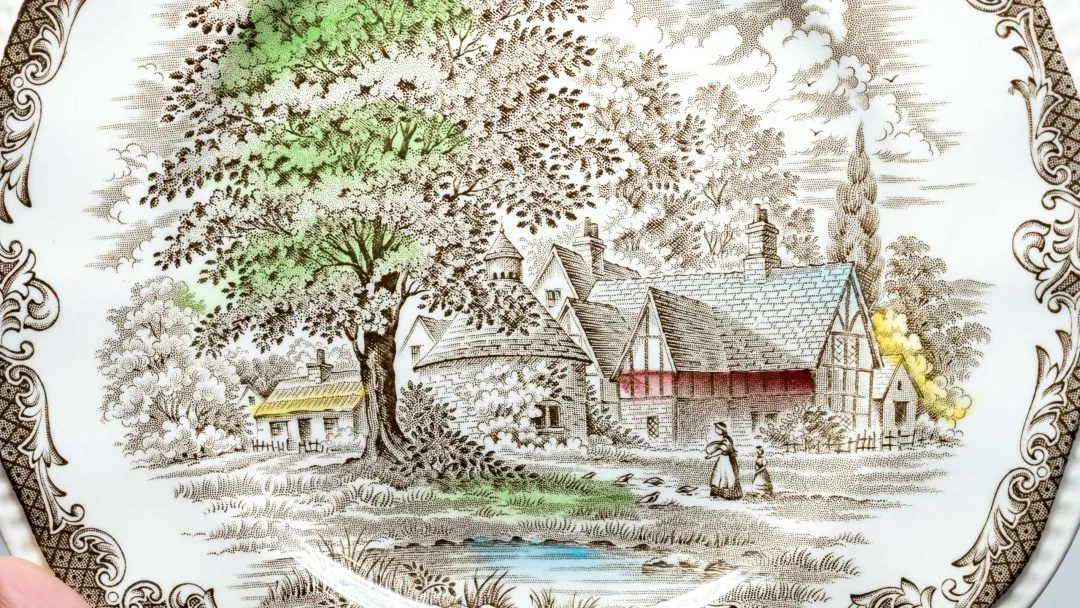
A transfer on a plate, with hand-decorated elements.
Look at the plate that goes under this butter dish: it carries a recognisable English transfer showing Shakespeare's wife, Anne Hathaway, out walking with a child beside the cottage where she was born and grew up. The sonnet above was dedicated to her.
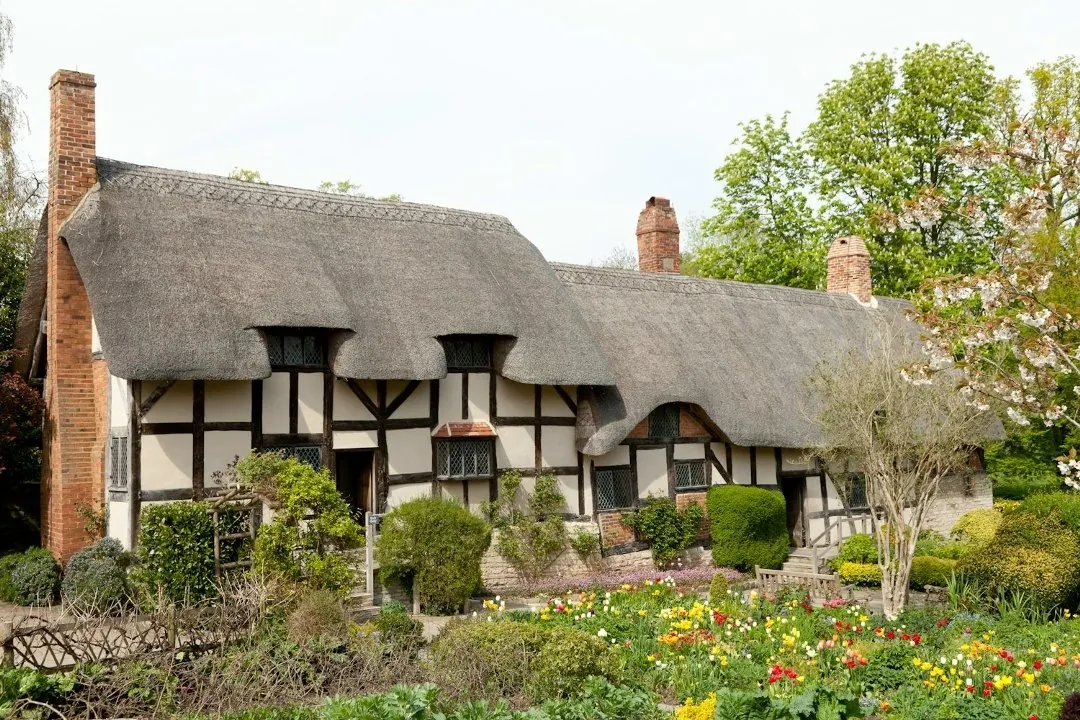
The Hathaway family cottage, birthplace of Shakespeare's wife.
The "Shakespeare's Sonnets" series covers a great many pieces, of which a butter dish and a gravy boat came my way recently.
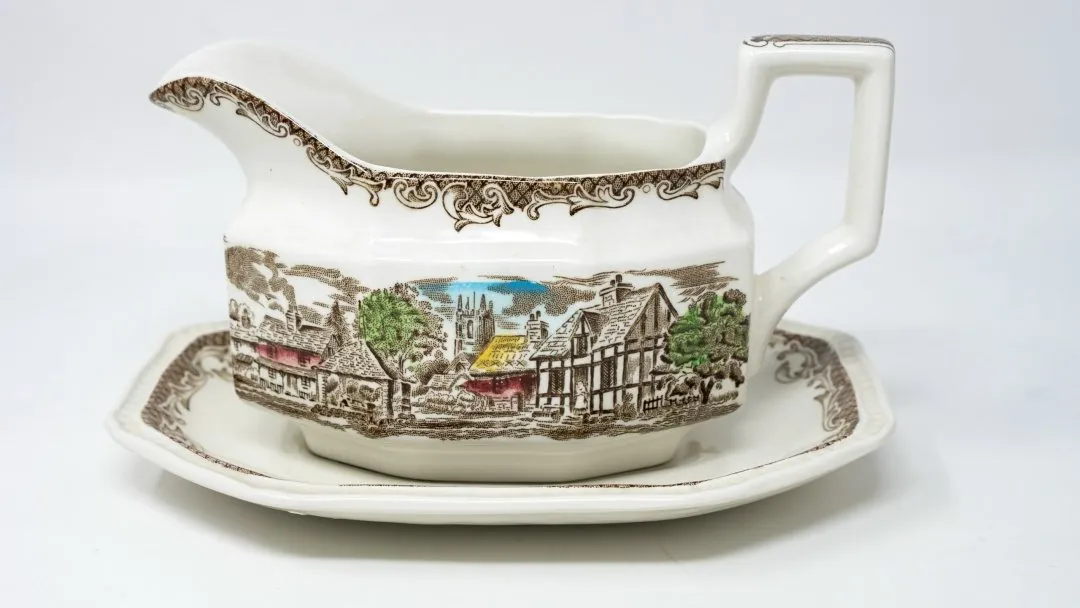
A gravy boat from the "Shakespeare's Sonnets" series.
The gravy boat carries a different verse — the opening of a poem set on a day in the merry month of May, its speaker sheltering beneath the myrtle trees.
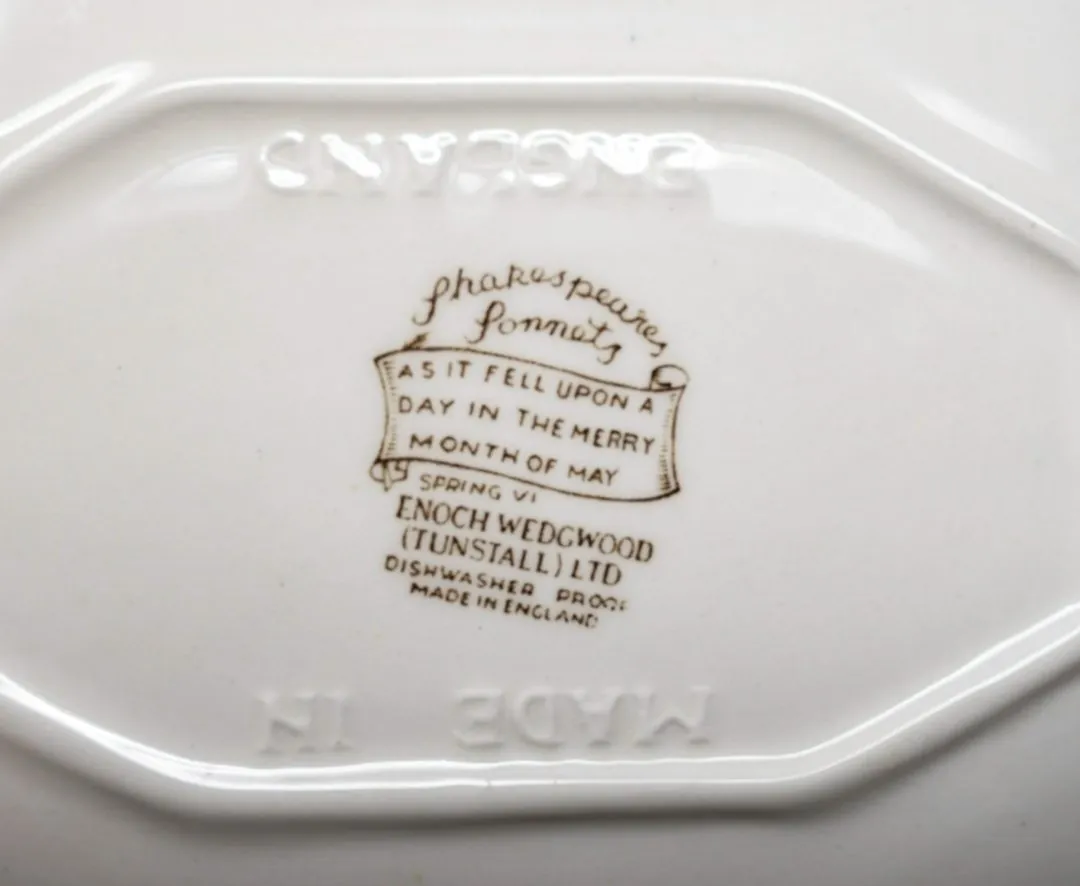
"As it fell upon a day / In the merry month of May."
According to researchers this one was not written by Shakespeare at all — but how could we turn away from something so lovely?
Receipts, boxes, delivery
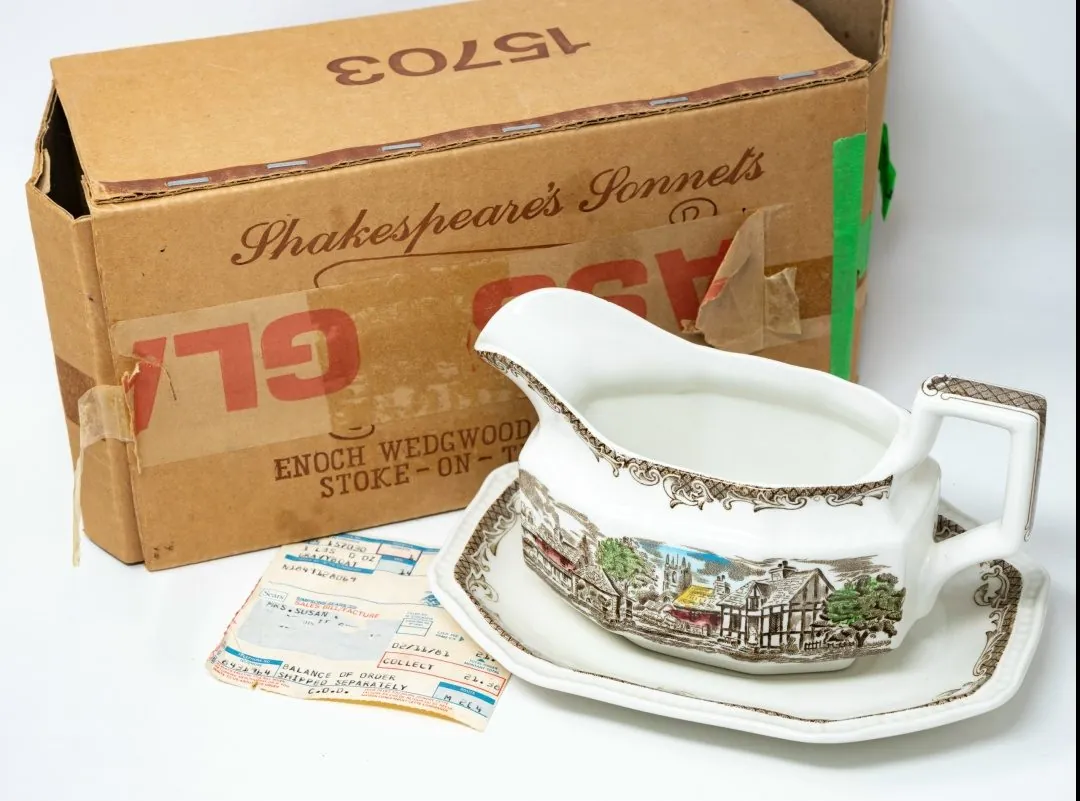
The delivery receipt. Sadly, the original receipt with the full balance has not survived.
What is interesting is that in this case the original receipts and boxes survived, in which these faience pieces travelled to their owner.
There is a great deal to learn from what the receipt says:
C.O.D. — cash on delivery — meant the recipient had to pay part of the order, possibly the delivery itself, on receiving it.
The date. It uses the North American format, so the piece was sent on 2 November 1981 — just in time for Christmas. It was a gift. Possibly even to herself.
There is the buyer's name and address. I have edited the receipt to conceal all the personal data and left only the name. So I know, for instance, that they were delivered to this house:

These pieces were bought by Susan, who lived in this house, in 1981.
You're no brother of mine, Josiah!
There were several Wedgwoods. Wedgwood is a surname. Most makers of porcelain and faience bearing the name Wedgwood are distant relatives. One was a supplier to the royal court, known for his jasperware; the other was plainer, and is almost unknown in Russia.
There exists a printed insert in which Enoch Wedgwood asks not to be confused with his brother, and insists that his wares are very easy to tell apart: on mine, he says, the place of manufacture is always given — namely Tunstall, near Stoke-on-Trent.
Josiah and Enoch are two biblical names, and the bitterness of Josiah having "taken" the surname from Enoch always shows through.
Even professional dealers in porcelain and faience confused the Wedgwood manufactories.
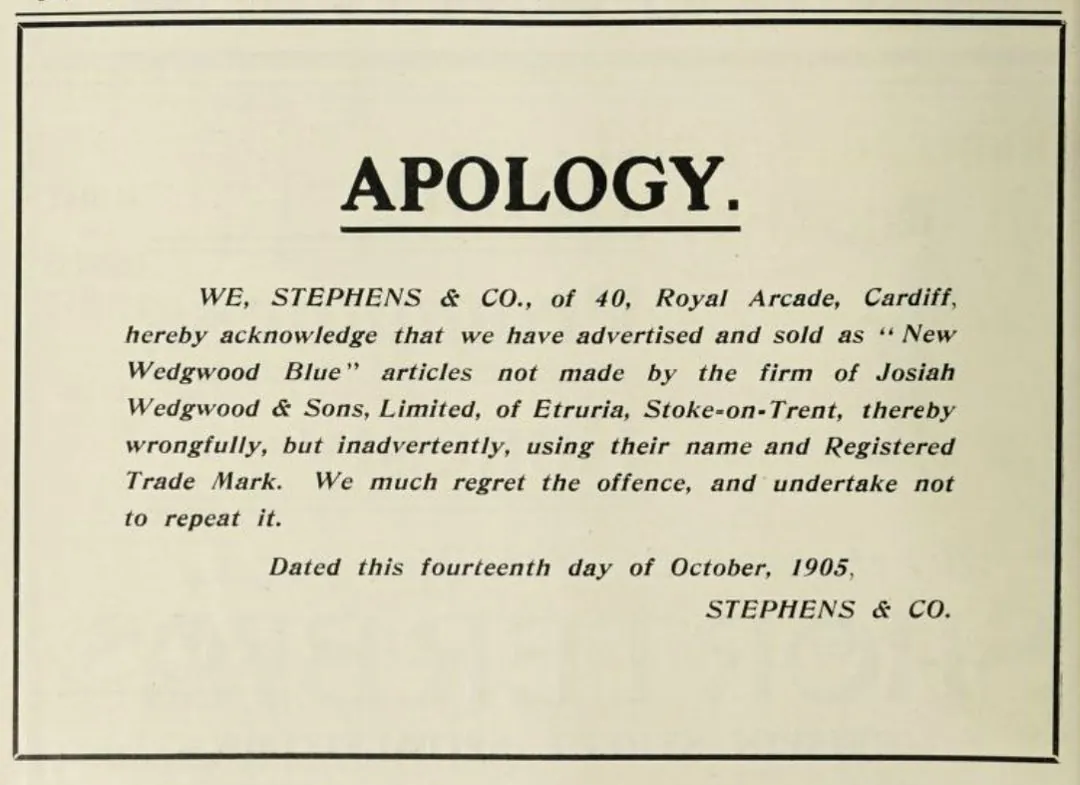
On 14 October 1905 Stephens and Co. formally apologised for advertising Enoch's goods as Josiah's, thereby breaching the rules on trademarks. I took the notices from a bound volume of the Pottery Gazette, 1906.
And there was Ralph, and other Wedgwoods besides! But that is for another time.