A lady who respected herself never went out without a hat.
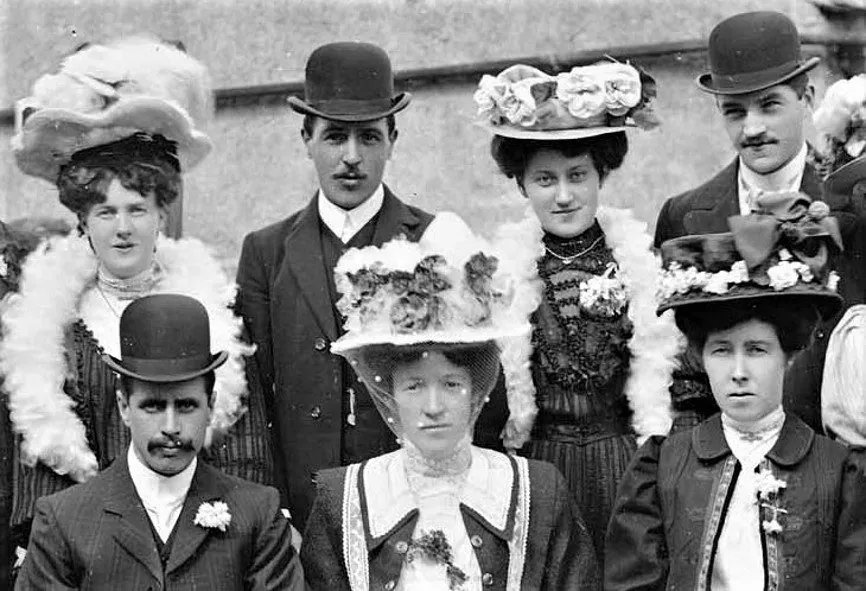
The 1890s, a wedding in the Shetland Isles, Scotland.
Loose hair was a mark of vulgarity, of infidelity, of carelessness.
And a hat was forever trying to slip, fly off or sit askew. What was to be done? Use a hat pin, of course.
A whole layer of culture is bound up with that pin — and in a sense it was a symbol of emancipation, of women's freedom.
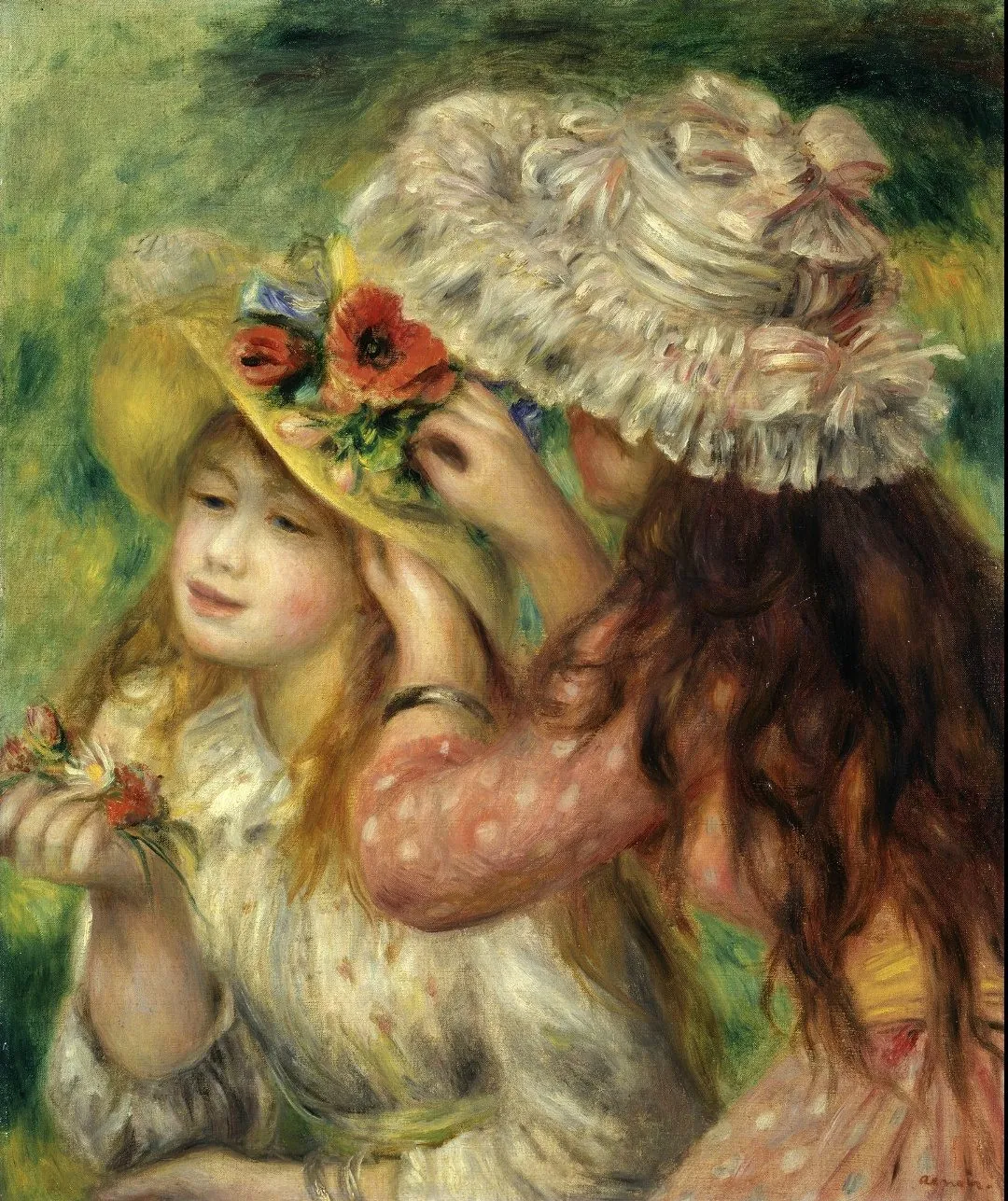
Renoir, "The Hat Pin", 1983.
Judge for yourself: relatively long at around 15 cm, easily held in the hand, the pin became a formidable weapon — and frequently the only one, other than cunning, that a woman could bring to bear in an emergency. What is more, the weapon was always to hand, on her head, and could be readied with two light movements.
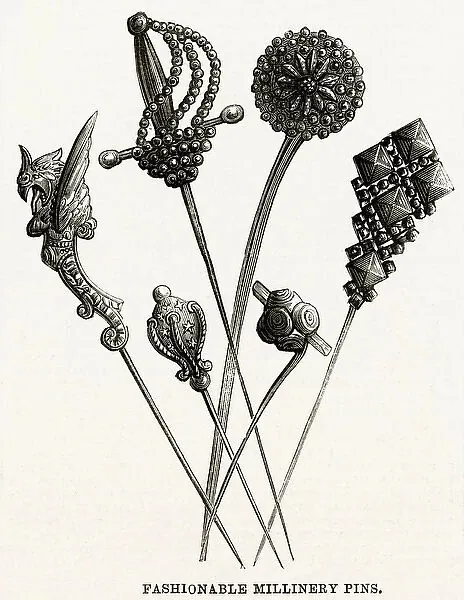
A real piece of women's cold steel.
Naturally, women did not care for a dull pin sticking out of their hair, and so the nineteenth century offered so many different designs that genuine pins of the period are now a great rarity and a serious collecting field.
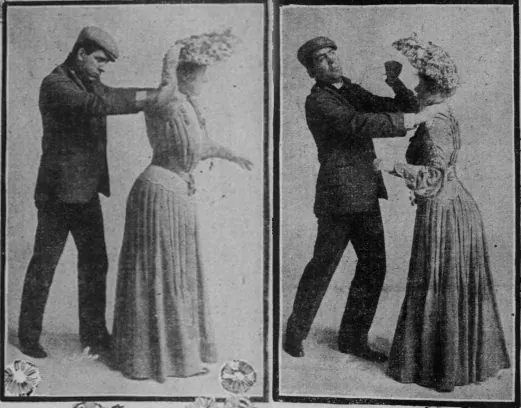
A photographic guide to self-defence with a pin drawn easily from the hat.
And no self-respecting woman would ever permit disorder in her boudoir, so every pin was kept either in a cushion or in a special hat-pin holder.
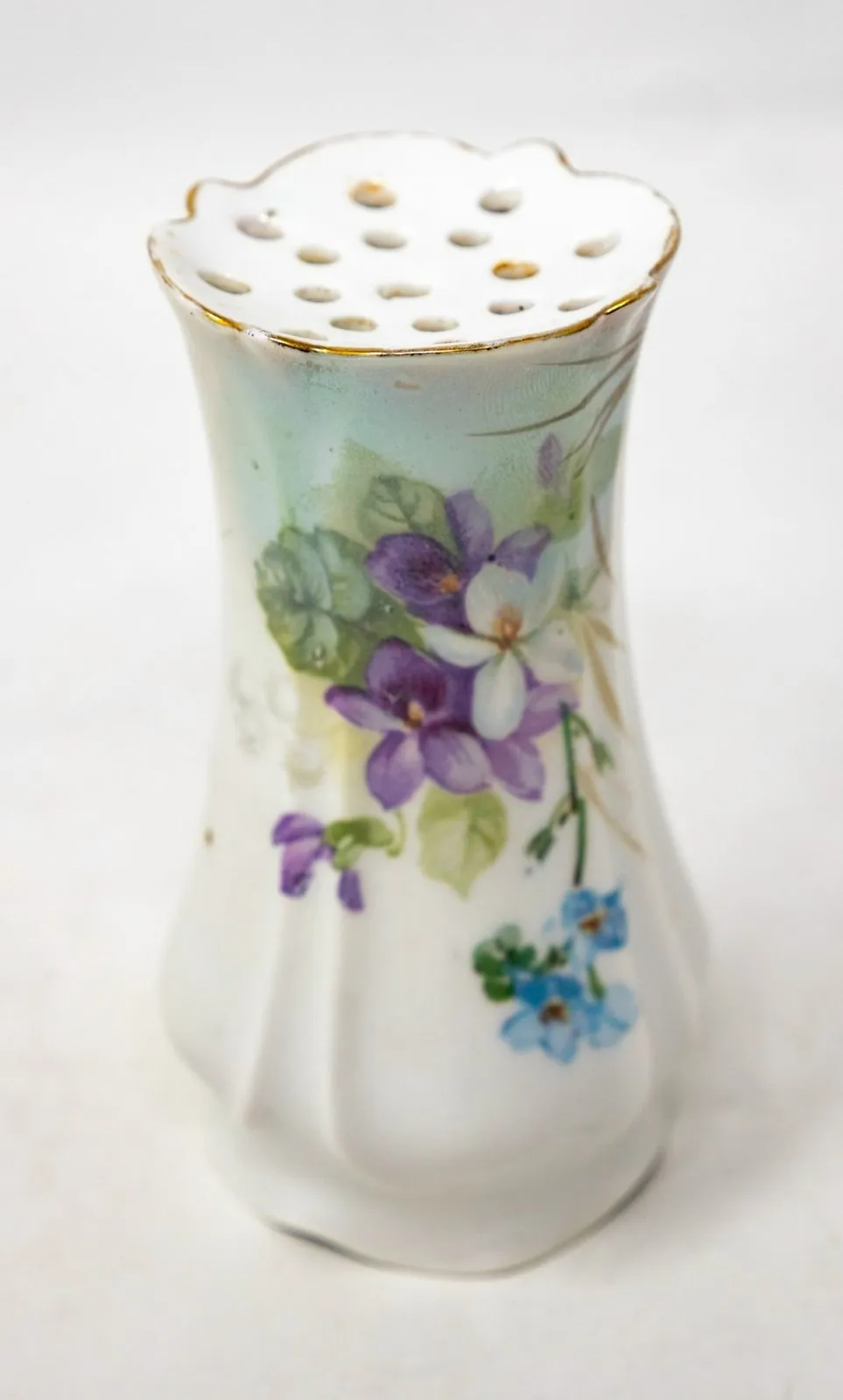
A hat-pin holder, from the Cupsicum collection.
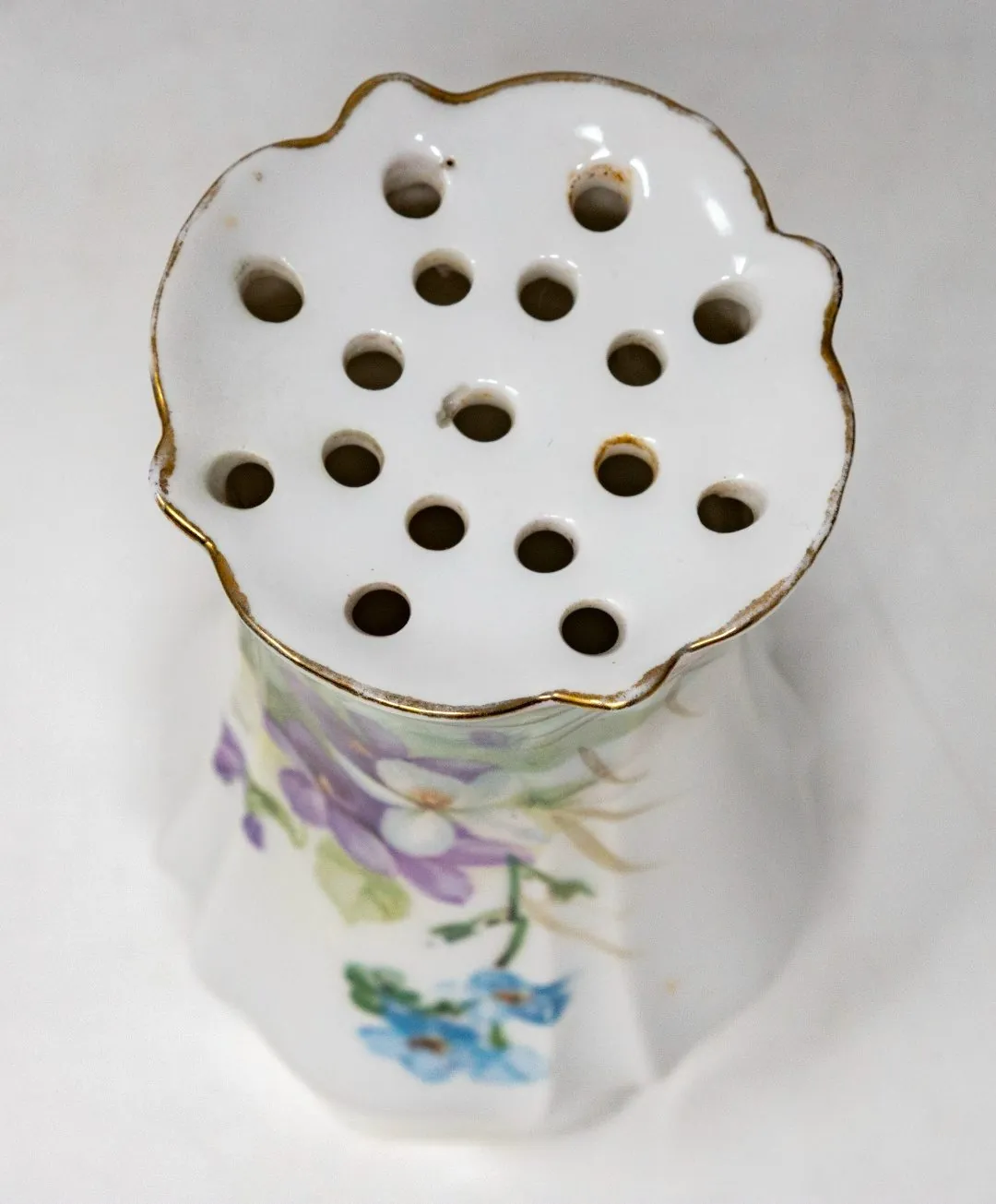
Sometimes a holder like this resembles a salt or pepper pot. The main differences are the number of holes and the size.
Hat pins became so popular that there was a serious shortage of them. Only once the USA learned to make them by machine did cheap examples flood the market. And even those now have collectors' value.
Against that background of cheap examples, the largest makers offered "elite" models for women of means.
Judge for yourself — here are hat pins by Fabergé.
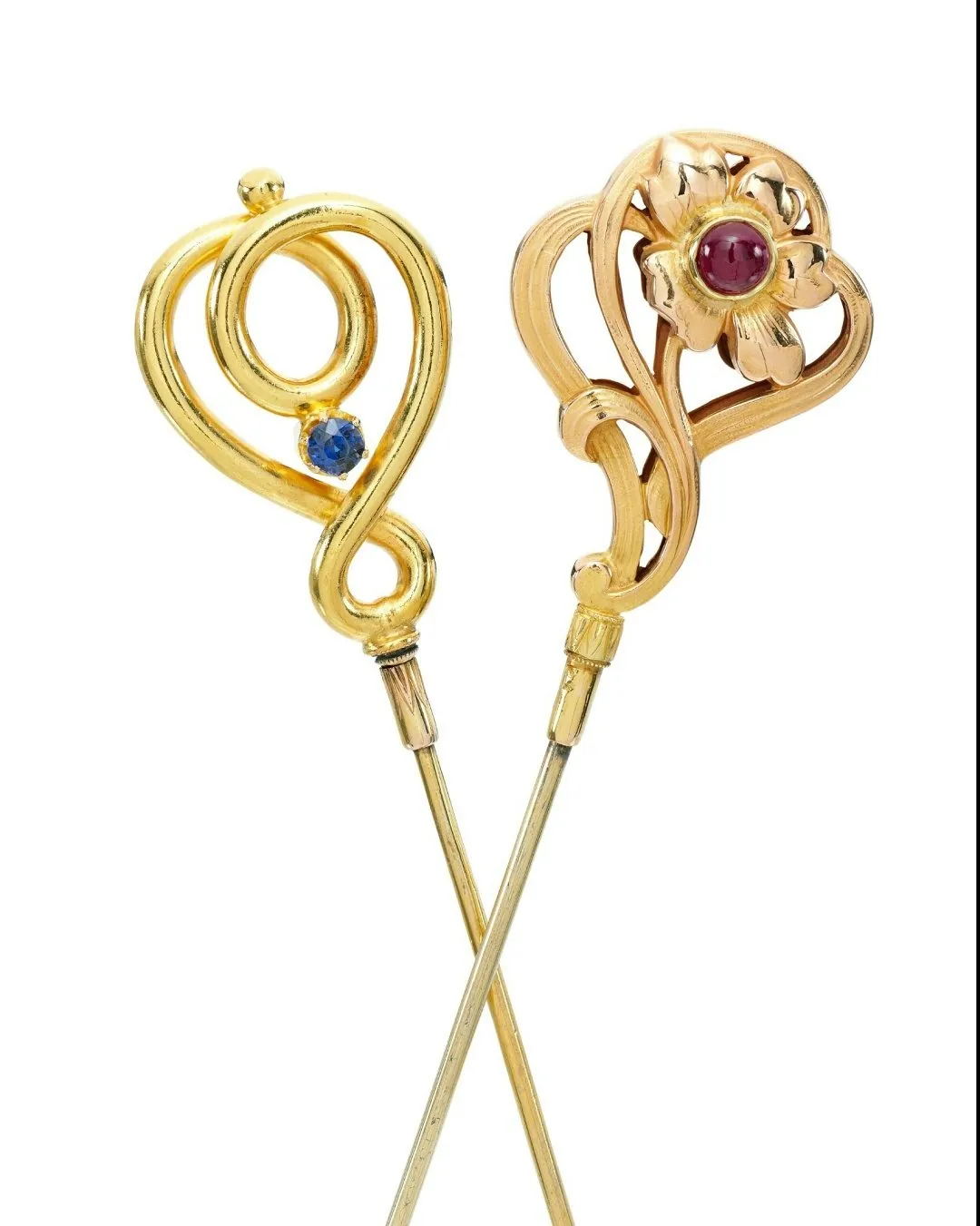
Fabergé hat pins. Photograph from Sotheby's.
Note the case. This is the export version, supplied to London.
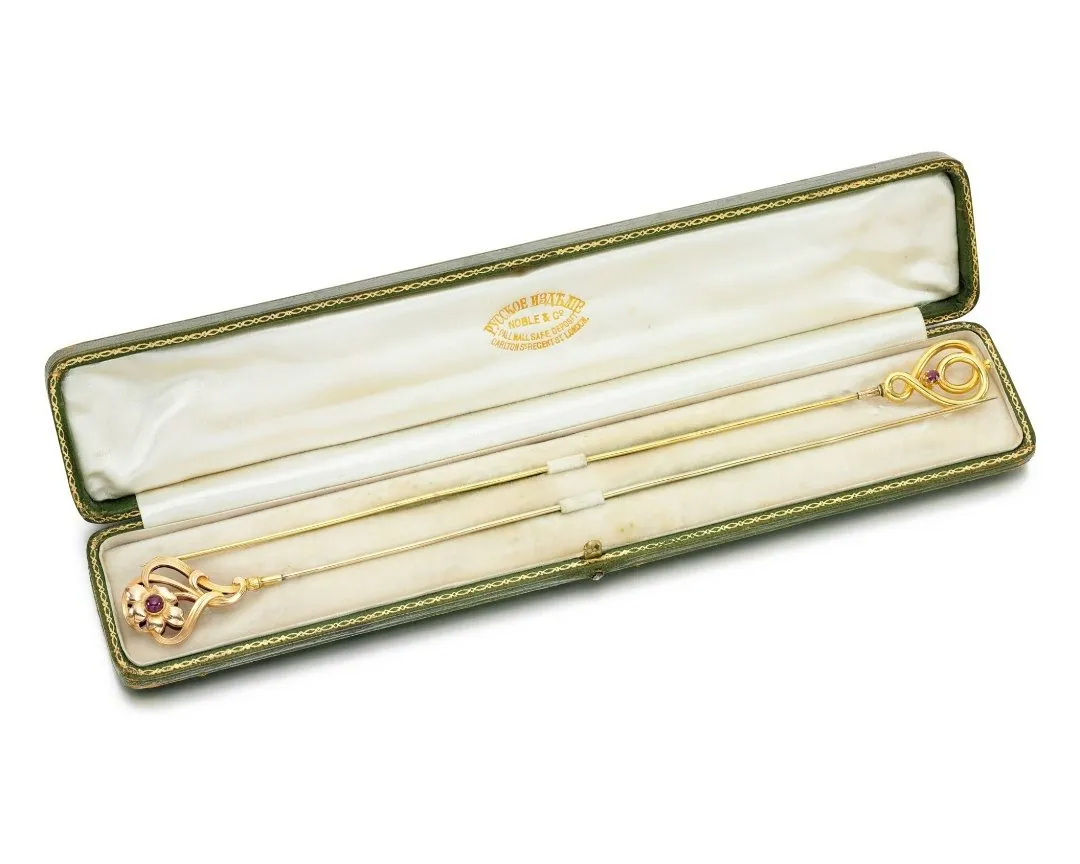
"Russian made" was a mark of quality. Photograph from Sotheby's.
An amusing fact, which says something about the fearsomeness of the weapon and the resolve of women. In 1916 the "Battle of the Hat Pins" took place in Ottawa, when 70 women armed with the fashionable accessory held off 30 Canadian policemen and saved two schoolteachers. The police had come to the school to arrest the teachers for teaching in French.
Some of the heroines of that stand-off appear in this photograph. Without their hats, unfortunately.
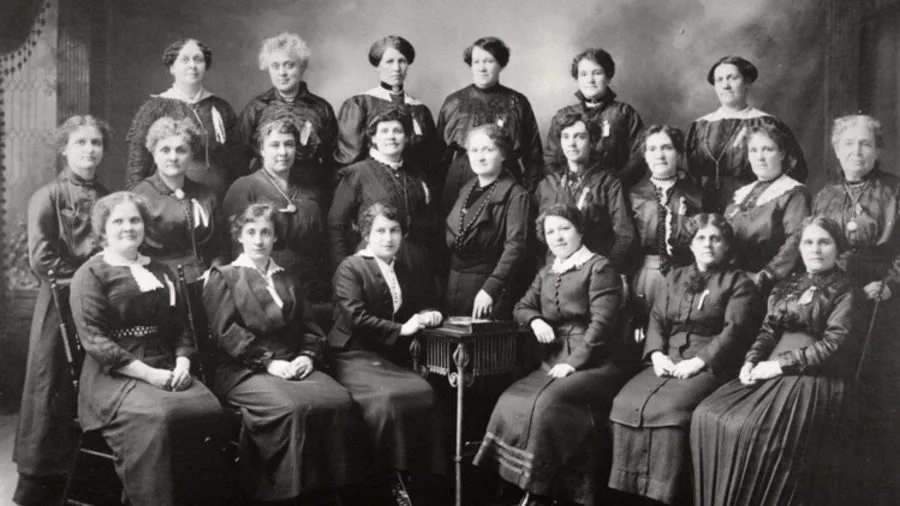
The defenders of the teachers who taught in French.
The women, however, won not only the skirmish but the longer battle: eleven years later, teaching in French was officially permitted in Ontario.
This piece will be added to…