Please note: 18+ material. Any use of tobacco harms your health.
A snuff box is a small container meant for holding tobacco in powdered form. Snuff boxes were used as elegant accessories, and were often made of precious metals, wood, bone, glass, papier-mâché and the like.
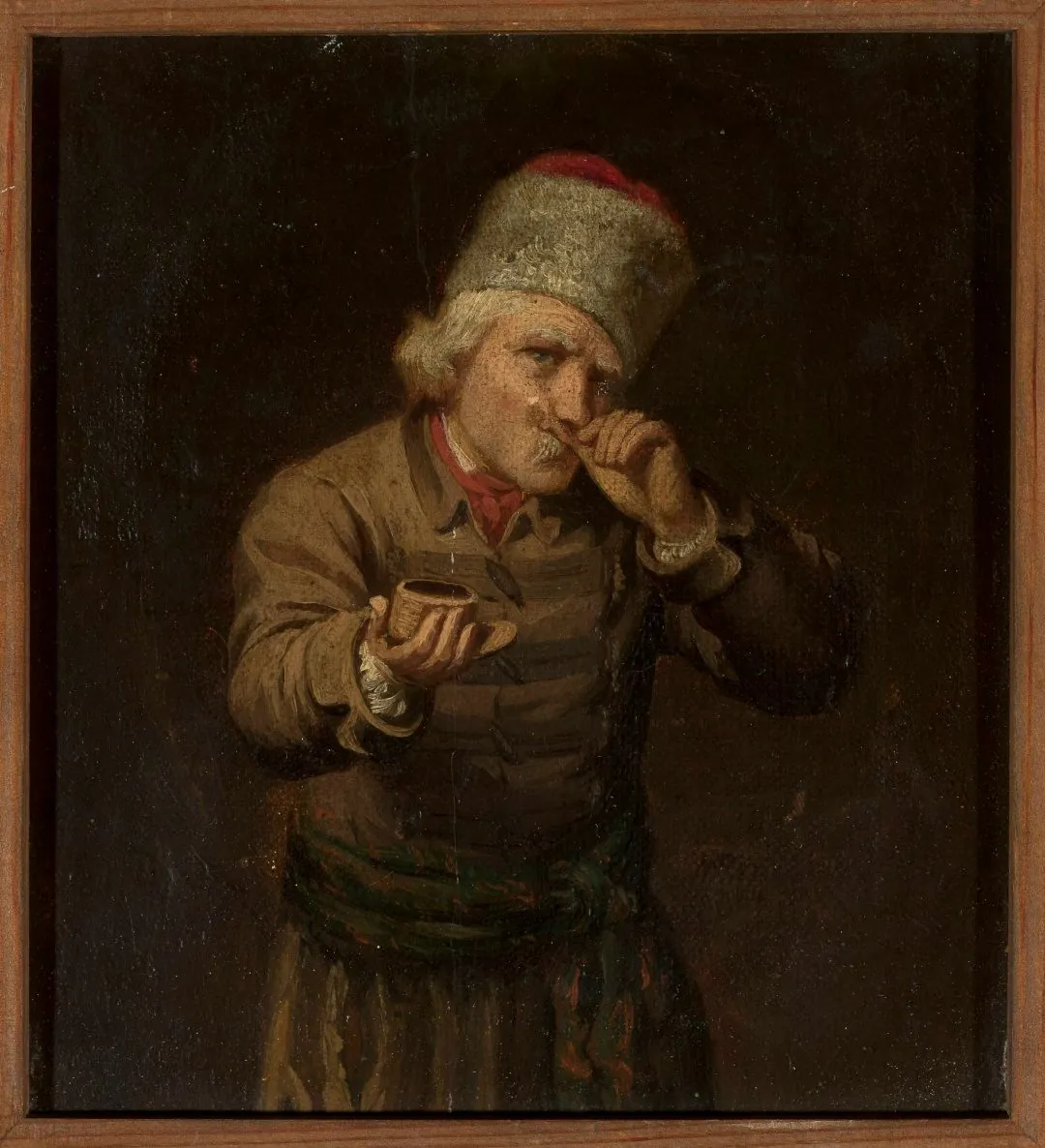
Antoni Piotrowski, "A Peasant Taking a Pinch of Snuff".
Today, when people meet, they may show off their phones, their handbags and other possessions; a few hundred years ago the status object of that kind was the snuff box.
Look at the peasant — what he holds is the cheapest sort of snuff box. It is carved from wood, quite possibly by his own hand.
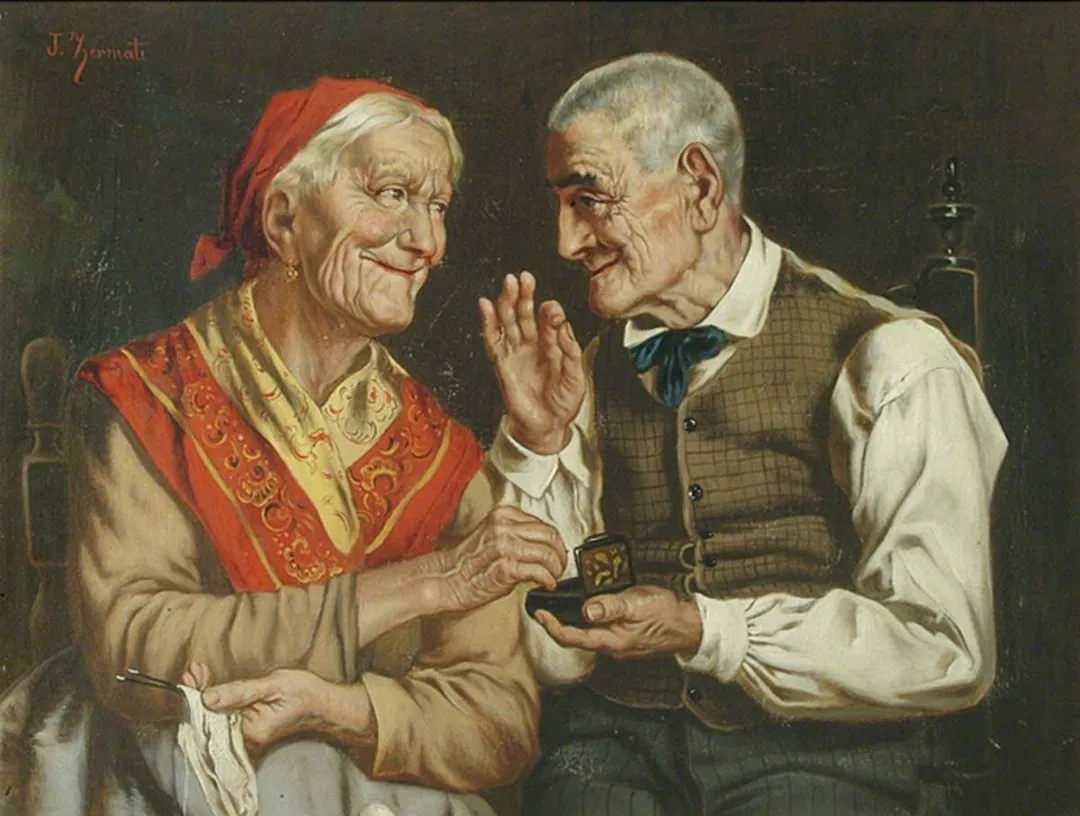
Jules Zernatti, "A Pinch of Snuff".
Here the box is richer, decorated and possibly lacquered.
But look closely at the two paintings above. Poor people used their fingers to take a pinch. Wealthier people used little spoons, which was more refined.
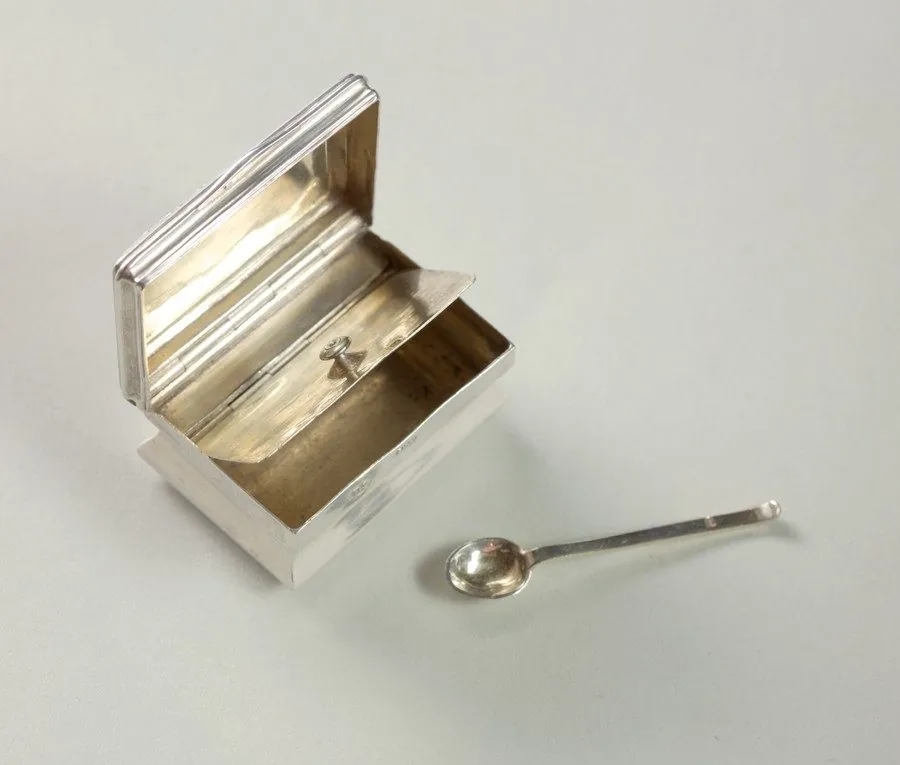
A silver snuff box with its spoon.
Using a spoon meant you could reach into narrower openings, and so snuff boxes turned into works of art without losing their utility.
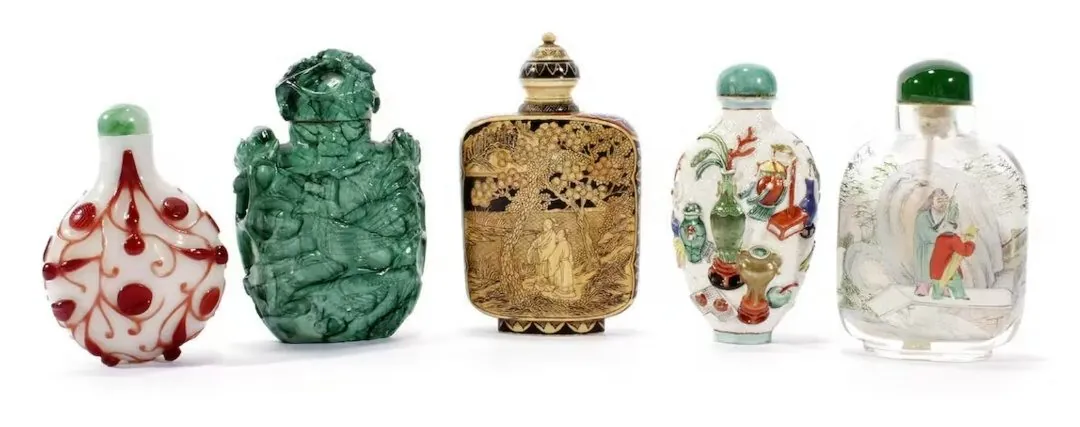
The so-called "Chinese snuff boxes" — bottles for keeping snuff in.
Many snuff boxes were decorated with patterns of all kinds, with engraving, with enamel inlays or with miniatures. The design and the ornament depended on the period, the style and the tastes of the culture.
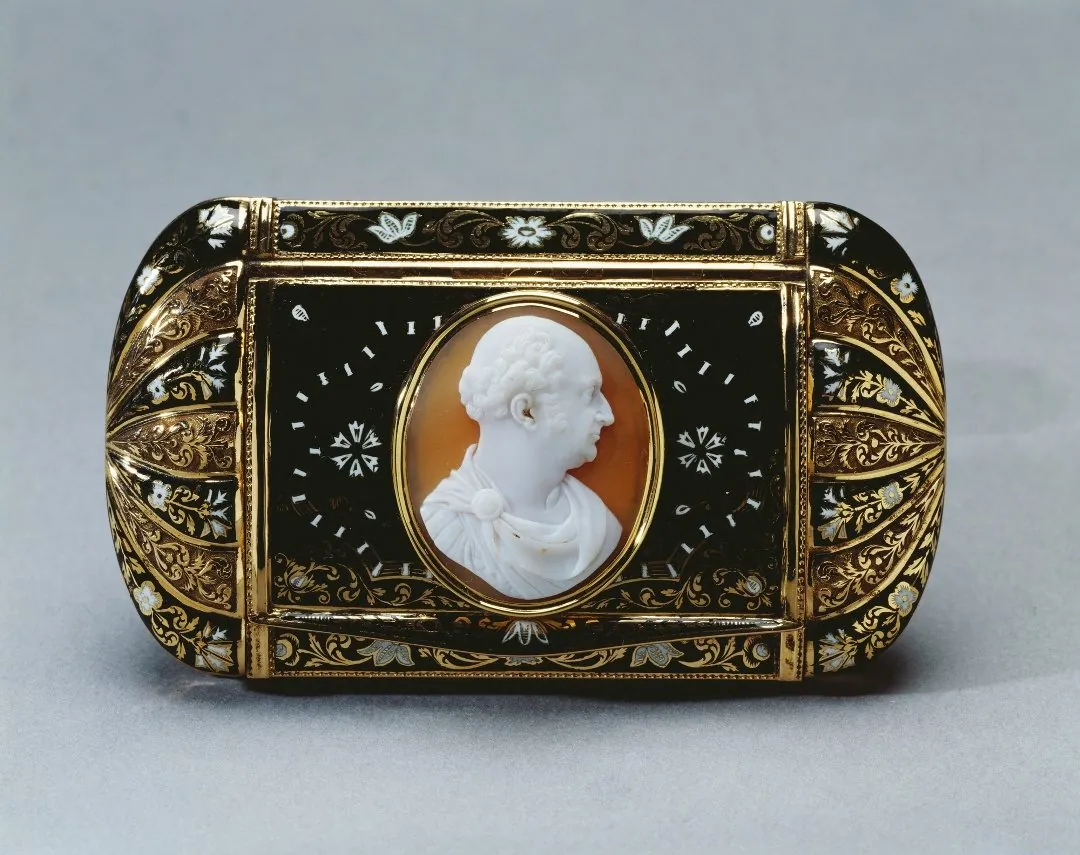
A snuff box with a cameo by Tommaso Saulini; a portrait of Frederick, Duke of York.
In the eighteenth and nineteenth centuries snuff boxes became a symbol of status and elegance in their own right. They were used in the highest circles of society, and were often made of precious metals such as silver or gold, and inlaid with precious stones.
Most snuff boxes were compact and easy to carry in a pocket, which made them convenient for everyday use.
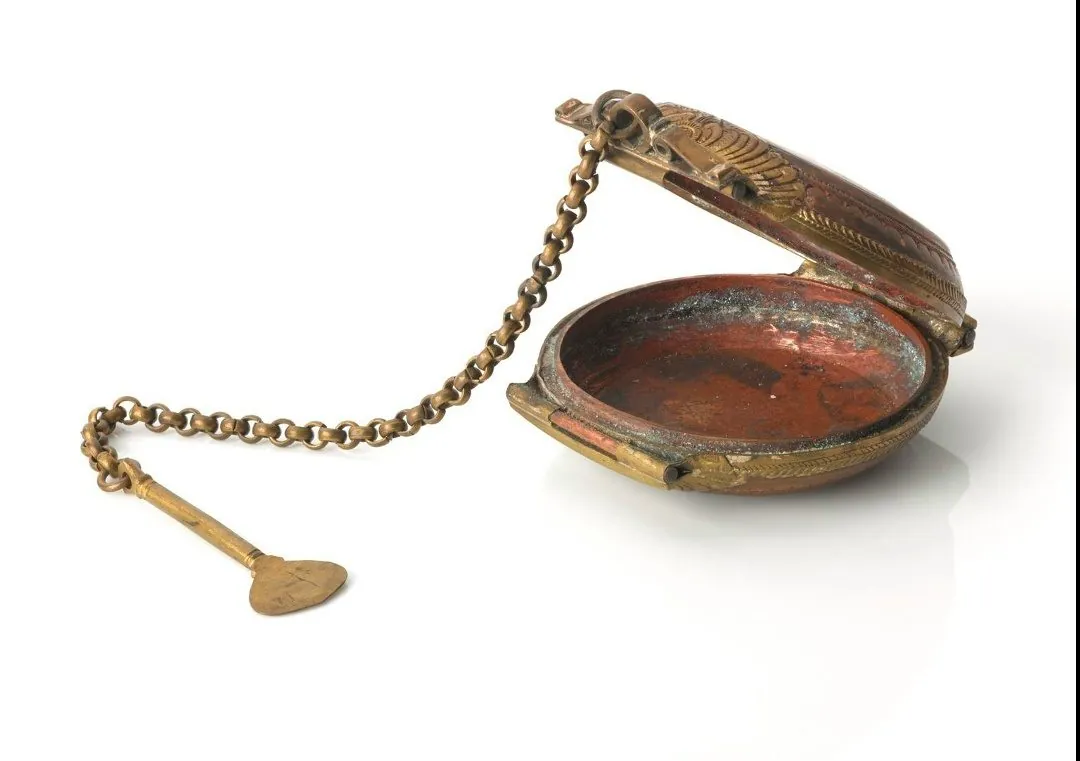
A copper pocket snuff box with a shovel-shaped spoon on a chain.
Some snuff boxes were flat, like cases, while others took more elaborate forms, bottles among them.
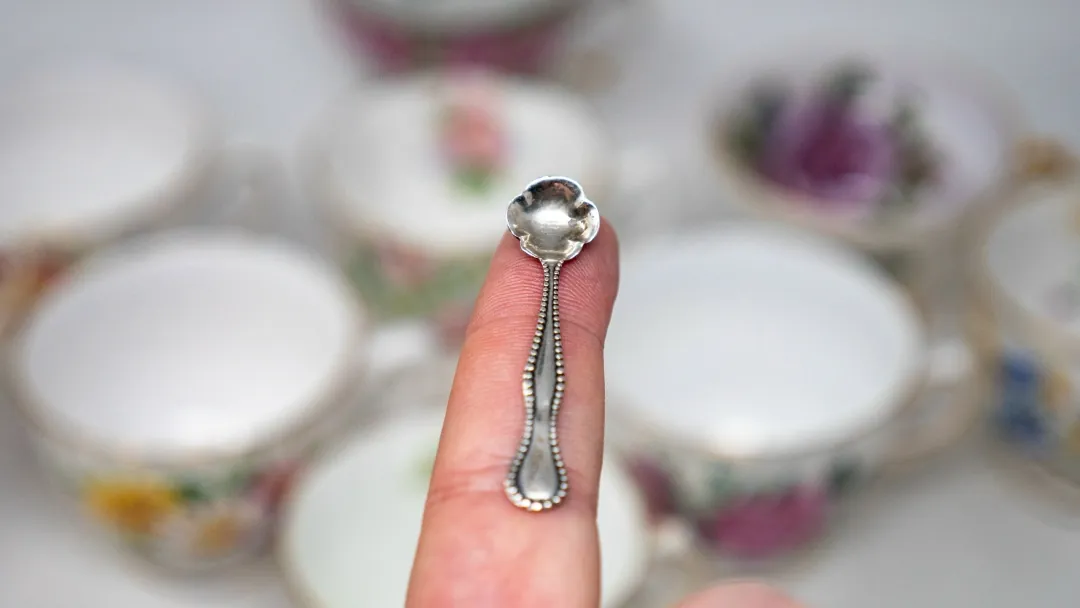
A silver spoon from a snuff box.
Some had spoons built into them, meant for lifting out the snuff to be inhaled. Sometimes these were combined with the lid.
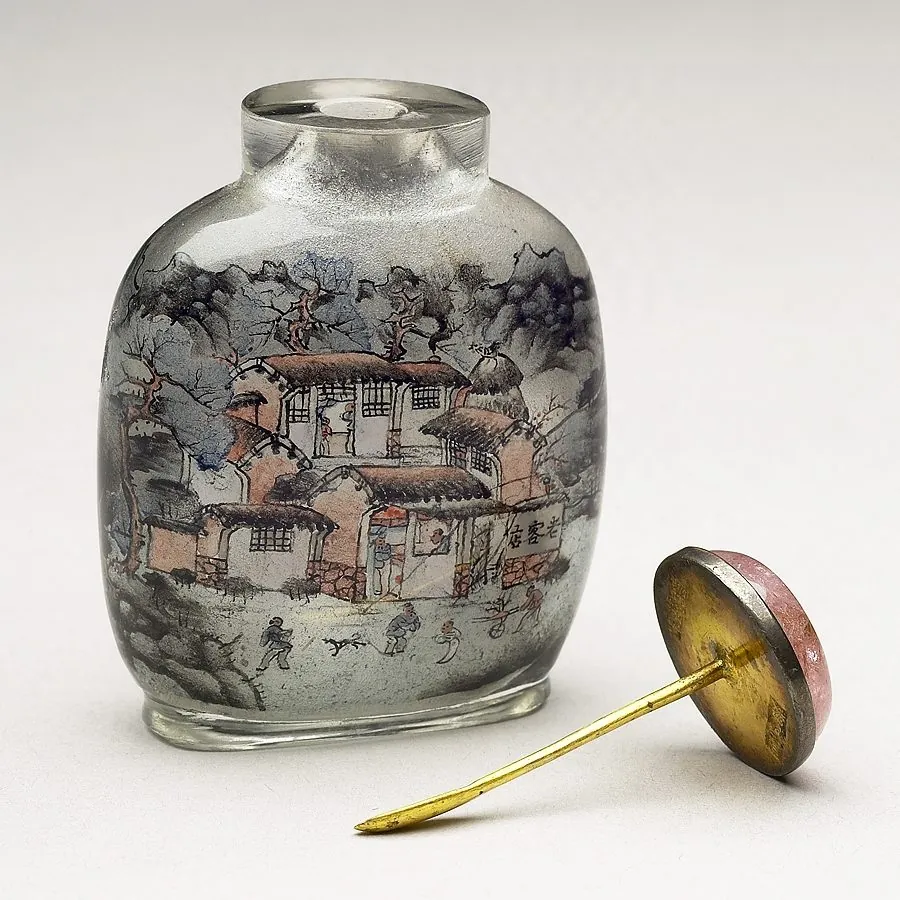
A snuff box with the spoon built into the lid.
Note that the spoons came in three types: the ladle, the shovel and the boat. The last followed the anatomical shape of the nostril.
The spoons were very small; they had to fit inside the box.
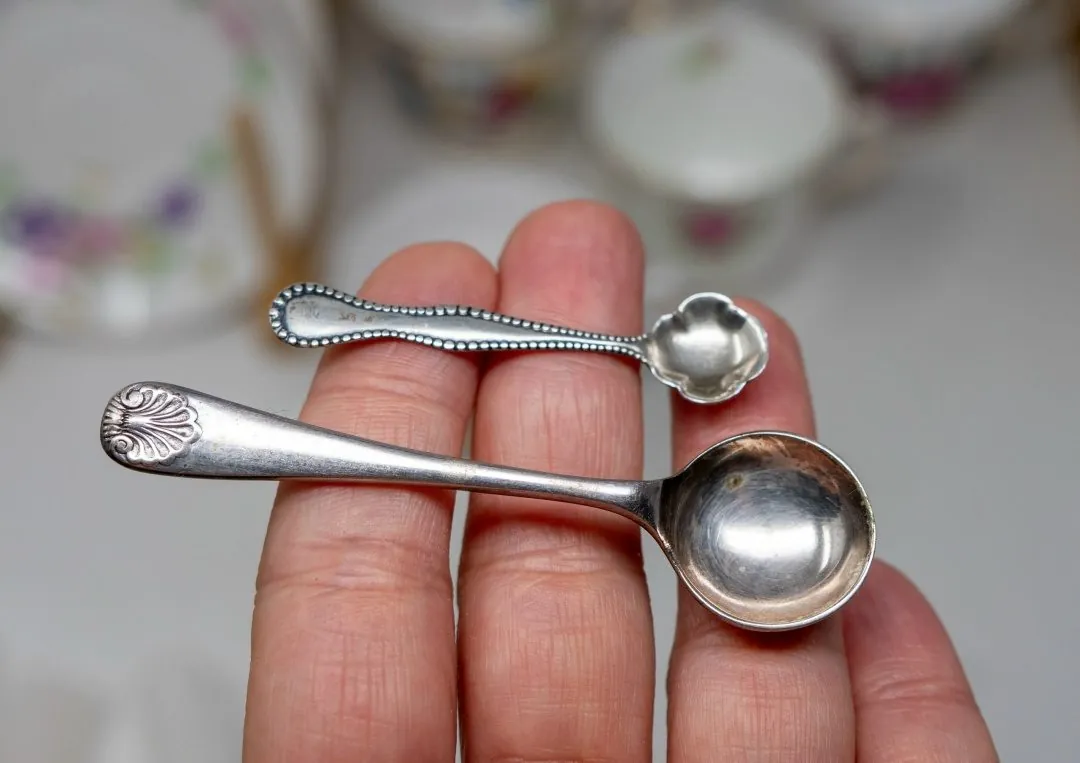
Silver spoons — for snuff, above, and for salt.
Using a snuff box was often accompanied by a particular etiquette: it was customary to exchange a pinch, to offer someone a taste of your own. Exchanging snuff became part of social custom, and the gift of a snuff box could be a mark of esteem or of friendship.
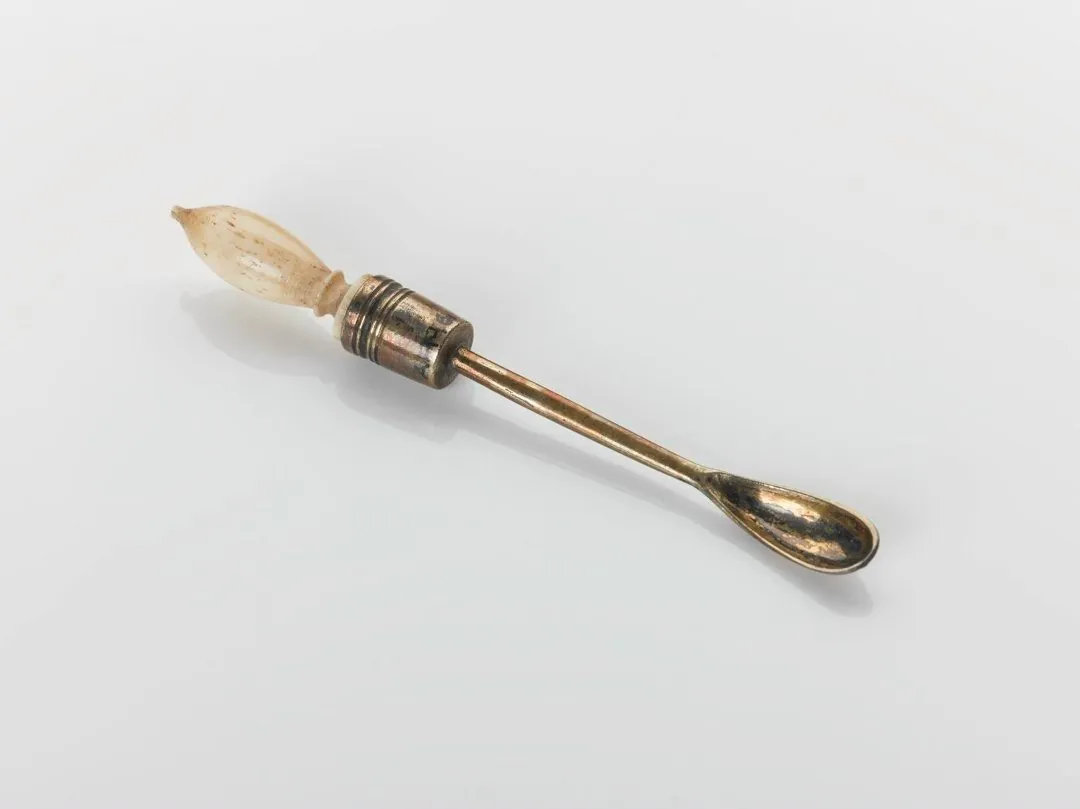
A snuff spoon with ivory.
At the end of the nineteenth century the taking of snuff, and with it the carrying of snuff boxes, began to lose its popularity, and these accessories became less common. But the snuff box remains a fascinating artefact of history and culture. There was a small surge of unhealthy interest in them in the twentieth century, from people taking powdered drugs, but that demand was quickly met by the modern Chinese market.
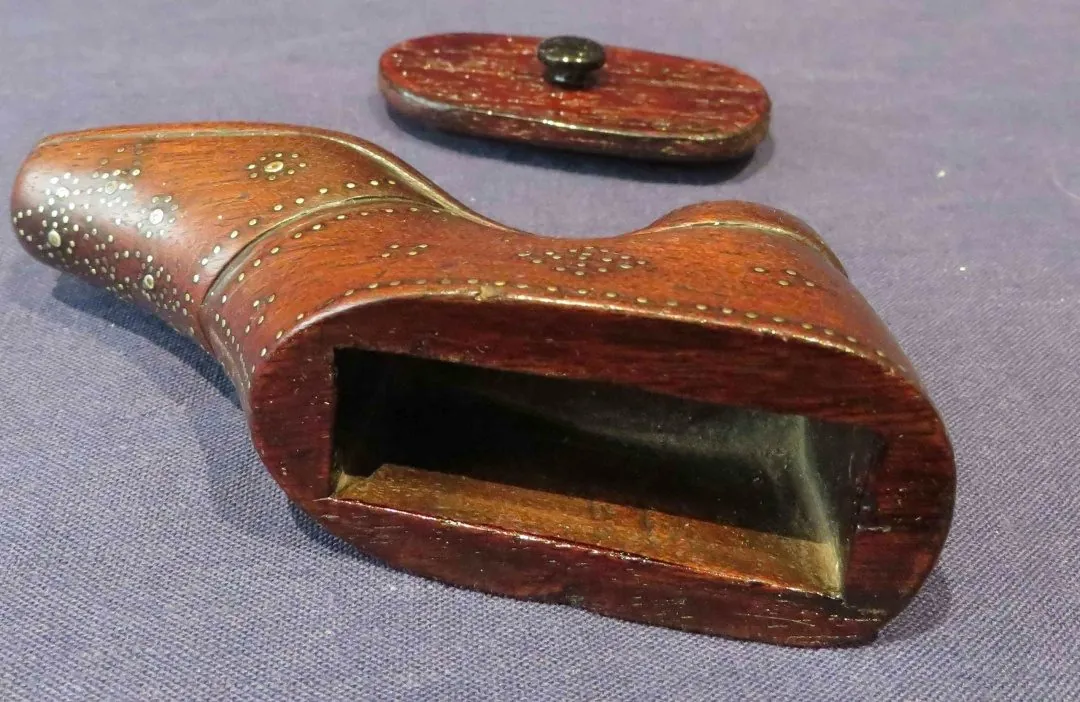
A snuff box in the shape of a shoe, for use in one place rather than carried.
The story of the snuff box does not end here. A remarkable future still awaits them, since a great many are lying about in attics somewhere, waiting to be born a second time and to find their fame.
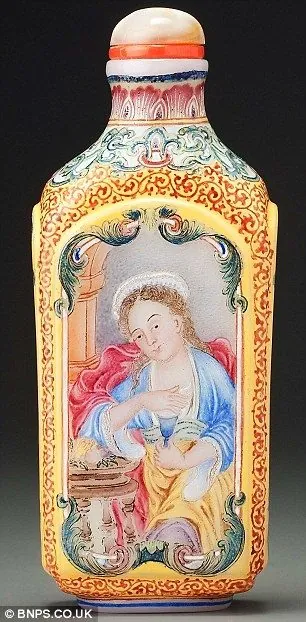
This snuff bottle sold at auction for two million pounds sterling.