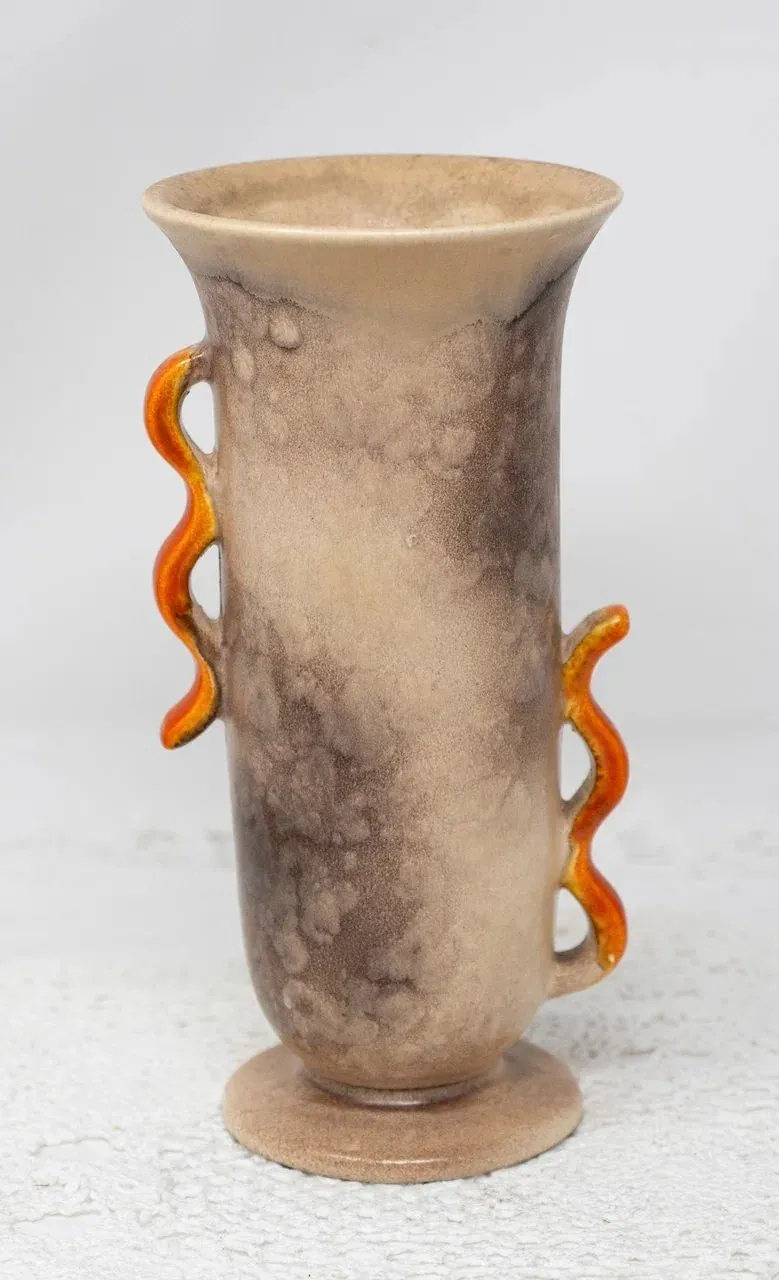
A Ruwaha vase, Germany.
On dating one small faience vase — and chasing down the loose ends.
The vase is cylindrical, widening slightly towards the top, with a soft transition of colour: pale beige above, giving way to a marbled brownish grey below.
Its distinguishing feature is the decorative side handles, formed as wavy lines and painted bright orange and yellow. They give the vase an extravagant, faintly surreal look. And those wavy lines are extraordinarily comfortable to carry it by, because the fingers settle neatly into the hollows.
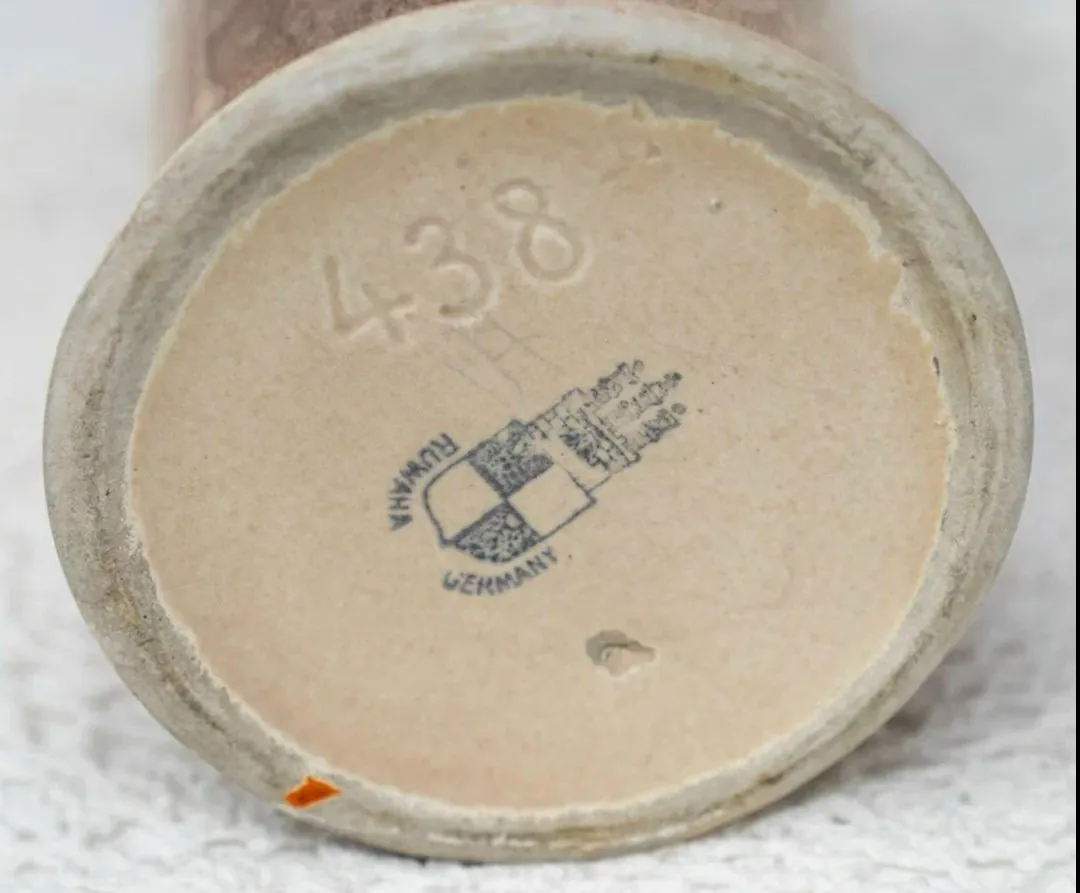
The mark: Ruwaha Germany.
Rare in design, and — at the time of writing — apparently the only one in the world in this form and with this pattern.
But that is not really the point here. The vase carries a mark, and yet nothing is known about the maker: we have a handsome "Ruwaha Germany" mark, and there it ends. A number of vintage dealers say it is one Rudolf Ruwaha, but the reference books know nothing of any Ruwaha, or of any Rudolf. Somebody writes that it was Adolf Ruwaha — a suggestion equally unsupported by anything.
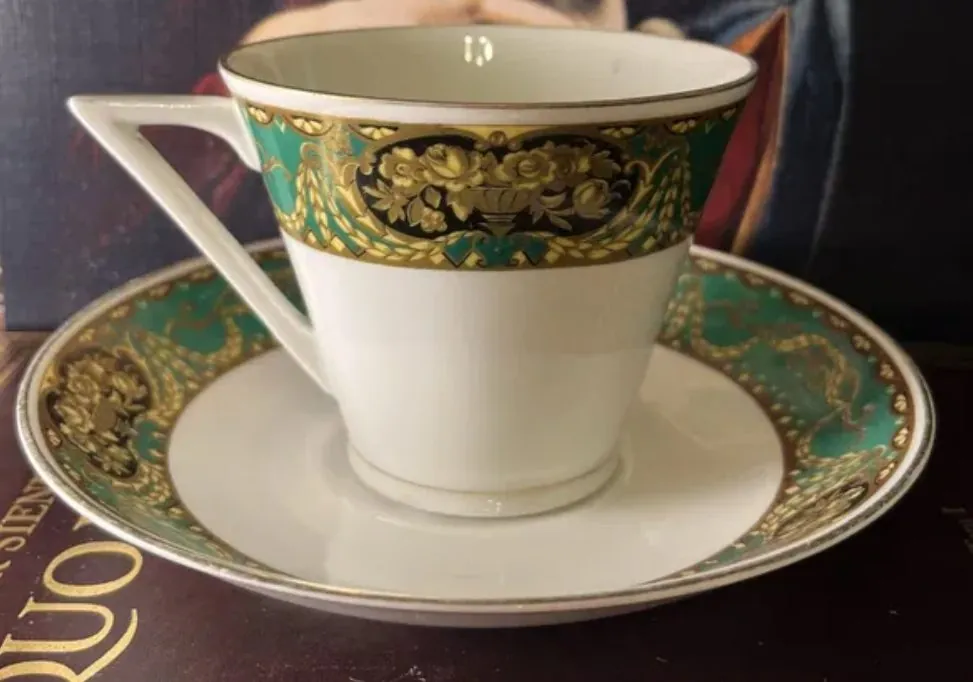
A Ruwaha tea duo with a Czechoslovak mark.
Possibly the name Rudolf really is buried inside Ruwaha, but then the rest of it would have to be decoded too. The linguistic theory has a right to exist, and may well be the strongest one, because otherwise you have to drag in, by the ears, a district in Tanzania — the only word that repeats what is written on the mark.

Ian Cormack's book, "Ruwaha".
I had to dig thoroughly through the sources. What we have: porcelain and faience pieces, both utilitarian and decorative, falling into two strictly separate grades of quality — either cheap and cheerful, or refined and expensive.
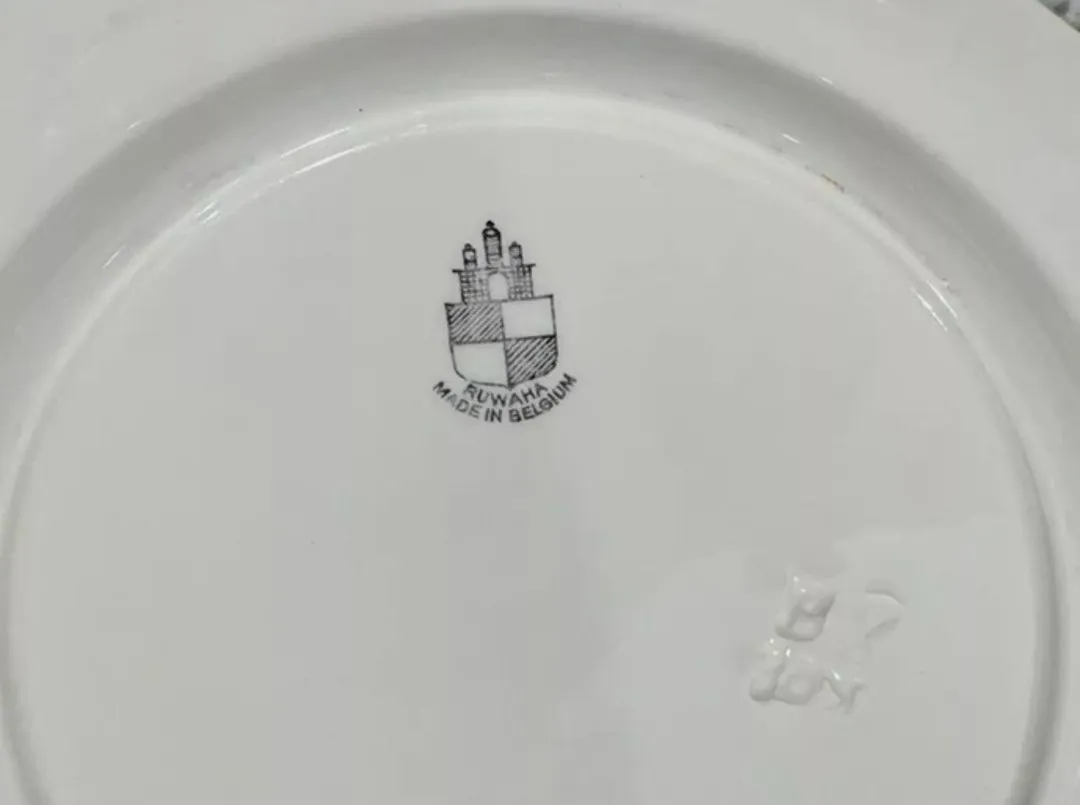
The "Belgian" Ruwaha mark on a porcelain plate commemorating King George's coronation.
The only comparable piece, as this is written, is for sale on Chairish at $425 USD, attributed as Austrian, 1930s.
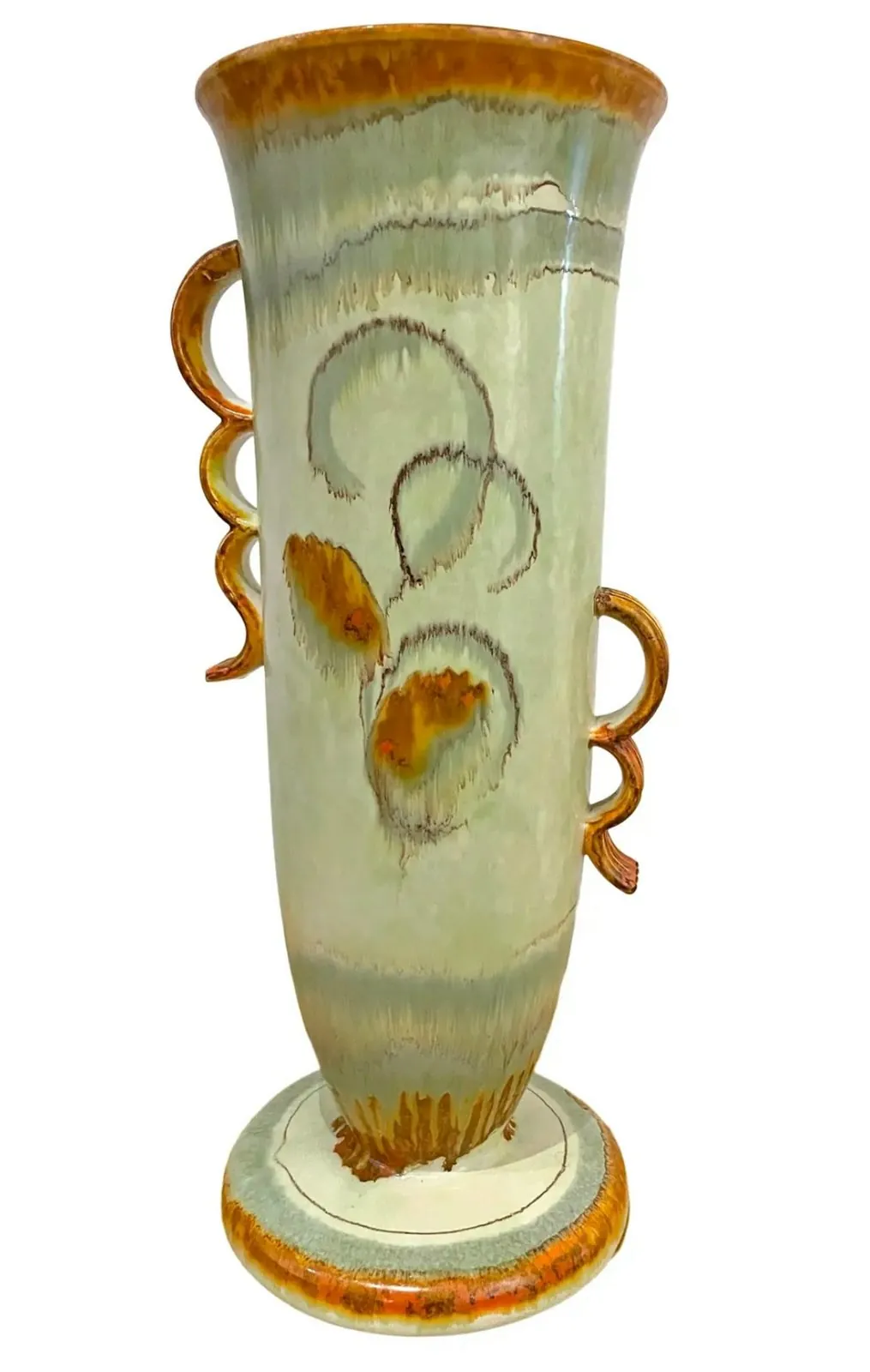
The vase listed on Chairish.
One might suppose this to be second-half-of-the-twentieth-century production imitating older pieces, but that theory does not survive the confirmed excavations of 2007. At the Kishle — the fortress — in Jaffa, utilitarian objects bearing this mark were found among the finds. The researchers note that the pieces were very crude. Israeli scholars date them to the 1920s–1930s, meaning the objects were made no later than that. The researchers also note that Ruwaha was most likely a trading firm supplying export goods out of Europe.
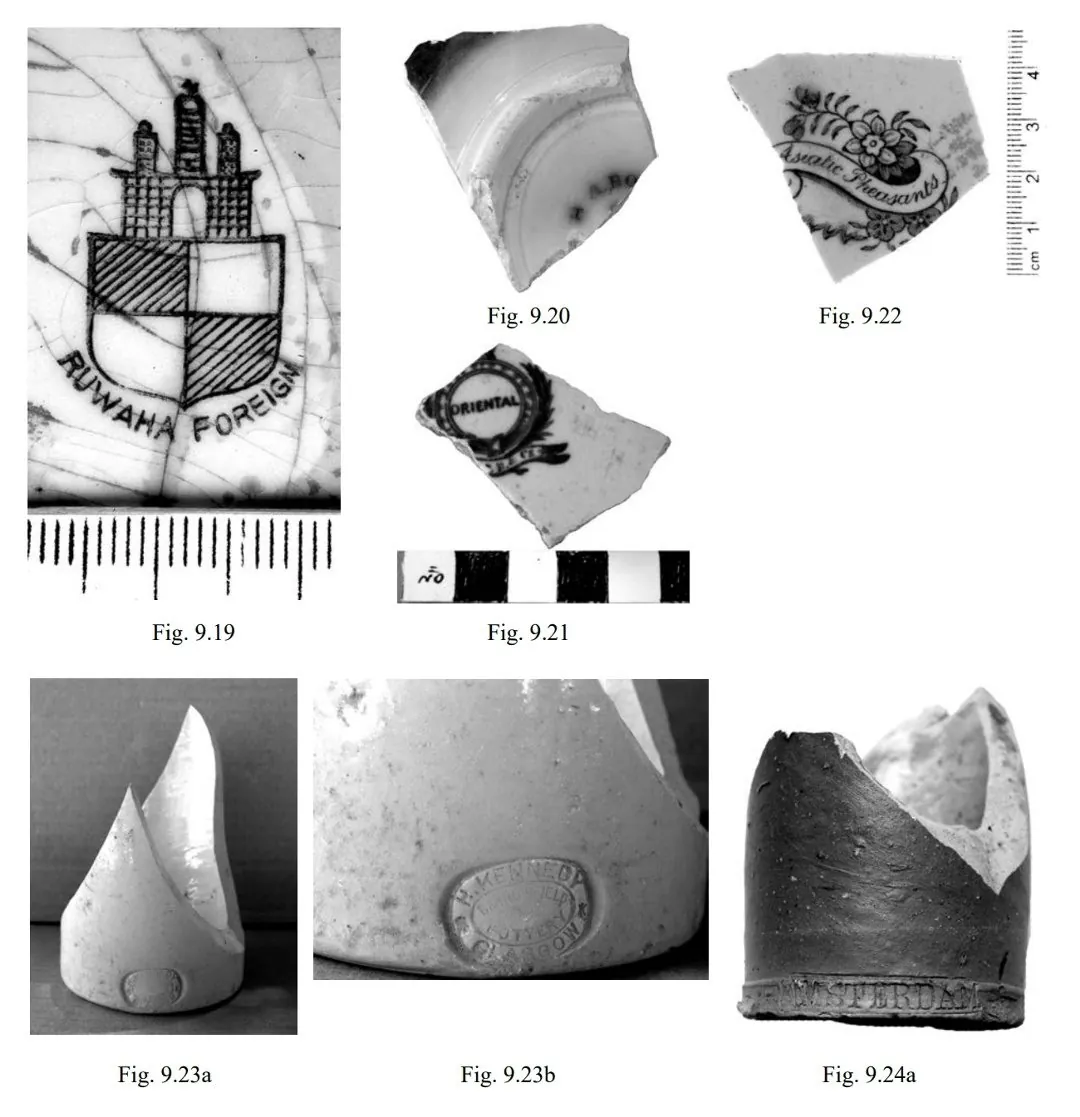
Marks on the objects found in the Jaffa excavations.
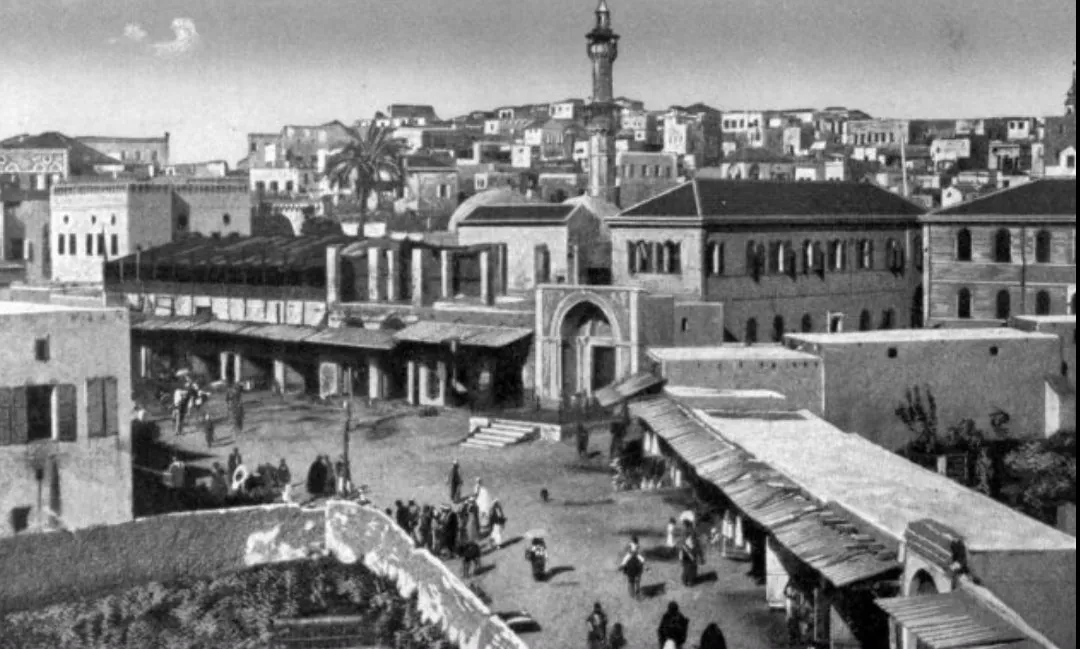
The fortress at Jaffa.
It is astonishing how little information there is about this trademark. There are meagre mentions in the archives — in newspaper advertising columns, for instance.
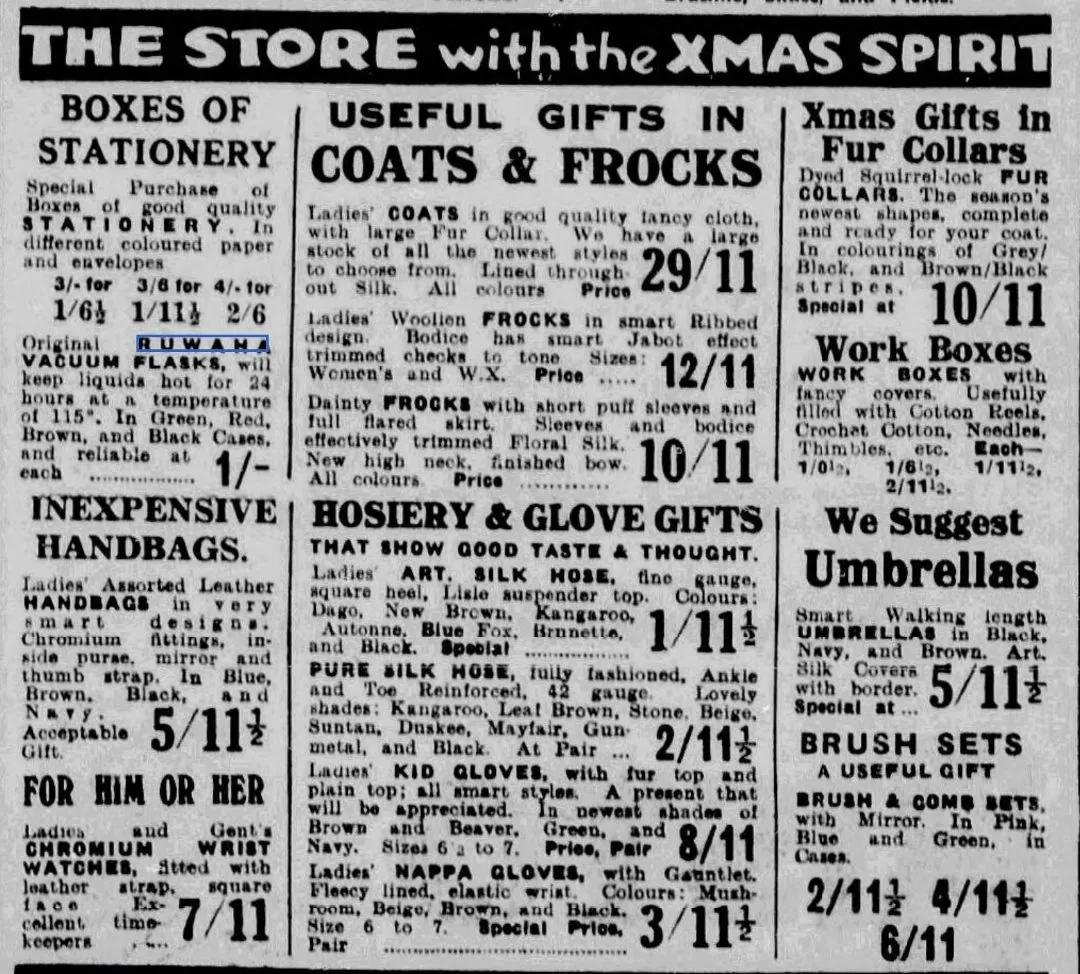
1934, The Evening Chronicle, an advertising block of Christmas gifts. Ruwaha invites you to buy vacuum flasks from them.
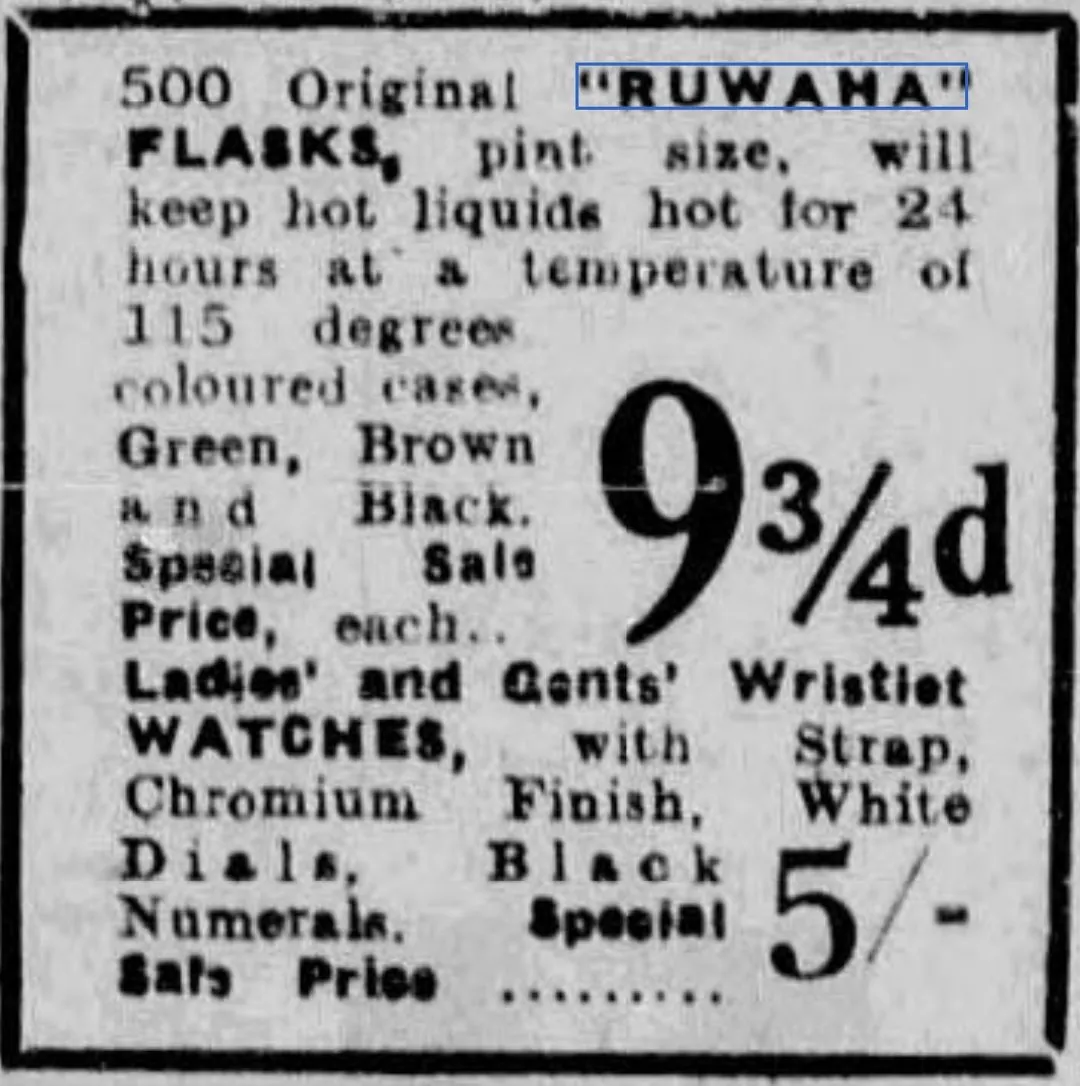
Summer 1933. The same newspaper and the same flasks.
This piece is unfinished; as soon as new data on the mark and the maker appear, it will be updated.
My money is on Ruwaha being the trademark of some European or American businessman who sought out manufactories and craftsmen standing idle, or otherwise short of orders — and who was not above borrowing ideas and misleading people as to the country of origin. Though that last part is still open to argument.