Our little primer continues. Down with illiteracy when buying porcelain!
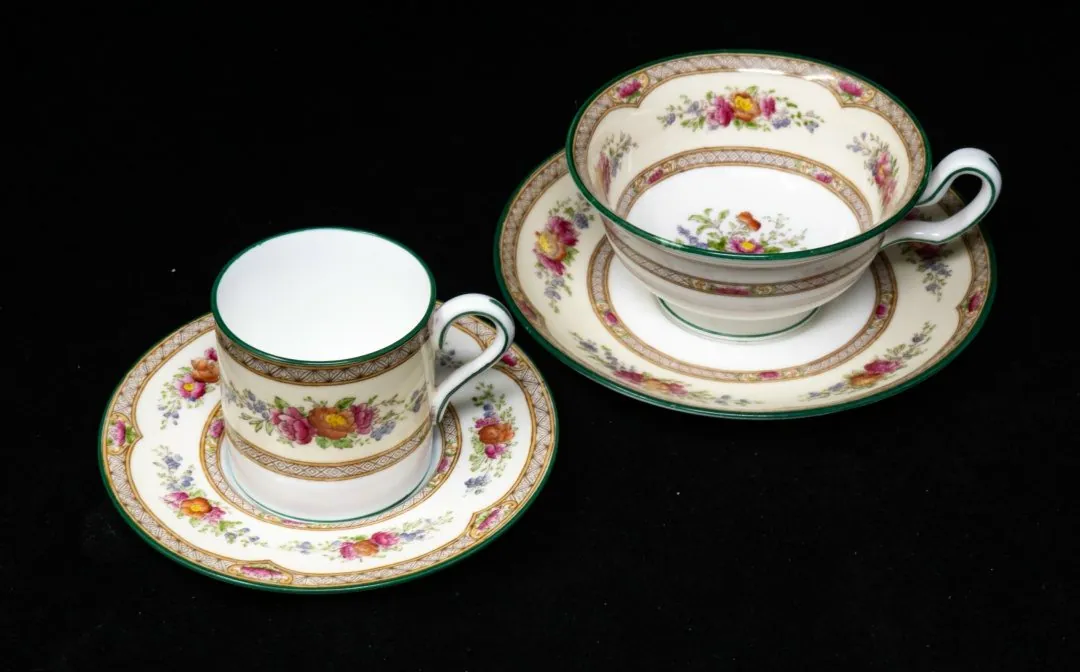
In the first photograph are standard English bone-china cups from Wedgwood's "Regent" series. On the right, the teacup; on the left, the demitasse. The first holds about 190 ml, the second 90 ml. Those are the standard capacities in English porcelain.
The demitasse — from the French demi-tasse, literally "half a cup" — is meant for coffee: espresso, Turkish coffee and so on. Its pattern is often exactly the same as its big sister's.
As you can see, the shapes in the photograph differ sharply, and you will have no trouble telling them apart by eye.
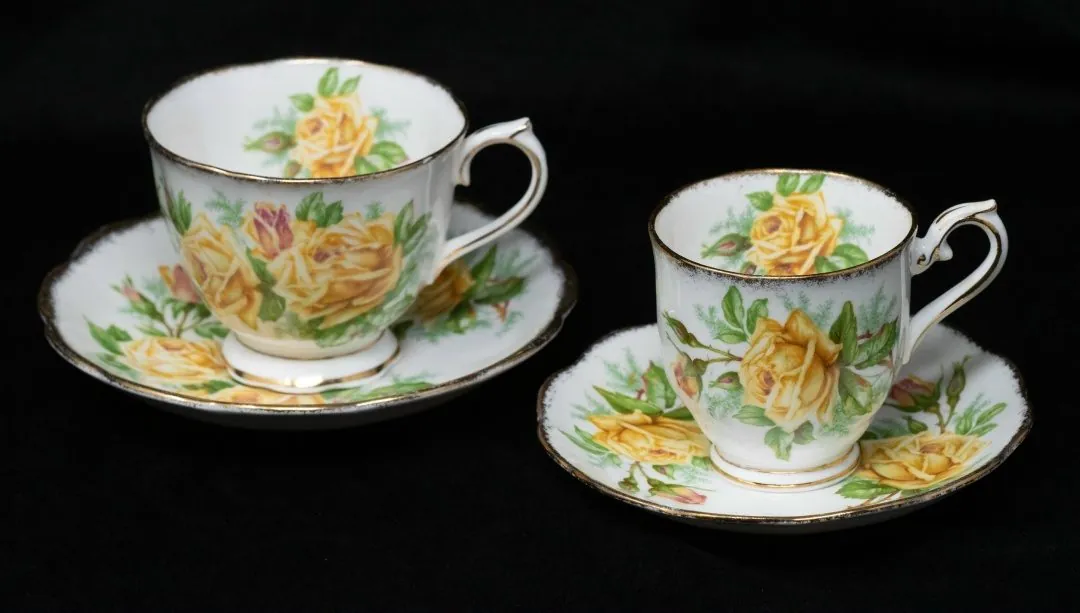
There are patterns and series, though, where the difference cannot be seen at all, and anyone might be caught out if only a single tea duo appears in the picture.
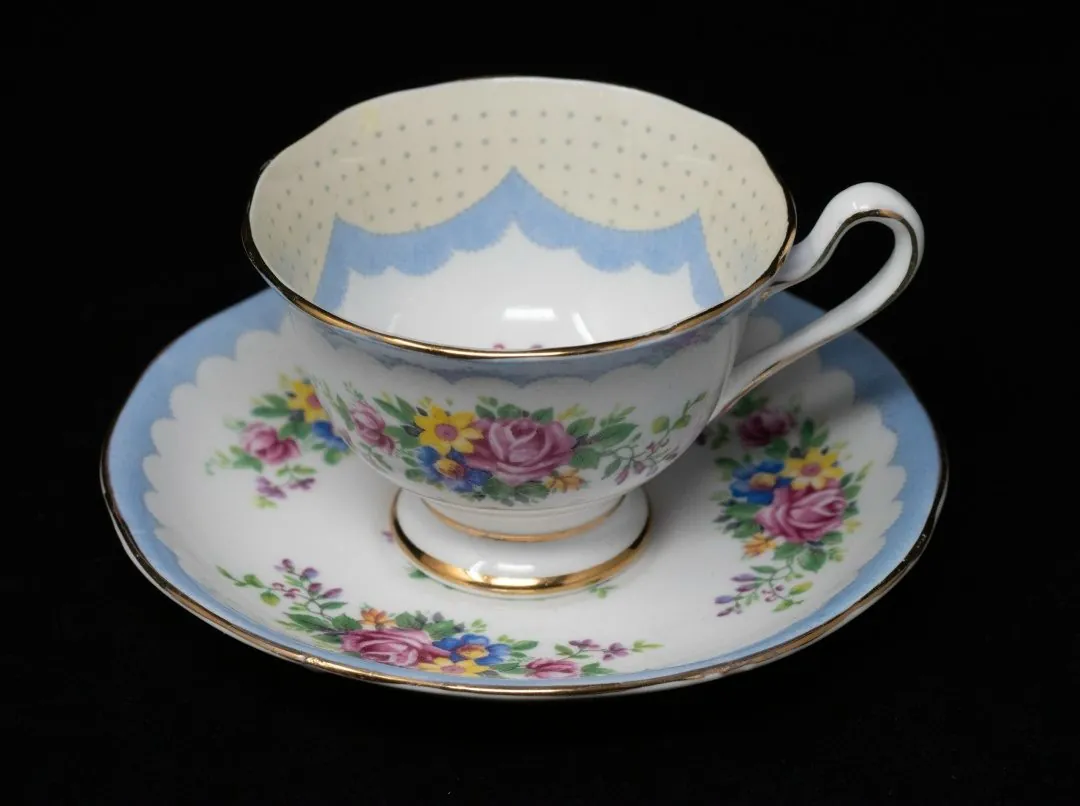
Two more examples have been added: "Tea Rose" by Royal Albert, and "Prudence" by the same maker. Try it — from that last photograph, is it a demitasse or an ordinary cup?
So my defaults are these. Unless stated otherwise, it is a standard tea duo. If a listing says the cup is a coffee cup or a demitasse, then — surprise — it is not a teacup.
If you buy a tea duo somewhere and are sent a tiny one instead of a full-size one, with no mention of it in the listing, that is very poor form, because demitasses generally sell for less. But you are armed now: you can judge the capacity of English porcelain cups by eye. Rather good, isn't it?