Our primer on marks, countries and the rest continues.
The Czech Republic; the little town of Stará Role, in the picturesque Karlovy Vary region, on the small river Rolava. Bohemia was rich, and where kaolin was concerned it was not stingy in the least.
Benedikt Haslacher, then managing another workshop at Dalovice, decided he knew better how the local kaolin ought to be handled, and in 1810 founded his own faience works nearby — close enough to walk from Dalovice.
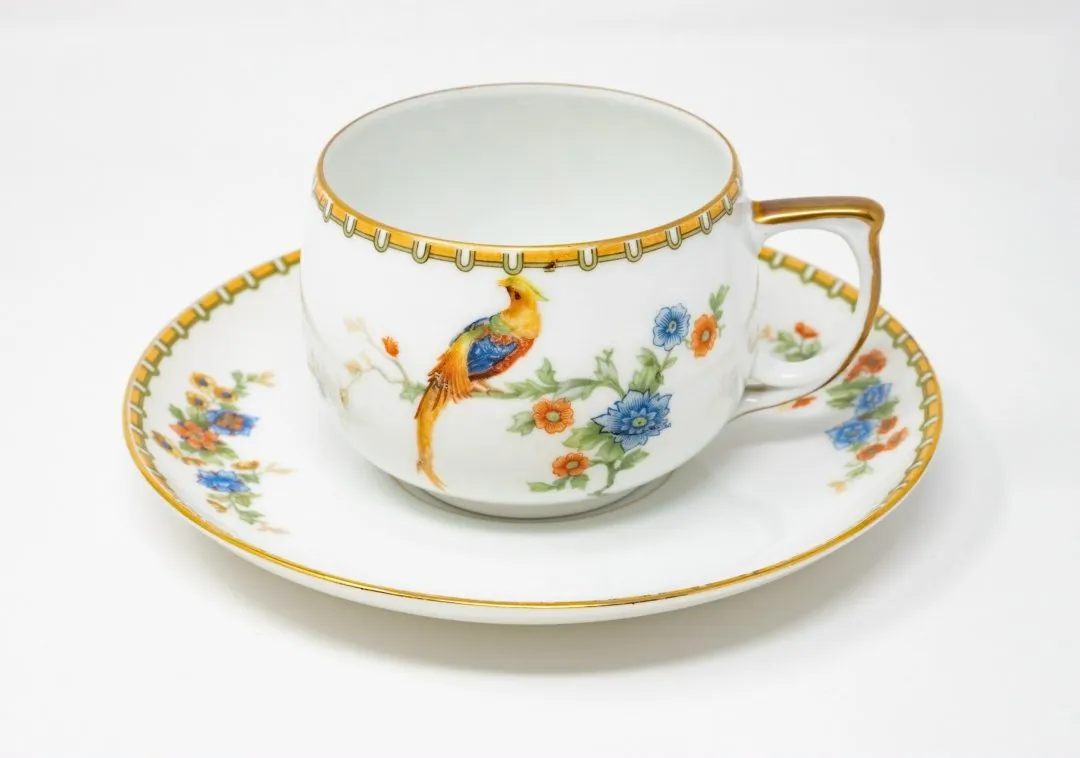
A "Golden Pheasant" tea duo, 1909–1922, marked MZ Altrohlau CMR. A slightly different form is available for sale.
The workshop operated under the name Alt Rohlau — the German name for Stará Role — for only ten years, after which it was bought by the Prague businessman Augustin Nowotny. He moved production to the right bank of the river and expanded it considerably. By now it was a genuine full-cycle factory, employing a hundred people. And by 1870 production had grown several times over, and the workforce to an unthinkable 800.
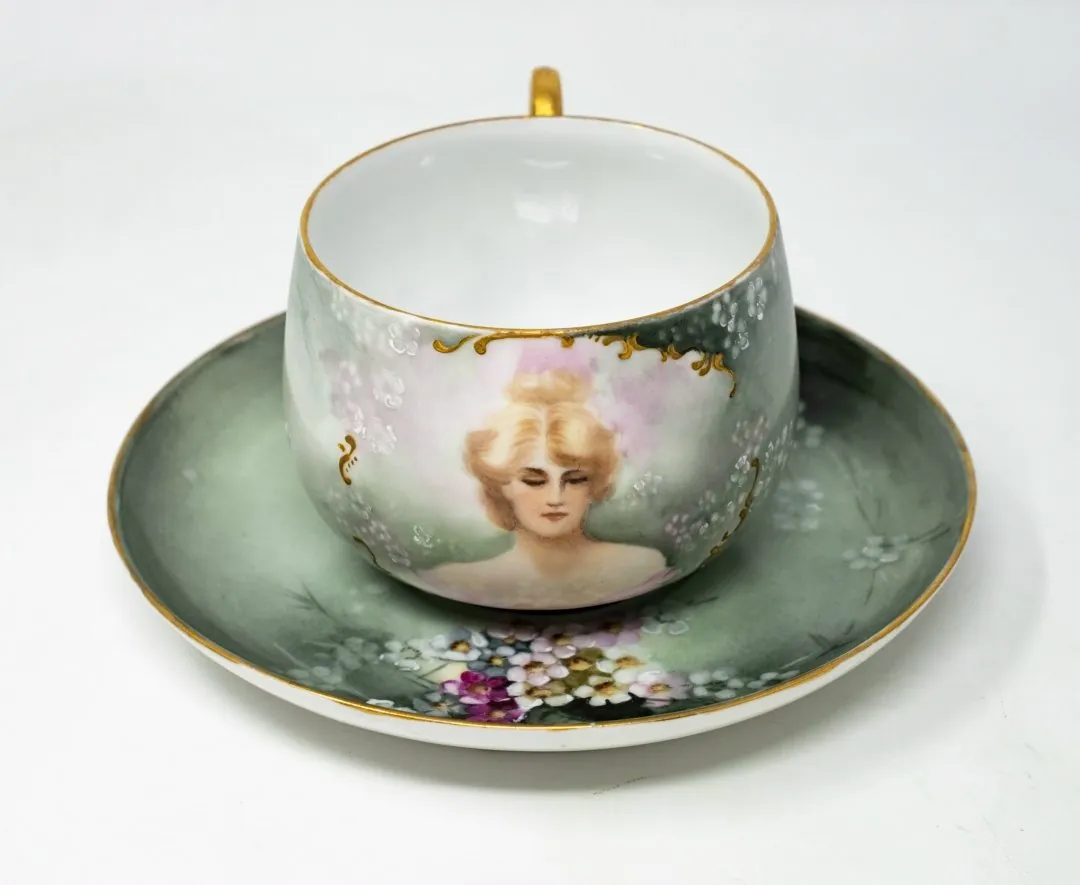
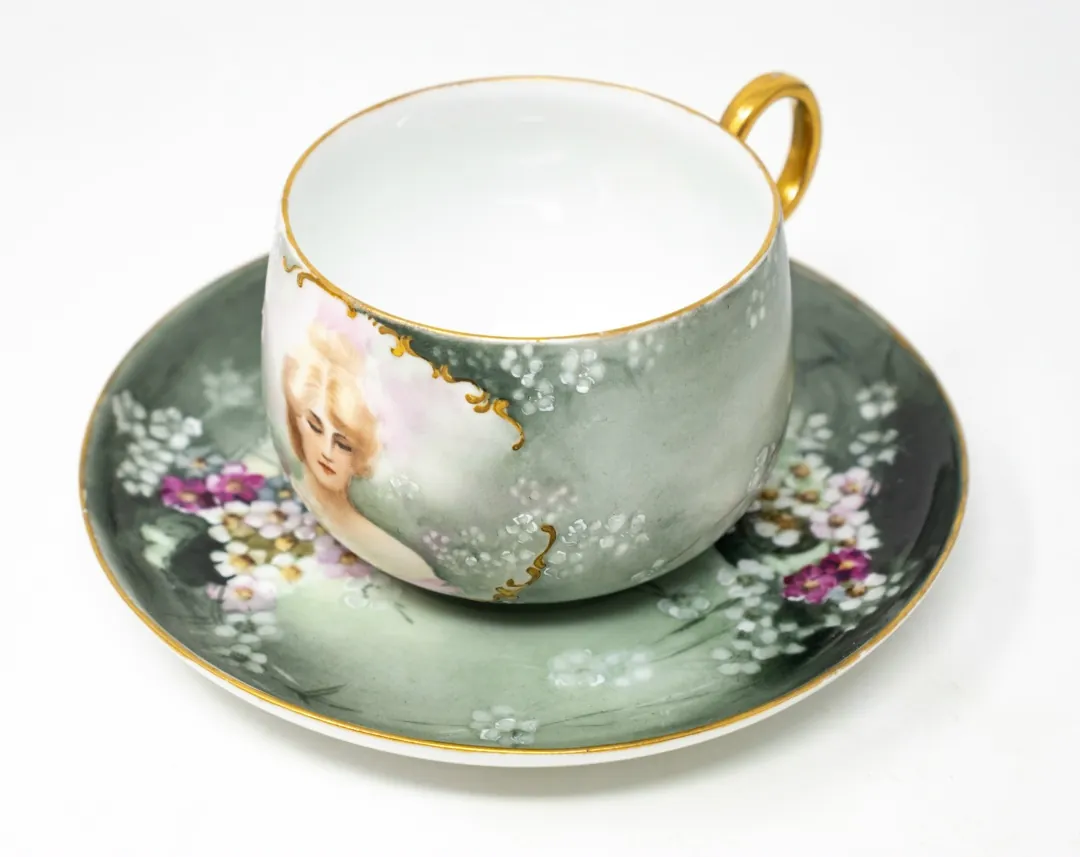
A portrait cup, MZ Austria — an extraordinary rarity nowadays; bought from me by a private collector in the USA. Collectors even know the name of the girl in the portrait.
Nowotny's factory fell victim to its own headlong growth, and he went bankrupt trying to build the largest manufactory in Europe.
A "Golden Pheasant" plate. MZ Altrohlau CMR.
At the auction that followed, the bankrupt business was bought by the well-known Prague banker Moritz Zdekauer, and in 1884 the manufactory's mark gained the letters "MZ" — the new proprietor's initials.
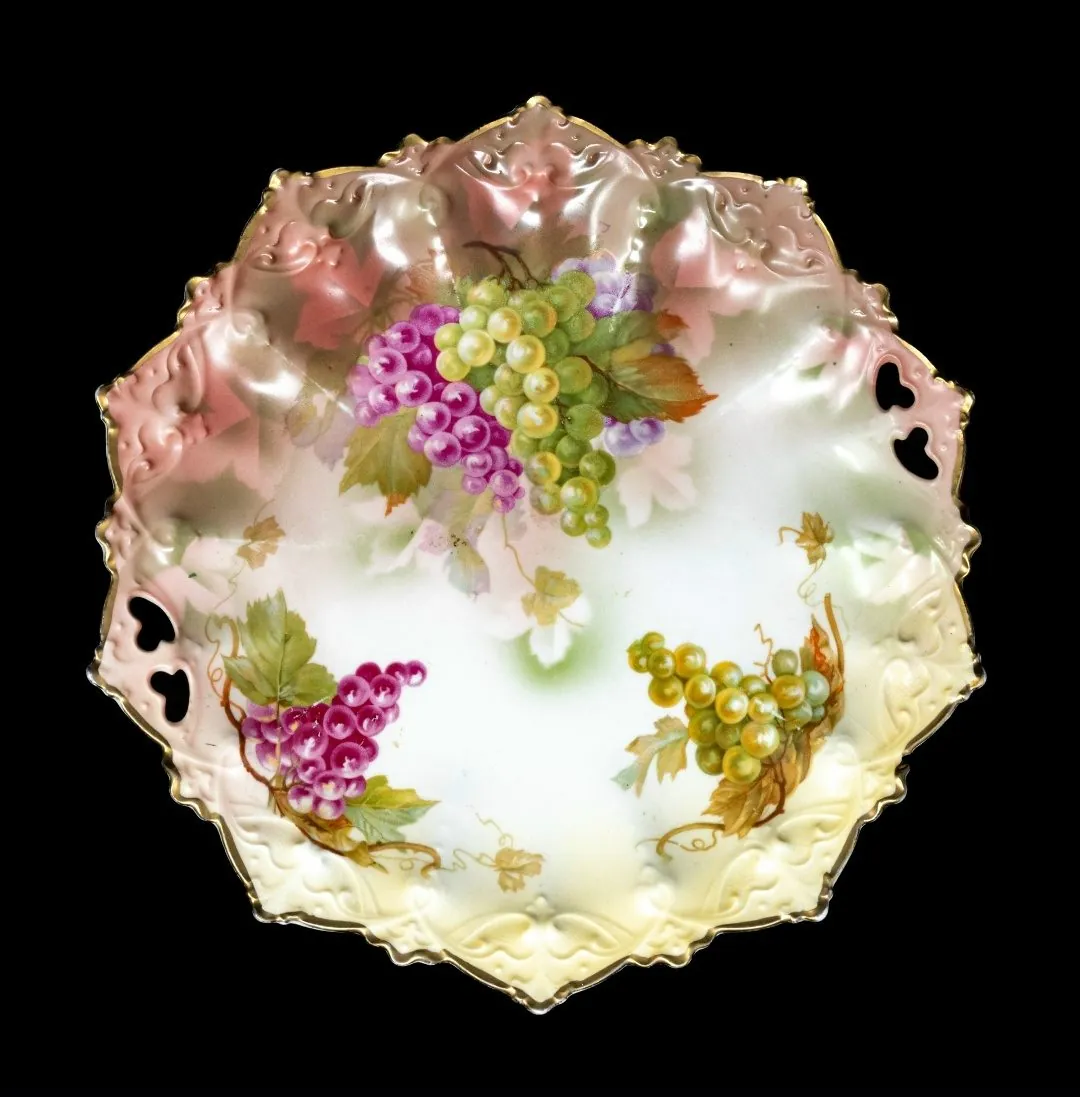
One of the most interesting MZ pieces in my collection: a dish with pierced handles. A genuine work of art.
Moritz built a successful business, supplying his wares across Europe and across Africa — and fifteen years later sold it to Carl Magnus Hutschenreuther, son of the well-known artist and proprietor of the Wallendorf manufactory. At this point new letters were added to the mark: C. M. R., taking in the new owner's initials.
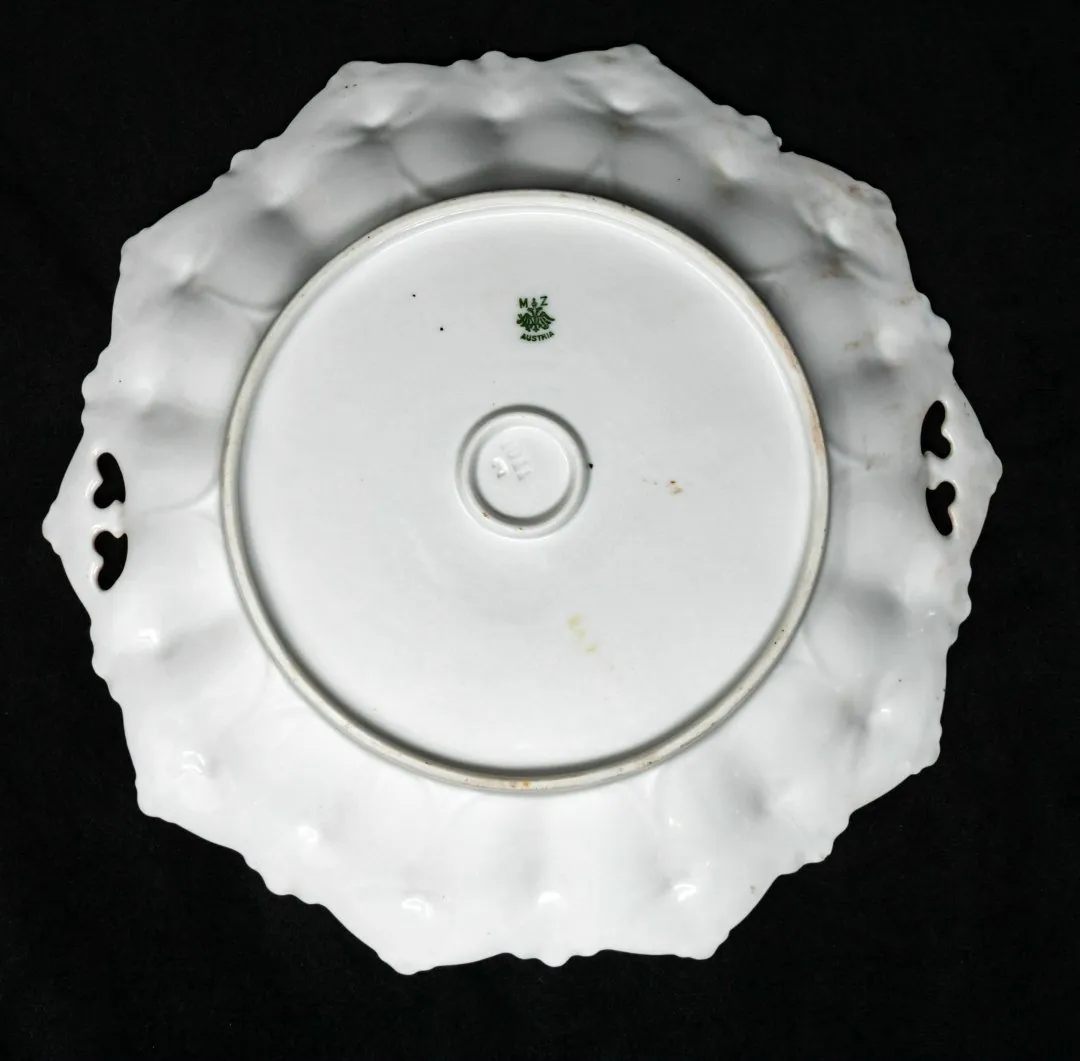
The MZ Austria mark belongs to the turn of the century — 1884 to 1909.
What is interesting is that you could learn history from the mark alone: there is Austria in it — Austria-Hungary, to be precise — and Czechoslovakia, and the Czech Republic. And yet the manufactory never moved out of the town at all.
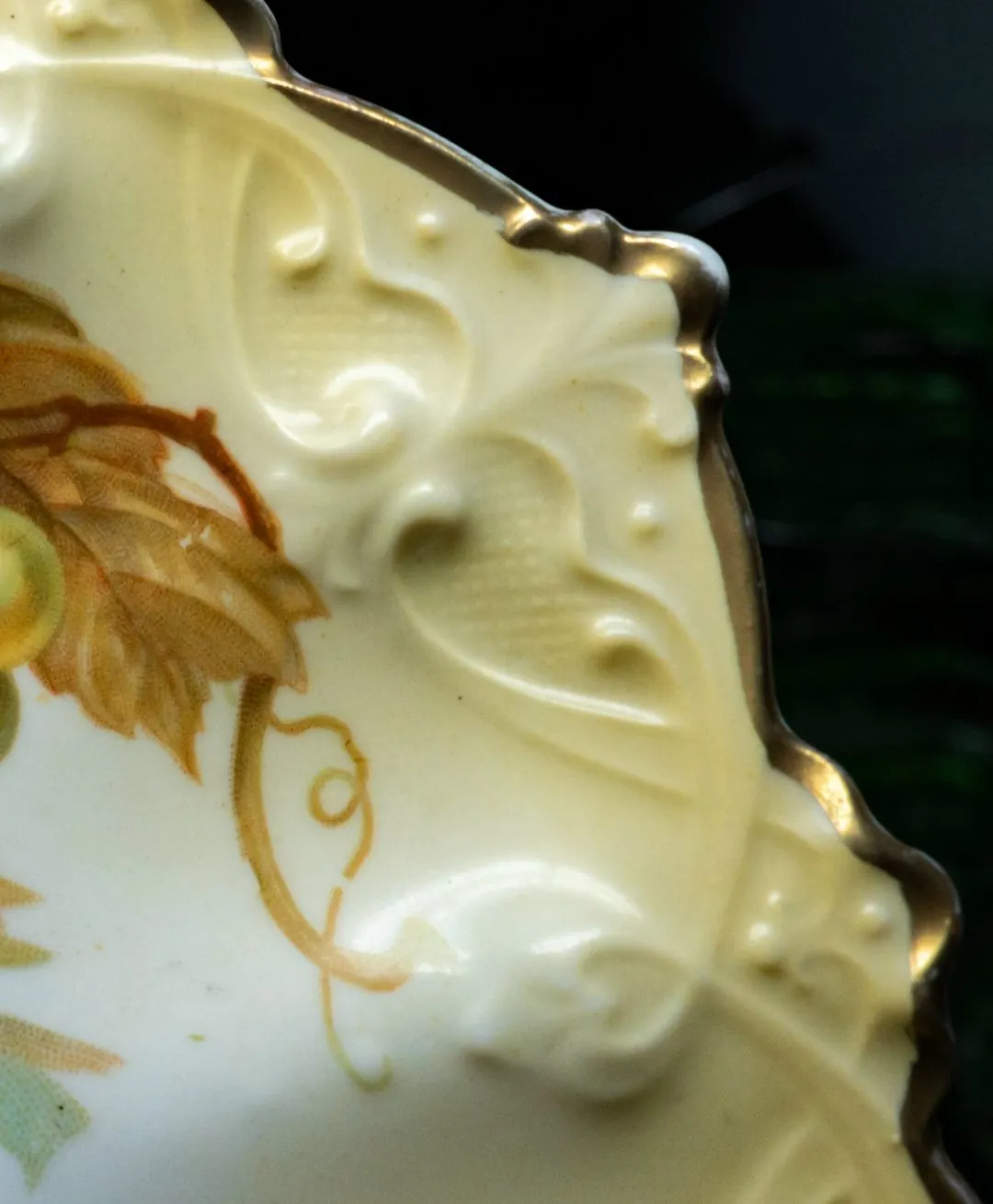
Note the form — the porcelain is of the finest, and yet the sheer number of raised details in the modelling is simply astonishing.
In 1968 the factory was nationalised, but carried on producing faience and porcelain. In 1992 it was privatised again, and it ceased to exist in 2013. What remained of the manufactory was bought by a new proprietor — Moritz Zdekauer 1810 s.r.o. — and porcelain was made on that basis for the last few years; but today, it seems, it has died for good.
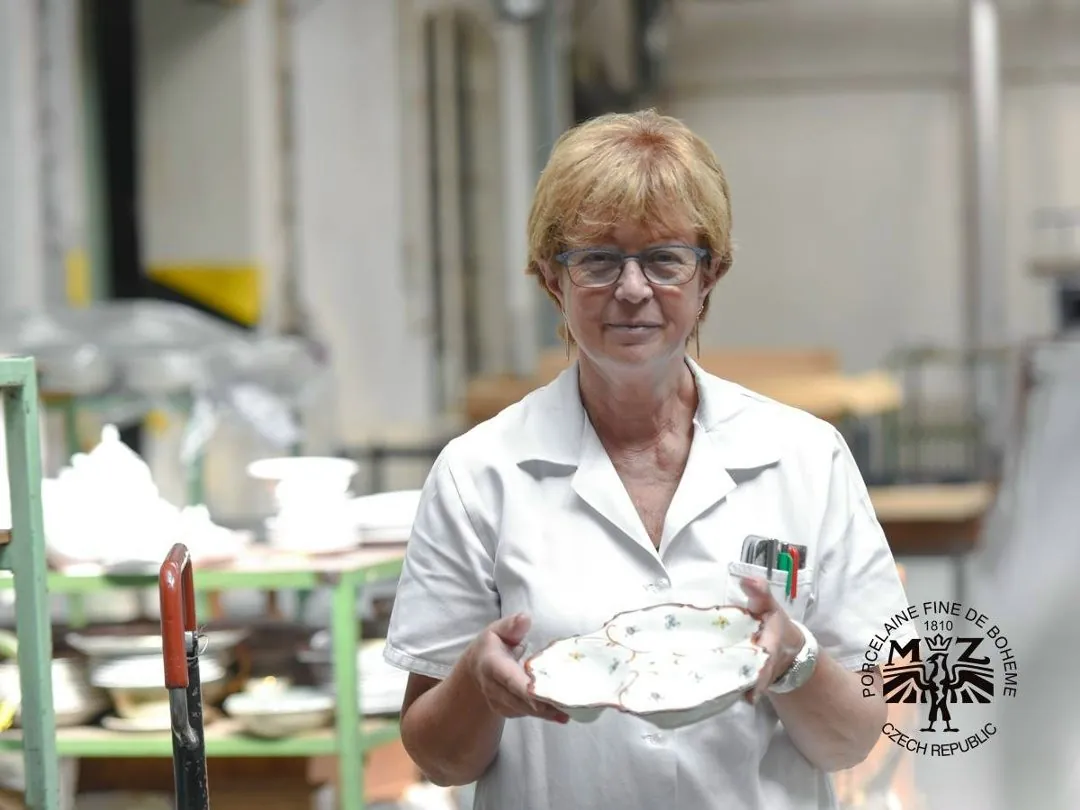
2020: the MZ works, a worker showing the final stage of production — decorating. Photo © Moritz Zdekauer 1810 s.r.o.